Quick answer: Laser hair removal works for PMOS patients (PMOS is the new name for what was previously called PCOS, changed in May 2026). Results take longer because elevated androgens keep activating new hair follicles between sessions. A realistic PMOS treatment plan involves 8 to 12 initial sessions and maintenance every 3 to 6 months. It is not a failure of the technology. It is the hormonal environment.
The question most women ask before starting laser hair removal when they have PMOS is: will this even work for me?
It is a fair question. Many women with PMOS have already spent years on threading, waxing, or epilating. They have seen the hair come back faster and coarser after each round. They are understandably cautious.
The honest answer is that laser hair removal does work for PMOS patients. But it works differently from how it works in women without PMOS. Understanding that difference is what makes the difference between a satisfying result and a frustrating one.
Written by Dr. Sarath Chandran, MD DVL, IADVL-registered dermatologist and Managing Director, DermaVue Clinics.
Table of Contents
- What Is PMOS and How Is It Different from PCOS
- What PMOS Does to Hair Follicles
- How Laser Hair Removal Works and Where PMOS Complicates It
- What Realistic Results Look Like for PMOS Patients
- Combining Laser with Hormonal Management
- Which Areas to Treat and in What Order
- Skin Type and Safety on Indian Skin
- What to Do Before Your First Session
- Laser Hair Removal for PMOS at DermaVue
- Frequently Asked Questions
What Is PMOS and How Is It Different from PCOS
PMOS stands for polyendocrine metabolic ovarian syndrome. It is the new clinical name for what was previously called polycystic ovary syndrome (PCOS). The name was changed in February 2026 following a global consensus process involving 56 academic, clinical, and patient organisations. The name change was published in The Lancet in May 2026.
The reason for the change is clinical accuracy. The old name, PCOS, implied pathological ovarian cysts. But the condition is not primarily about ovarian cysts. It is a systemic metabolic and hormonal condition that affects the entire body, involving androgen excess, insulin resistance, and disrupted ovulation. The new name, PMOS, reflects this better.
For patients, nothing changes in terms of diagnosis or treatment. The same hormonal profile, the same symptoms, the same treatment approaches. The name is what is different. In this post, we use PMOS throughout, with PCOS noted in brackets where search recognition is still needed.
What PMOS Does to Hair Follicles
PMOS affects approximately one in five women of reproductive age in India. Among its many visible effects, hirsutism is one of the most common: the growth of thick, dark, coarse hair in areas where women typically have fine or no hair. The upper lip, chin, jawline, sideburns, neck, abdomen, inner thighs, and lower back are the most commonly affected areas.
This hair growth is driven by androgens, specifically testosterone and DHEAS (dehydroepiandrosterone sulphate). In PMOS, androgen levels are chronically elevated. When androgens are high, they trigger vellus follicles to convert into terminal follicles. Vellus follicles produce fine, light, barely visible hair. Terminal follicles produce thick, dark, coarse hair.
The key point: this conversion does not happen all at once. It happens gradually, over months and years, as the hormonal environment keeps stimulating follicles that were previously dormant. This is what fundamentally changes how laser hair removal behaves in PMOS patients.
How Laser Hair Removal Works and Where PMOS Complicates It
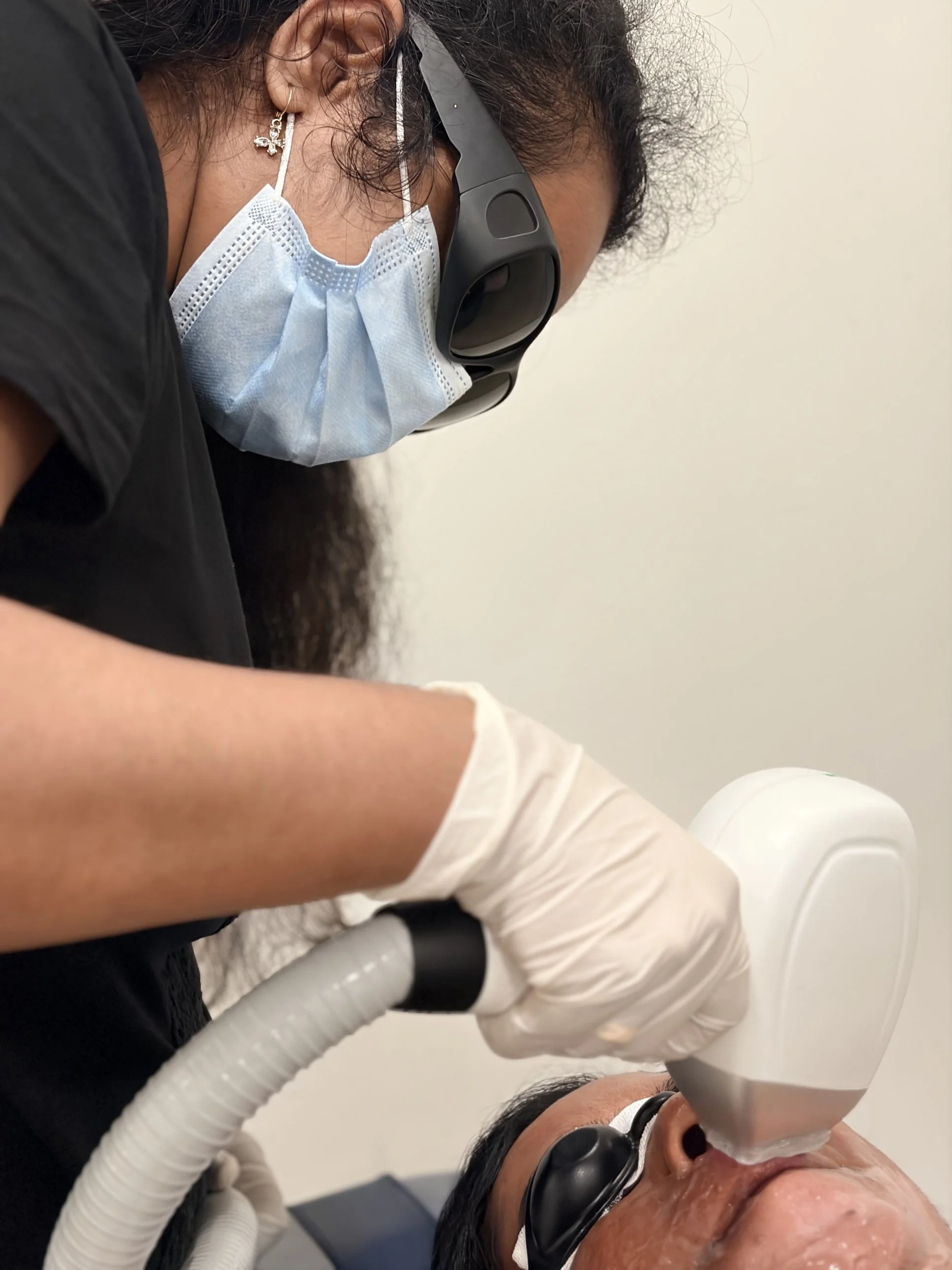
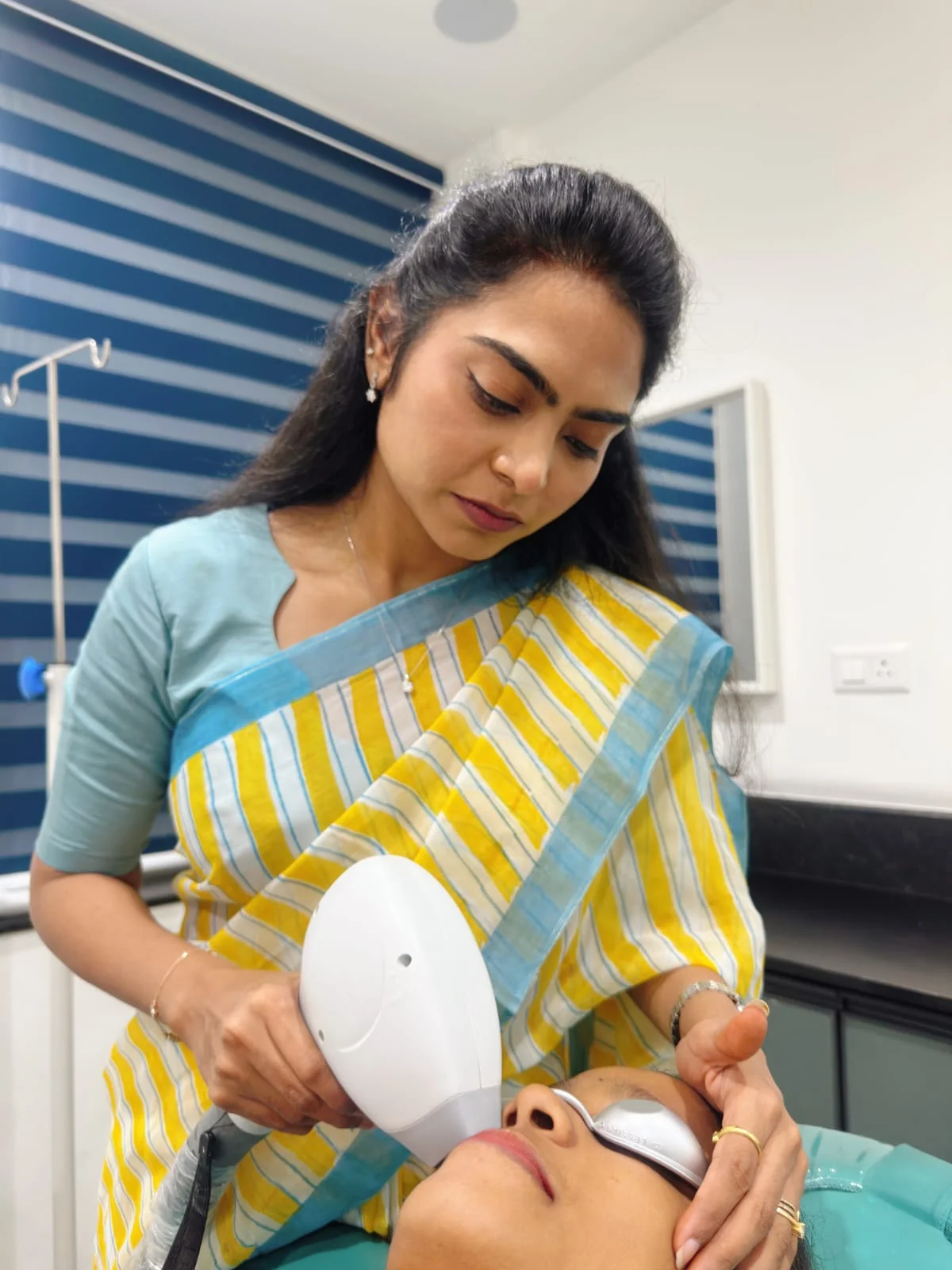
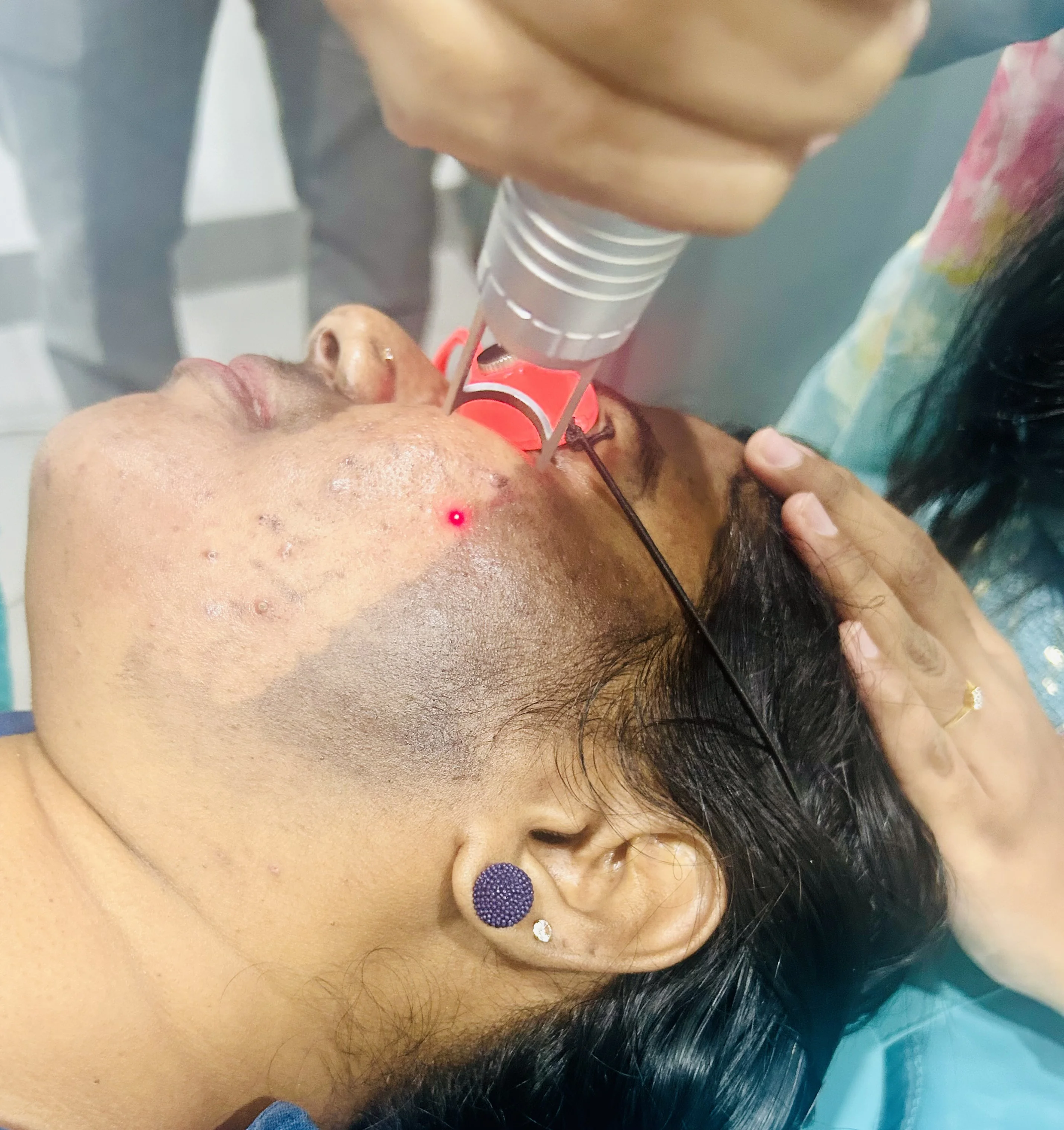
Laser hair removal works by directing light energy into the hair follicle. The melanin in the hair absorbs this energy, converts it to heat, and that heat permanently destroys the follicle’s ability to produce hair. For a full explanation of the mechanism, see how laser hair removal works at DermaVue.
For most women without PMOS, 6 sessions spaced 4 to 6 weeks apart produce a significant and lasting reduction in hair growth. Annual touch-up sessions manage any remaining fine hair.
PMOS patients experience a different pattern for one specific reason: the ongoing androgen stimulation means that dormant follicles continue to convert and activate throughout the treatment course and after it. Laser destroys the active follicles it treats. But while it is doing that, new follicles are activating from the pool of dormant ones. Those newly activated follicles were not producing hair during earlier sessions, so they were not treated.
This is not regrowth from treated follicles. It is activation of previously untreated ones.
The distinction matters because it explains why more sessions are needed and why periodic maintenance is a realistic and expected part of long-term management, not a sign that the treatment has failed.
What Realistic Results Look Like for PMOS Patients
Most PMOS patients need 8 to 12 initial sessions rather than the standard 6. Sessions are spaced 4 to 6 weeks apart for facial areas and 6 to 8 weeks apart for body areas.
After the initial course, most PMOS patients benefit from maintenance sessions every 3 to 6 months. The frequency depends on how active the hormonal environment is and whether medical management of PMOS is also underway.
What changes progressively across sessions
- Hair becomes finer and lighter with each round, even in areas that continue to show some growth between sessions
- Density reduces significantly across the treatment area
- The interval between any residual threading or waxing lengthens noticeably
What to expect after a full 8 to 12 session course
Substantial, visible, and lasting reduction in hair growth. Most PMOS patients describe no longer needing to manage their hair with threading or waxing on a regular basis. Maintenance sessions once or twice a year address newly activated follicles and preserve the result.
| Non-PMOS patients | PMOS patients | |
|---|---|---|
| Initial sessions needed | Typically 6 | Typically 8 to 12 |
| Session spacing (face) | 4 to 6 weeks | 4 to 6 weeks |
| Session spacing (body) | 6 to 8 weeks | 6 to 8 weeks |
| Maintenance sessions | 1 to 2 per year (optional) | 1 to 2 per year (recommended) |
| Reason for continued hair | Rare: residual fine vellus | New follicle activation from ongoing androgens |
| Expected long-term result | Significant permanent reduction | Significant reduction with managed maintenance |
Combining Laser with Hormonal Management
Laser hair removal and hormonal management work best together because they address different parts of the problem.
Laser destroys existing active follicles. Hormonal management, prescribed by your gynaecologist or endocrinologist, reduces androgen levels and slows the rate at which new follicles become active. When androgen levels are better controlled, the intervals between maintenance sessions can be longer and the total sessions needed over a lifetime are lower.
DermaVue’s metabolic health programme addresses the systemic side of PMOS. Read more about PMOS and metabolic health management at DermaVue. Patients do not need to wait for hormonal levels to be fully controlled before starting laser. In practice, most women benefit from starting both simultaneously.
Common hormonal management approaches for PMOS hirsutism include combined oral contraceptives, anti-androgen medications such as spironolactone, and metformin for insulin-resistant PMOS. These are prescribed by your gynaecologist, not your dermatologist.
If you are taking any PMOS medication, inform your dermatologist before starting laser. Some medications have no bearing on laser treatment. Others may affect skin sensitivity or the treatment protocol.
Which Areas to Treat and in What Order
The most effective starting point for PMOS patients is the area causing the most visible impact. For most women, this is the face: upper lip, chin, and jawline. Facial hair from PMOS tends to be coarser and more immediately visible, and it responds reliably to treatment.
After facial areas are under control, body areas can be addressed in subsequent treatment rounds:
- Abdomen, particularly the midline navel-to-pubic line
- Inner thighs
- Lower back
- Arms and forearms
Full-body laser is also appropriate for women who experience diffuse hair growth across multiple areas. Laser hair removal is not recommended during pregnancy, breastfeeding, or during acute PMOS flares with very high androgen levels that are not yet under any management.
Skin Type and Safety on Indian Skin
Diode laser is the safest and most effective technology for Indian skin types (Fitzpatrick IV to VI). The 808nm diode wavelength targets melanin in the hair without causing the surface pigmentation damage that older technology sometimes caused on darker skin. US-FDA approved diode laser equipment is used at all DermaVue branches. Settings are calibrated for Indian skin types individually at each session.
Darker areas of the face, such as the upper lip, require lower energy settings and careful technique to protect the surrounding skin while still treating the follicle effectively. No standard settings from lighter skin type protocols are applied to Indian patients.
What to Do Before Your First Session
- Shave the area to be treated 24 hours before the session. Do not wax, thread, or epilate the treatment area for at least 4 weeks before your appointment.
- Avoid sun exposure on treatment areas for 2 weeks before each session and apply SPF 30 or above daily on exposed areas throughout your treatment course.
- Inform your dermatologist of all PMOS medications and any other prescription or over-the-counter topical treatments you are using on the areas to be treated.
- A clinical skin consultation before the first session allows the dermatologist to assess skin type, hair coarseness, androgen-related hair distribution, and plan the appropriate number and spacing of sessions.
Laser Hair Removal for PMOS at DermaVue
DermaVue offers laser hair removal across all seven clinics in Kerala and Tamil Nadu. PMOS patients are assessed with an awareness that the treatment plan needs to account for the hormonal environment from the outset. All sessions are performed by or under the supervision of IADVL-registered MD DVL dermatologists. US-FDA approved diode laser equipment calibrated for Indian skin types is used across the network.
Laser hair removal is available at all DermaVue branches
| Branch | Address | Phone / WhatsApp |
|---|---|---|
| Thiruvananthapuram | TC 42, 3003-2, Poojappura Main Rd, Kesari Nagar, Chengalloor, TVM 695012 | +91 83308 60007 |
| Kollam | UMK Arcade, Vellayittambalam, Kavanad PO, Kollam 691003 | +91 80868 60465 |
| Thiruvalla | Iykara Peniel Tower, Opp. Indian Overseas Bank, Thukalassery, Thiruvalla 689101 | +91 80860 00608 |
| Kottayam | Zion Towers, Second Floor 101, SH 1, Thellakom, Kottayam 686631 | +91 81298 83331 |
| Kochi (Aluva) | Metro Pillar No. 57, Tamarind Rajadhani Building, Near Pulinchodu, NH-47, Aluva 683101 | +91 90720 07733 |
| Thrissur | Ardra Arcade, Opp. Akshaya Hotel, Punkunnam, Thrissur 680002 | +91 73567 42225 |
| Coimbatore | 460, Ponnaiyan St, Cross Cut Rd, Ram Nagar, Gandhipuram, Coimbatore 641009 | +91 80868 60018 |
Book a consultation at your nearest branch. Visit dermavue.com/locations, call the branch directly, or WhatsApp our Thiruvananthapuram team for the nearest clinic to you.
Related Reading
- Laser Hair Removal at DermaVue: How It Works
- Laser Hair Removal for Women
- PMOS and Metabolic Health at DermaVue
- All DermaVue Locations
Recommended Viewing
Still wondering whether laser hair removal is the right call for you? Our team answers that question directly in this short video. Worth watching before your first consultation.
Laser Hair Reduction: Is It Really Worth It?
Frequently Asked Questions
What is PMOS and is it the same as PCOS? Yes. PMOS (polyendocrine metabolic ovarian syndrome) is the new clinical name for what was previously called PCOS (polycystic ovary syndrome). The name was changed in February 2026 following a global consensus process published in The Lancet in May 2026. The condition, symptoms, and treatment approaches remain the same. Only the name has changed to better reflect that PMOS is a systemic metabolic and hormonal condition, not simply an ovarian one.
Does laser hair removal work for PMOS patients? Yes, laser hair removal works for PMOS patients, but it works differently from how it works in women without PMOS. Laser permanently destroys active hair follicles. In PMOS, elevated androgens keep triggering new follicle activation, so while each session destroys the follicles it treats, new ones can become active between sessions. This means PMOS patients need more sessions, typically 8 to 12 compared to 6 for women without PMOS, and periodic maintenance sessions every 3 to 6 months even after the initial course is complete.
How many sessions of laser hair removal does a PMOS patient need? Most PMOS patients need 8 to 12 sessions for initial treatment, compared to 6 sessions for women without PMOS. Sessions are typically spaced 4 to 6 weeks apart for facial hair and 6 to 8 weeks apart for body hair. After the initial course, most PMOS patients need 1 to 2 maintenance sessions per year to address newly activated follicles.
Which areas are most commonly treated with laser for PMOS? The most common areas for PMOS-related laser hair removal are the upper lip, chin, jawline, sideburns, neck, abdomen (particularly the midline), inner thighs, and lower back. These are the areas where androgen-sensitive follicles are most concentrated. Full-body laser is also an option for women who experience diffuse hair growth across multiple body areas.
Should I manage my PMOS medically before starting laser? Starting hormonal management alongside laser hair removal typically produces better long-term results than laser alone. Hormonal therapy prescribed by your gynaecologist or endocrinologist can reduce androgen levels, which slows the rate at which dormant follicles become active between sessions. You do not need to wait to start laser treatment. Most patients start laser while their gynaecologist addresses the hormonal component simultaneously.
Is laser hair removal safe for Indian skin with PMOS? Yes. Diode laser technology is safe and effective for Indian skin types (Fitzpatrick IV to VI), which are the most common skin types among patients across Kerala and Tamil Nadu. The wavelength and settings are adjusted for darker skin tones to deliver effective follicle destruction while protecting the surrounding skin. At DermaVue, all laser hair removal sessions are performed with US-FDA approved diode laser equipment calibrated for Indian skin types.
What is the difference between PMOS hair growth and normal hair growth? In women without PMOS, hair follicles follow predictable growth cycles. Once a follicle is treated by laser, it is unlikely to reactivate. In PMOS, chronically elevated androgens, particularly testosterone and DHEAS, stimulate vellus (fine, soft) hair follicles to convert into terminal (thick, dark, coarse) follicles. This conversion continues over time, even after already-converted follicles are treated. This is why PMOS patients see ongoing hair growth and why maintenance sessions are part of a long-term plan.
Will my facial hair from PMOS grow back after laser hair removal? Laser permanently destroys the follicles that are active at the time of treatment. Those specific follicles will not regrow hair. However, in PMOS, previously dormant follicles can become active due to continued androgen stimulation, resulting in new hair in the same areas. This is not regrowth from treated follicles. It is activation of untreated ones. Maintenance sessions every 3 to 6 months address these newly active follicles. With consistent treatment and hormonal management, most PMOS patients see a significant and lasting reduction in hair density and coarseness.
Authored by Dr. Sarath Chandran, MD DVL, IADVL-registered dermatologist and Managing Director, DermaVue Clinics. Published July 2026. This article is for general information and does not substitute a clinical consultation. Individual treatment plans vary based on skin type, hair type, androgen levels, and PMOS severity. PMOS was previously known as PCOS (polycystic ovary syndrome). The name change was published in The Lancet, May 2026.