You apply serums, moisturisers, and hydrating masks consistently, yet your skin still looks dull, dry, and tired. If this sounds familiar, the issue may not be your products. It may be that topical hydration, no matter how well-formulated, cannot reach the deeper layers of skin where dehydration actually originates. This is the clinical problem that skin boosters were designed to solve.
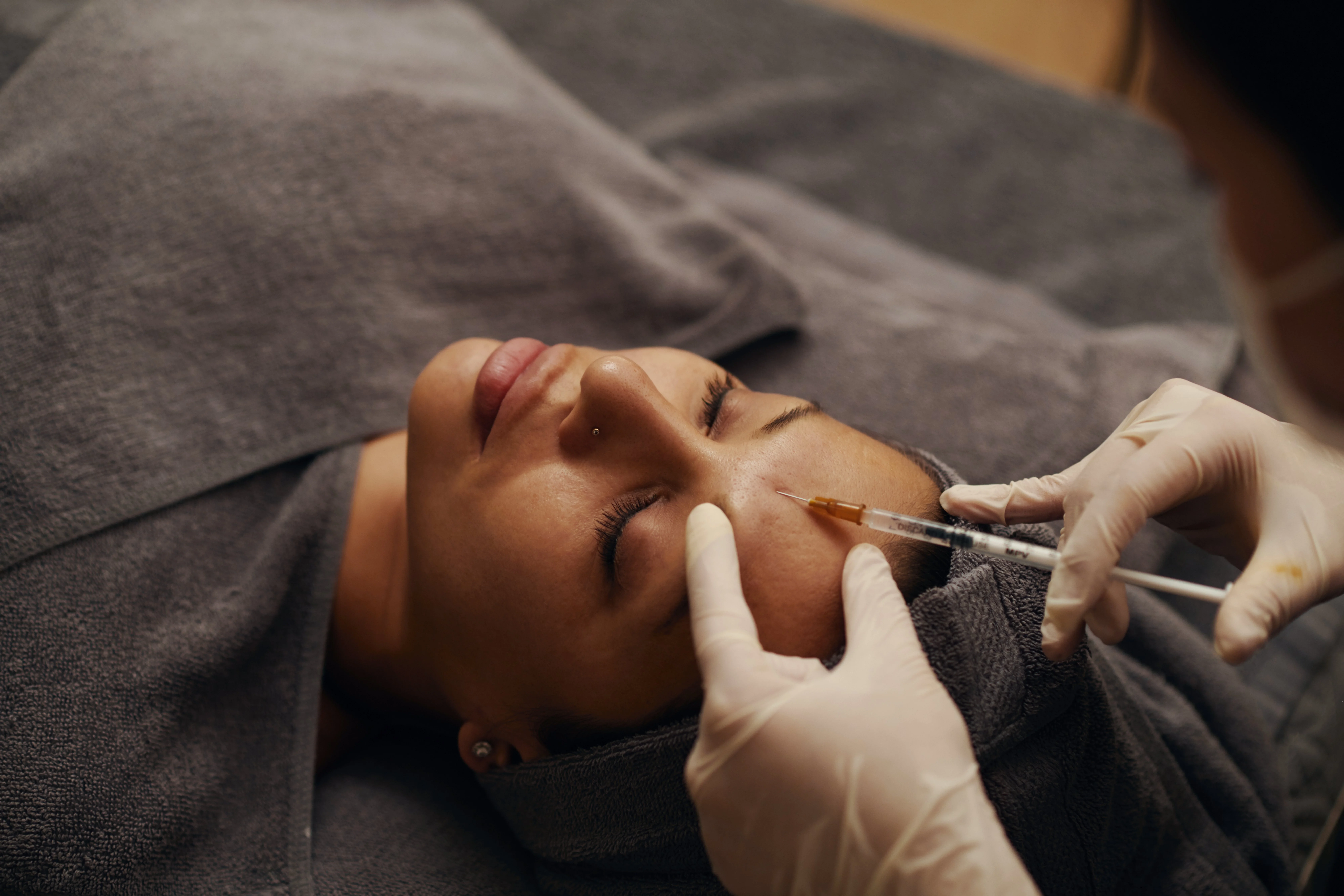
Skin boosters are injectable treatments that deliver hyaluronic acid directly into the dermis, the layer of skin where moisture retention, collagen production, and structural integrity are determined. Unlike dermal fillers, which are designed to add volume or reshape facial contours, skin boosters spread evenly through the tissue to improve overall skin quality: hydration, luminosity, elasticity, and fine line reduction.
In this article, I will explain how skin boosters work at a biological level, who benefits most from them, what the treatment experience is like, and what the clinical evidence tells us about their efficacy and longevity.
What Are Skin Boosters?
Skin boosters are micro-injections of stabilised hyaluronic acid (HA) delivered into the superficial to mid-dermis. The HA used in skin boosters is different from the HA in dermal fillers. While filler HA is highly cross-linked to maintain shape and provide structural volume, skin booster HA is lightly cross-linked or non-cross-linked, allowing it to spread uniformly through the tissue and integrate with the skin’s natural hydration systems.
The most widely studied skin booster products use NASHA (non-animal stabilised hyaluronic acid) technology, which produces HA that is biocompatible, biodegradable, and has a proven safety record spanning decades of clinical use.
How Is This Different from Topical Hyaluronic Acid?
Topical HA serums sit on the skin surface or penetrate the outermost layer of the epidermis. High-molecular-weight HA (the most common form in serums) is too large to pass through the stratum corneum. Even low-molecular-weight HA, while it can penetrate slightly deeper, does not reach the dermis where the most significant hydration deficit occurs in dehydrated or aging skin.
Skin boosters bypass this barrier entirely by delivering HA directly where it is needed. The result is measurably improved dermal hydration that lasts months, not hours.
How Do Skin Boosters Work? The Mechanism
1. Hygroscopic Hydration
Hyaluronic acid is a glycosaminoglycan naturally present in the skin’s extracellular matrix. Its defining property is hygroscopy: a single molecule of HA can bind up to 1,000 times its weight in water. When injected into the dermis, the HA molecules attract and retain water from the surrounding tissue and vasculature, creating a sustained hydration reservoir.
This is not a surface effect. The hydration occurs within the dermal matrix, improving skin turgor (firmness), smoothing fine lines caused by dehydration, and creating a visible improvement in skin luminosity from within.
2. Fibroblast Stimulation and Collagen Induction
Beyond passive hydration, skin boosters actively stimulate the skin’s repair mechanisms. The micro-injections create controlled micro-injuries that trigger a wound-healing response. Additionally, the presence of HA in the dermis signals fibroblasts to increase production of type I collagen, elastin, and endogenous hyaluronic acid.
Published histological studies have confirmed increased collagen density and improved elastic fibre organisation in skin biopsies taken weeks to months after skin booster treatment. This means the benefits extend beyond hydration to genuine structural improvement of the dermis.
3. Improved Microcirculation
Some clinical evidence suggests that the micro-injection process and the HA itself improve local microcirculation, enhancing nutrient delivery and waste removal at the tissue level. This may contribute to the “glow” effect that patients consistently report after treatment.
Who Benefits from Skin Boosters?
Skin boosters have a broad candidacy profile because their effect is on fundamental skin quality rather than a specific cosmetic concern:
Dehydrated, dull skin. Patients whose skin appears lifeless despite consistent topical hydration. This is the primary indication.
Early aging signs. Fine lines, crepey texture, and loss of skin radiance in patients in their late 20s to 40s who are not yet candidates for more aggressive treatments.
Pre-event skin conditioning. Patients wanting improved skin quality before a wedding, event, or important occasion. Results appear within 1 to 2 weeks after the initial session.
Post-procedure skin recovery. Skin boosters can complement other treatments such as laser resurfacing or chemical peels by accelerating hydration recovery.
Smokers and sun-exposed skin. Chronic UV exposure and smoking deplete dermal HA reserves. Skin boosters replenish what has been lost.
Acne scar improvement. While not a primary acne scar treatment, skin boosters improve the texture and hydration of scarred skin, making scars less conspicuous and improving overall skin quality.
Neck, decolletage, and hands. These areas age rapidly due to thin skin and sun exposure but are often neglected in skincare routines. Skin boosters can rejuvenate these areas effectively.
The Treatment Process at DermaVue
Consultation and Skin Assessment
We begin with a thorough evaluation of your skin type, hydration status, concerns, and goals. Skin boosters are not a one-treatment-fits-all approach; we customise the product choice, injection depth, and treatment area based on your individual assessment.
Pre-Treatment
- Avoid blood-thinning medications and supplements (aspirin, fish oil, vitamin E) for 3 to 5 days before treatment to minimise bruising
- No alcohol consumption for 24 hours before
- Arrive with clean, makeup-free skin
During the Procedure
A topical anaesthetic cream is applied 20 to 30 minutes before treatment. The skin booster is then injected using either a series of micro-injections with a fine needle or using a micro-cannula technique, depending on the treatment area and the practitioner’s assessment.
The injections are placed into the superficial dermis in a grid pattern, ensuring even distribution of HA across the treatment zone. Common areas include the full face, under-eyes, neck, decolletage, and backs of the hands.
The procedure takes 20 to 40 minutes depending on the extent of treatment.
Immediately After
Small raised bumps (papules) at each injection site are normal and expected. These flatten within 24 to 48 hours. Mild redness and slight swelling may be present for 1 to 2 days.
Post-Treatment Care
- Avoid touching or massaging the treated area for 6 hours
- No makeup for 12 hours
- Avoid intense exercise, sauna, or swimming for 24 to 48 hours
- Apply a gentle moisturiser and sunscreen as part of your normal routine
- Avoid facial treatments (peels, laser) for 2 weeks after
Treatment Protocol
| Phase | Schedule | Purpose |
|---|---|---|
| Initial course | 3 sessions, each 2 to 4 weeks apart | Build up dermal hydration reservoir |
| Results peak | 2 to 4 weeks after final session | Maximum collagen stimulation and hydration |
| Maintenance | 1 session every 4 to 6 months | Sustain results |
Results: What to Expect
After session 1: Improved hydration and a subtle glow are noticeable within days, though the full effect develops over 2 weeks as the HA integrates with the tissue.
After session 2-3: Cumulative improvement in skin texture, fine line reduction, and overall luminosity. Skin feels plumper, smoother, and more resilient.
Duration of results: Published studies using objective measurement tools (Corneometer for hydration, Cutometer for elasticity) show sustained improvement for 6 to 9 months after a full course. Individual results vary based on age, skin condition, lifestyle factors, and sun exposure.
What skin boosters will not do: They will not provide the volumising effect of dermal fillers, will not address deep wrinkles or significant skin laxity, and will not replace sun protection or a good skincare routine. They are a complement to these approaches, not a substitute.
Safety Profile
Skin boosters have an excellent safety profile, supported by extensive clinical use and published data:
- Very common: Injection-site redness, mild swelling, small papules (all transient, resolving within 48 hours)
- Common: Minor bruising at injection sites (resolves within 5 to 7 days)
- Uncommon: Temporary asymmetry in swelling (self-resolving)
- Rare: Infection (minimised by aseptic technique), allergic reaction (extremely rare with modern HA products), nodule formation
Hyaluronic acid is a naturally occurring substance in human skin, making immunological reactions exceptionally uncommon. Additionally, HA-based products are reversible: the enzyme hyaluronidase can dissolve the injected HA if needed, providing an additional safety margin.
Skin Boosters vs. Other Hydration Treatments
| Treatment | Depth of Action | Duration | Collagen Stimulation | Downtime |
|---|---|---|---|---|
| Topical HA serum | Epidermis only | Hours | None | None |
| Sheet masks | Surface | Hours | None | None |
| HydraFacial | Epidermis | Days to 1 week | Minimal | None |
| Skin Boosters | Dermis | 6 to 9 months | Yes | 1 to 2 days |
| Dermal Fillers | Deep dermis/subcutis | 9 to 18 months | Minimal | 1 to 3 days |
Related DermaVue Services
Frequently Asked Questions
Are skin boosters the same as dermal fillers? No. Dermal fillers use highly cross-linked hyaluronic acid designed to add volume and structure (lip enhancement, cheek augmentation, nasolabial fold correction). Skin boosters use lightly cross-linked HA that spreads evenly to improve overall skin quality, hydration, and texture without adding volume.
At what age should I start skin boosters? There is no strict age requirement. Patients in their late 20s use skin boosters as a preventive measure for maintaining skin quality. Patients in their 40s to 60s use them to restore lost hydration and improve texture. The treatment is customised to your skin’s current condition.
Can skin boosters be combined with other treatments? Yes. They pair well with botulinum toxin, dermal fillers, chemical peels, and laser treatments. At DermaVue, we often include skin boosters as part of a comprehensive rejuvenation plan. Timing of combined treatments is coordinated to allow adequate healing between procedures.
Is there any downtime? Minimal. Expect small papules at injection sites for 24 to 48 hours and possible mild bruising for a few days. Most patients return to normal activities the same day or the following day.
How do I maintain results after the initial course? A single maintenance session every 4 to 6 months sustains the hydration and collagen benefits. Consistent use of topical hyaluronic acid, moisturiser, and sunscreen between sessions supports the results.
Is This Treatment Right for You?
If your skin feels chronically dehydrated, dull, or tired despite a solid topical routine, skin boosters address the problem at a level that topical products physically cannot reach. The treatment is gentle, has minimal downtime, and delivers clinically measurable improvements in hydration, texture, and luminosity.
Schedule a consultation at DermaVue to assess your skin’s hydration status and determine whether skin boosters are the right addition to your skincare plan.