EV
01 / 04 Cleansers
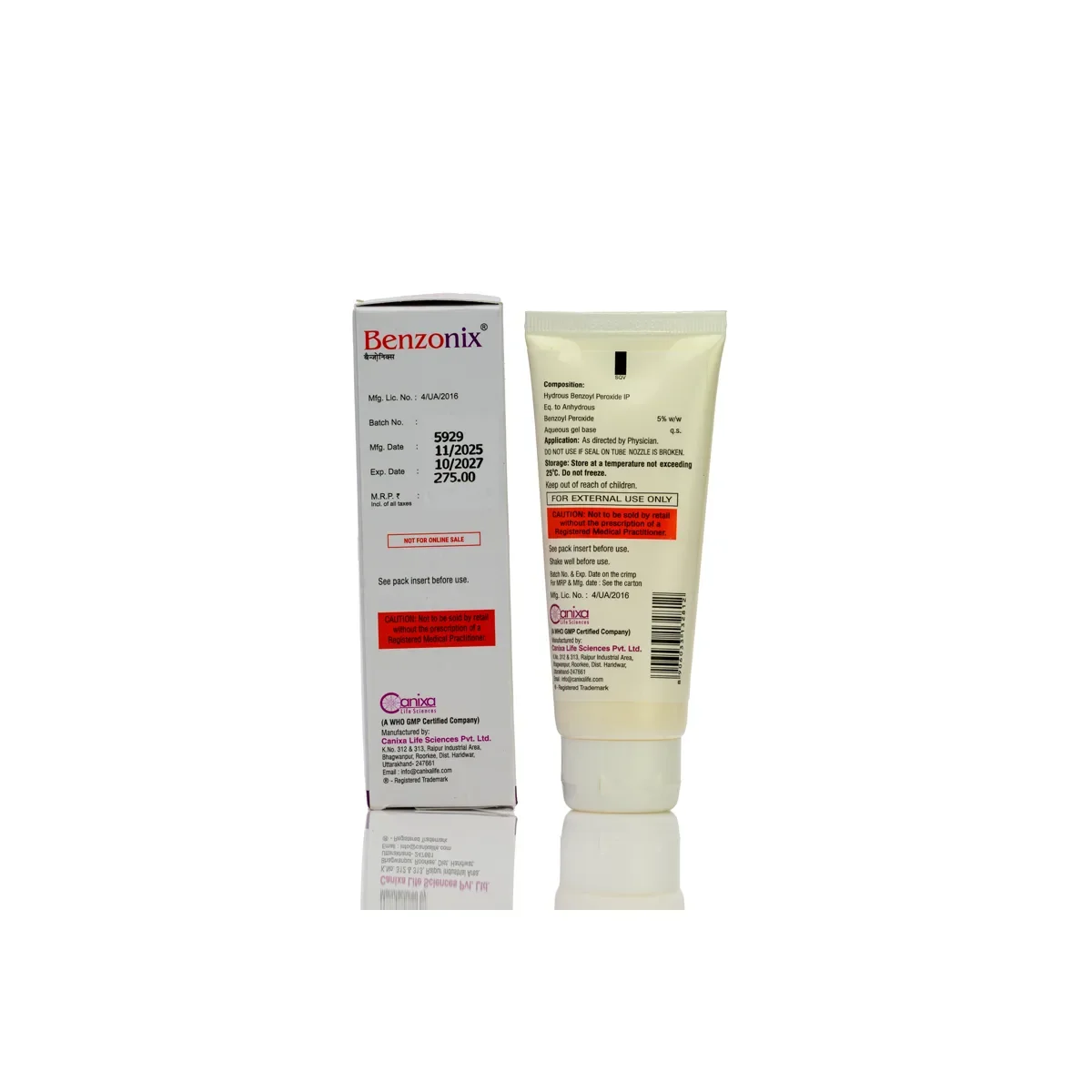
BENZONIX GEL WASH
CANIXA
60gm
The Science of Cleansers
CANIXA BENZONIX GEL WASH (60gm). Topical cleansing product for controlling acne causing bacteria and reduces excess sebum
Drug Facts
INGREDIENT · ANTIMICROBIAL AGENT, KERATOLYTIC
Benzoyl Peroxide
Function
Antimicrobial and keratolytic agent for acne vulgaris management
How it works
Benzoyl peroxide exerts bactericidal activity against Cutibacterium acnes through oxidative mechanisms that disrupt bacterial cell membranes and DNA. The agent also promotes keratolysis and may help normalize follicular keratinization, reducing comedone formation. Research indicates the ingredient has been shown to reduce bacterial colonization and associated inflammatory response in acne-prone skin. Additionally, studies suggest benzoyl peroxide may support reduction of surgical site infections caused by C. acnes in clinical settings.
⚑ For Indian skin (Fitzpatrick IV–VI)
Benzoyl peroxide requires careful consideration in Fitzpatrick IV-VI skin types prevalent in Kerala populations due to heightened post-inflammatory hyperpigmentation (PIH) risk with prolonged or excessive use. Studies suggest initiating therapy at lower concentrations (2.5-5%) and titrating upward to minimize irritation-induced PIH in Indian skin. In tropical Kerala climate with high humidity and heat, benzoyl peroxide formulation selection is critical—gel-based vehicles may be preferable to avoid excessive drying while cream-based formulations may occlude in perspiration. Recommend patch testing and gradual introduction, particularly when combined with other keratolytic or depigmenting agents, to mitigate risk of reactive hyperpigmentation in darker skin phenotypes.
Effective concentration
2.5–10 % w/w (optimal ~5% w/w)
Clinical evidence
Research indicates benzoyl peroxide application has been shown to reduce surgical site infections caused by Cutibacterium acnes in posterior spine surgery patients. Studies suggest the antimicrobial properties of benzoyl peroxide support clinically meaningful reduction in C. acnes-associated post-operative complications.
Not specified in abstract Neurosurgery. 2026. PubMed →
In a split-face trial of Asian patients using adapalene/benzoyl peroxide combination therapy, research indicates supportive moisturization (containing ceramide and panthenol) may help mitigate xerosis and irritation while maintaining acne lesion reduction efficacy. Studies suggest benzoyl peroxide-based regimens benefit from adjunctive hydrating formulations to improve tolerability and patient satisfaction.
Not specified in abstract Dermatology Reports. 2026. PubMed →
A systematic review and meta-analysis examined efficacy of Lactobacillus probiotics compared to benzoyl peroxide in reducing inflammatory lesions, non-inflammatory lesions, and total acne counts. Research indicates benzoyl peroxide remains a comparative standard for acne lesion reduction, with emerging probiotic therapies evaluated against this established benchmark.
Not specified in abstract Journal of Cosmetic Dermatology. 2026. PubMed →
Pairs well with
Adapalene · Azelaic Acid · Ceramide · Panthenol · Licochalcone A
Avoid combining with
Vitamin C (L-Ascorbic Acid) · Niacinamide (high concentrations) · Glycolic Acid (simultaneous application without buffering) · Tretinoin (without adequate spacing)