EV
01 / 03 Moisturisers
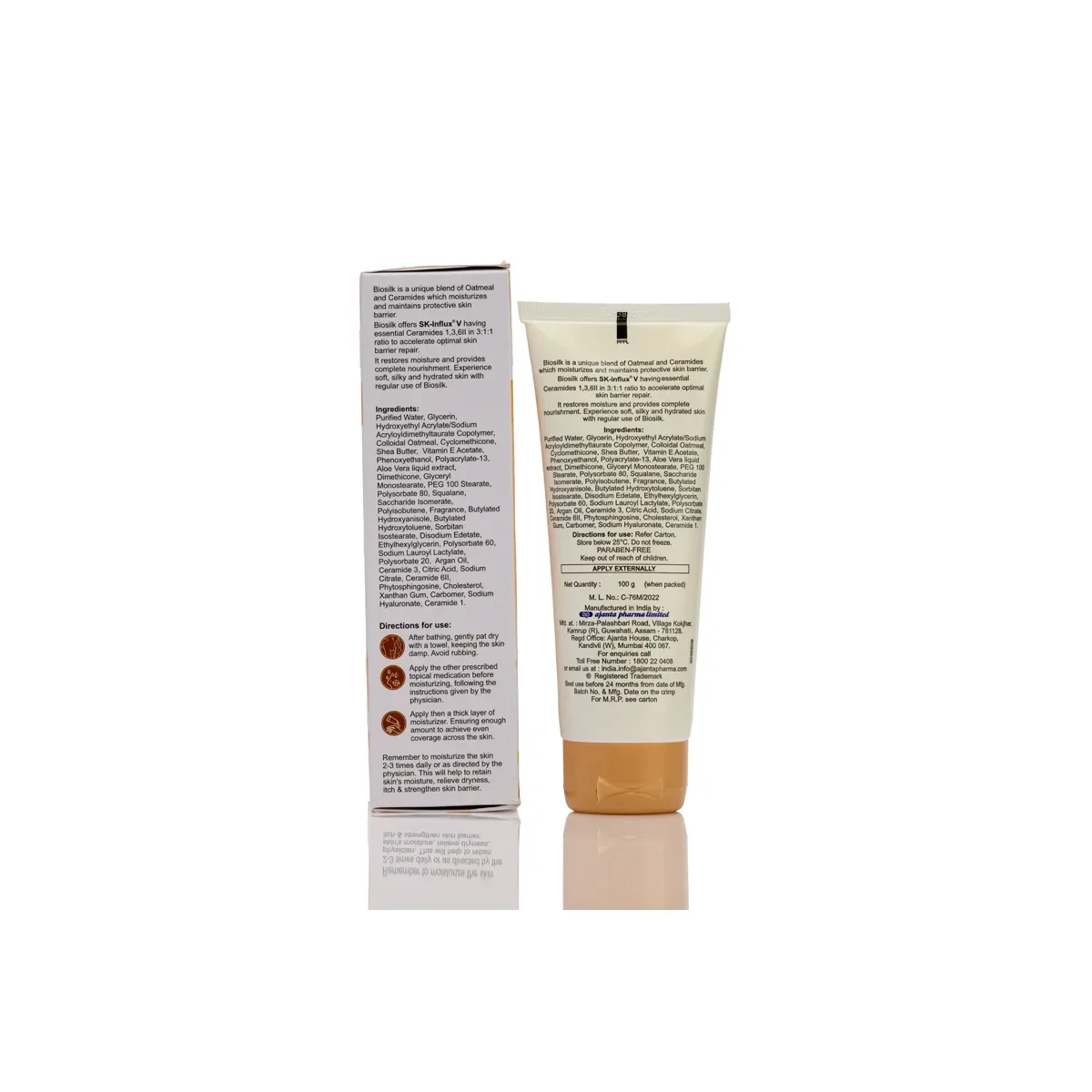
AQUREA 20 MOISTURIZING CREAM
AJANTA
100G
Clinical Efficacy Markers
- Colloidal Oatmeal
- Ceramide NP
- Ceramide AP
The Science of Moisturisers
AJANTA AQUREA 20 MOISTURIZING CREAM (100G)
Drug Facts
Purified Water, Glycerin, Dimethicone, Alkylpolysiloxane, Cyclomethicone, Colloidal Oatmeal, Cyclomethicone, Shea Butter, Vitamin E Acetate, Stearic Acid, Ceramide NP, Ceramide AP, Ceramide EOP, Phytosphingosine, Cholesterol, Aloe Vera liquid extract, Dimethicone, Sodium Hyaluronate, Polysorbate 80, Sorbitan Stearate, PEG-100 Stearate, Cetearyl Alcohol, Isopropyl Myristate, Methylparaben, PEG 100 Stearate, Carbomer, Phenoxyethanol, Pyrrolidone, Fragrance, Butylated Hydroxytoluene, Ethylhexylglycerin, Polysorbate 80, Argan Oil, Xanthan Gum, Carbomer, Sodium Hyaluronate, Ceramide 3, Citric Acid, Sodium Citrate, Disodium EDTA, Purified Water
INGREDIENT · LIPID HUMECTANT AND BARRIER REPAIR AGENT
Ceramide NP
also known as Ceramide NP, N-Palmitoyl Phytosphingosine
Function
Stratum corneum barrier restoration and transepidermal water loss reduction
How it works
Ceramide NP integrates into the stratum corneum lipid matrix, restoring barrier integrity and reducing water permeability through formation of organized lamellar structures. Research indicates that ceramide NP-containing membranes demonstrate significantly lower water permeability compared to other ceramide species such as ceramide NS. The ingredient may modulate skin microbiome composition via restoration of stratum corneum hydration and lipid content, potentially supporting immune regulation. Studies suggest ceramide NP exhibits superior retention in the stratum corneum compared to aqueous-based moisturizers, with ceramide content measurable up to 24 hours post-application.
⚑ For Indian skin (Fitzpatrick IV–VI)
Ceramide NP is particularly valuable for Fitzpatrick IV-VI skin types, which frequently present with compromised barrier function and increased transepidermal water loss secondary to environmental stressors and genetic predisposition. Studies suggest this ingredient may support barrier restoration without increasing postinflammatory hyperpigmentation (PIH) risk, as the mechanism is purely lipid-based restoration rather than inflammatory modulation. In Kerala's tropical humid climate with high ambient moisture, ceramide NP formulations demonstrate enhanced retention and efficacy; however, formulation vehicles should be carefully selected to avoid occlusive effects that may precipitate folliculitis in high-humidity environments. Research indicates ceramide NP is particularly beneficial in managing sensitive skin presentations common in Indian populations, where barrier dysfunction frequently coexists with melanin-rich skin phototypes.
Effective concentration
0.5–3 % w/w (optimal ~1% w/w)
Clinical evidence
Research indicates that ceramide-containing emollients may improve barrier function and modulate microbial communities through restoration of stratum corneum lipids, hydration, and immune regulation. Studies suggest these effects may help relieve symptoms associated with sensitive skin conditions.
Authors not listed Skin Pharmacology and Physiology. 2026. PubMed →
Research suggests that ceramide NP-containing formulations, when combined with complementary ingredients, may support management of sensitive skin conditions. Evidence indicates a holistic skincare approach incorporating ceramide NP may be beneficial in clinical practice.
Authors not listed Journal of Cosmetic Dermatology. 2025. PubMed →
Molecular dynamics simulations indicate that ceramide NP-containing stratum corneum lipid membranes demonstrate significantly lower water permeability compared to ceramide NS-containing systems. Research suggests ceramide NP is associated with healthy, unimpaired skin barrier function.
Authors not listed Molecular Pharmaceutics. 2025. PubMed →
Studies indicate that ceramide NP-based creams retain ceramide in the stratum corneum for extended periods (up to 24 hours post-application) compared to aqueous-based creams. Research validates improved ceramide delivery and retention with handheld confocal Raman spectroscopy assessment.
Authors not listed Journal of Biophotonics. 2025. PubMed →
Research suggests that topical application of ceramide-containing moisturizers may improve barrier function by increasing stratum corneum ceramide levels. Studies indicate ceramide absorption into the stratum corneum may enhance overall ceramide profiles and reduce transepidermal water loss.
Authors not listed Journal of Cosmetic Dermatology. 2025. PubMed →
Pairs well with
Panthenol · Centella asiatica extract · Cholesterol · Free fatty acids · Phytosphingosine · Niacinamide · Hyaluronic acid
INGREDIENT · SKIN CONDITIONING AGENT, BARRIER FUNCTION SUPPORT
Ceramide AP
also known as Ceramide [AP], α-hydroxy-phytosphingosine, CER[AP]
Function
May help support stratum corneum barrier integrity and skin hydration
How it works
Ceramide AP is an endogenous lipid component of the stratum corneum that research indicates may contribute to lamellar lipid organization and barrier structure. Studies suggest it integrates into intercellular lipid matrices alongside cholesterol and free fatty acids to maintain lamellar architecture. Research indicates the d-isomer configuration may help support native-like lipid phase behavior, which may have implications for barrier function restoration. Molecular dynamics simulations and neutron diffraction studies suggest ceramide AP influences stratum corneum nanostructure and water retention capacity.
⚑ For Indian skin (Fitzpatrick IV–VI)
Ceramide AP may be particularly relevant for Fitzpatrick IV-VI individuals in Kerala's tropical climate, where elevated humidity and heat can compromise stratum corneum barrier function and increase risk of inflammatory dermatoses. Research suggests maintaining adequate ceramide AP levels may help mitigate transepidermal water loss and reduced skin hydration that can exacerbate post-inflammatory hyperpigmentation (PIH) through inflammatory pathways. Studies indicate ceramide AP integration into barrier structure may help reduce irritant penetration and inflammatory triggers that disproportionately affect melanin-rich skin phenotypes. The Kerala tropical climate with high humidity may paradoxically increase barrier dysfunction through osmotic stress, making ceramide AP supplementation potentially beneficial for barrier maintenance and PIH prevention strategies.
Effective concentration
0.5–5 % w/w in formulations (optimal ~2% w/w in formulations)
Clinical evidence
Research indicates that oral administration of lactic acid bacteria metabolites improved ceramide AP content in the stratum corneum and reduced transepidermal water loss in an atopic dermatitis-like murine model. Studies suggest the lipid fraction derived from bacterial metabolites may help support ceramide AP restoration and barrier function improvement. Evidence indicates these effects were associated with normalized stratum corneum water content and reduced epidermal thickness.
Study authors not specified in abstract Nutrients. 2018. PubMed →
Research using neutron diffraction indicates that ceramide AP in combination with ceramide NS, cholesterol, and lignoceric acid forms lamellar structures with repeat distances of 5.34-5.43 nm in stratum corneum model systems. Studies suggest these lipid mixtures display slightly tilted ceramide arrangements with overlapping C24 chains in the lamellar mid-plane. Evidence indicates water content and structure remain stable under varying humidity conditions.
Study authors not specified in abstract Chemistry and Physics of Lipids. 2018. PubMed →
Research indicates that the d-isomer (natural form) of ceramide AP promotes native-like lipid phase behavior when combined with other stratum corneum lipids, while the l-isomer shows crystalline-like characteristics. Studies suggest the d-ceramide AP configuration may be more appropriate for barrier restoration applications. Evidence indicates isomer-specific differences in lamellar organization may have implications for ceramide replacement therapies.
Study authors not specified in abstract Chemistry and Physics of Lipids. 2017. PubMed →
Research indicates that coarse-grain molecular dynamics models of ceramide AP have been developed and validated against atomistic simulations and experimental data. Studies suggest these computational models may help elucidate the structural role of ceramide AP in stratum corneum barrier organization. Evidence indicates these models can capture ceramide AP interactions with other major skin lipids and cholesterol at biologically relevant time and length scales.
Study authors not specified in abstract Journal of Molecular Modeling. 2020. PubMed →
Research indicates that ceramide AP-containing model lipid mixtures (CER[AP]/stearic acid/cholesterol) mimic intercellular lipid organization in the stratum corneum. Studies suggest synthetic surfactants alter the surface properties and rheological behavior of these ceramide AP-containing systems. Evidence indicates ceramide AP-containing lipid systems demonstrate distinct mechanical properties compared to phospholipid-cholesterol mixtures.
Study authors not specified in abstract Biochimica et Biophysica Acta. Biomembranes. 2019. PubMed →
Pairs well with
Cholesterol · Lignoceric acid · Stearic acid · Ceramide NS · Ceramide NP · Phytosphingosine
INGREDIENT · HUMECTANT, HYDRATING AGENT
Sodium Hyaluronate
also known as Hyaluronic Acid Sodium Salt
Function
May help support skin hydration and moisture retention through hygroscopic properties
How it works
Sodium hyaluronate is a sodium salt of hyaluronic acid that may help bind water molecules in the stratum corneum and dermis, potentially enhancing skin hydration. Research indicates it can penetrate the skin barrier when formulated with appropriate adjuvants and amino acids. Studies suggest the ingredient maintains structural stability during gastrointestinal transit and may exert antioxidant and anti-inflammatory effects when combined with complementary actives. The molecule's ability to modulate CD44 receptor expression has been shown in in vitro keratinocyte models.
⚑ For Indian skin (Fitzpatrick IV–VI)
Sodium hyaluronate has been shown to support hydration in deeper skin tones where transepidermal water loss may be elevated, particularly relevant in Kerala's humid tropical climate where excessive moisture can paradoxically lead to dehydration due to osmotic stress. Research indicates the ingredient does not increase melanin synthesis or phototoxic potential in Fitzpatrick IV-VI skin types. However, formulations should be carefully evaluated as combination products (particularly those with amino acids or cross-linked derivatives) may require stability testing under tropical humidity and heat conditions to prevent degradation. Clinical consideration should be given to post-inflammatory hyperpigmentation risk with injectable formulations in darker skin types, requiring careful injection technique and avoidance of trauma.
Effective concentration
0.1–2 %w/w (optimal ~0.5%w/w)
Clinical evidence
Research indicates that sodium hyaluronate combined with amino acids (glycine, alanine, proline) may enhance moisturizing performance compared to mono-component formulations. Studies suggest this combination strategy may reduce dosing frequency and improve hydration efficacy in skin rejuvenation applications.
Not specified in abstract Journal of Cosmetic Dermatology. 2026. PubMed →
Research suggests that hyaluronic acid derivatives demonstrate high structural stability across gastrointestinal stages and may exert superior antioxidant and anti-inflammatory activity. Studies indicate efficient intestinal barrier penetration without increased enzymatic degradation, with potential upregulation of CD44 receptor expression in keratinocytes.
Not specified in abstract Foods (Basel, Switzerland). 2026. PubMed →
Studies indicate sodium hyaluronate can be successfully formulated in hydrogel systems with complementary ingredients such as xanthan gum, demonstrating adequate physical and microbiological stability over extended storage periods. Research suggests these formulations maintain tunable rheological properties suitable for dermal administration.
Not specified in abstract Gels (Basel, Switzerland). 2026. PubMed →
Pairs well with
Glycerin · Propylene Glycol · Amino Acids (Glycine, Alanine, Proline) · Xanthan Gum · Panthenol · Niacinamide · Ceramides · Lactic Acid
Avoid combining with
High concentrations of alcohol (may cause osmotic dehydration) · Strong chemical exfoliants at high pH (may impair hyaluronic acid stability) · BDDE cross-linked derivatives in certain formulations (safety considerations)