ACZEE OTC
Browse only · Order via clinic
 EV
EV ACZEE SERUM
ACZEE ₹1,499 incl. of all taxes
View product
Online ordering is paused while we finalize fulfillment. Browse our products and consult via WhatsApp or visit any DermaVue clinic to order.
 01 / 03
 Anti-Acne
LAPRISTINE
50ML
Curated by DermaVue Clinical Board
₹531
Members save more — join free
Inclusive of all taxes
Free clinic pickup · Courier ₹49, free from ₹999
Clinical Efficacy Markers
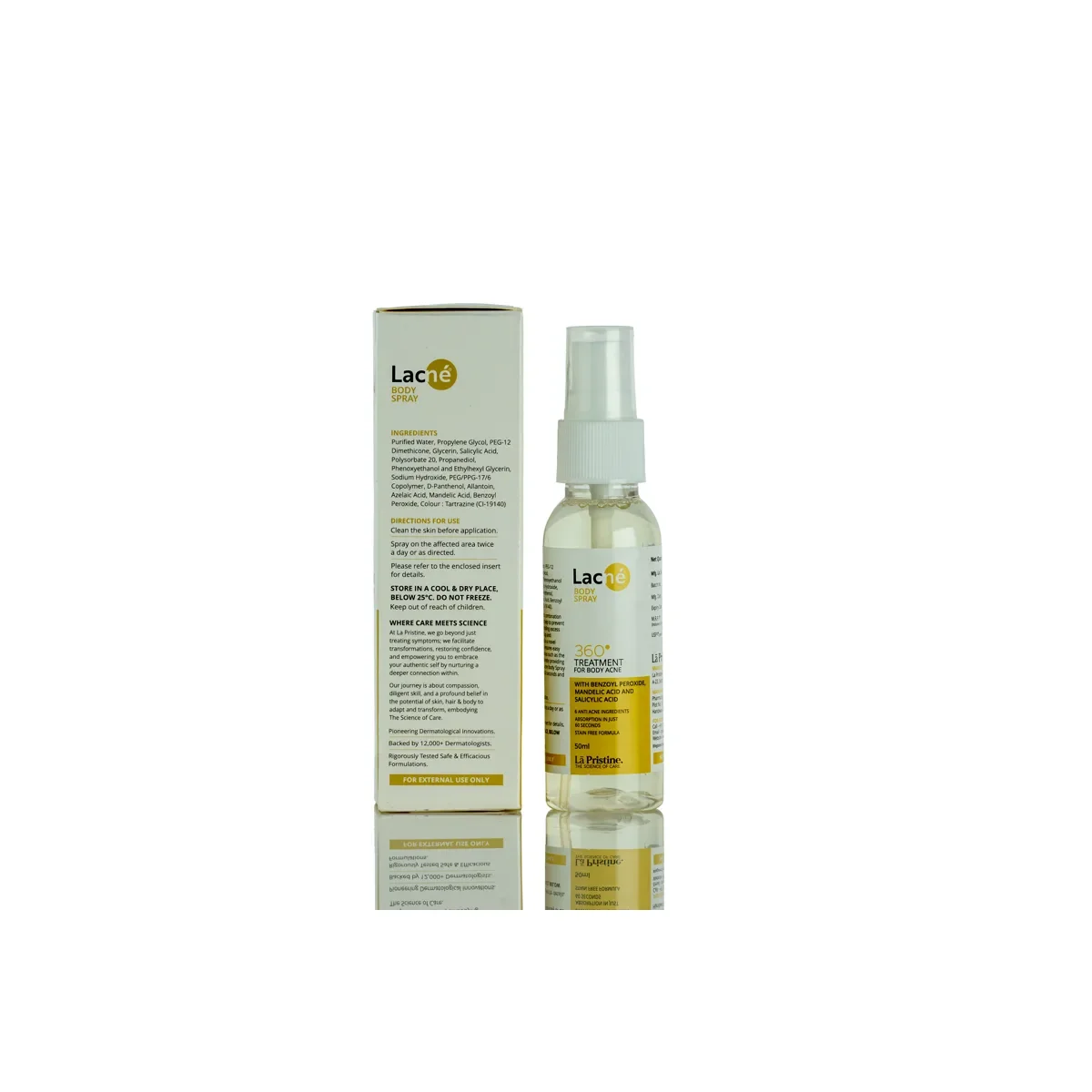
LAPRISTINE LACNE BODY SPRAY (50ML)
Purified Water, Propylene Glycol, PEG 12 Dimethicone, Glycerin, Isopropyl Alcohol, Phenoxyethanol and Ethylhexyl Glycerin, Sodium Hyaluronate, BioDP Plus, Lactic Acid, Azelaic Acid, Mandelic Acid, Benzoyl Peroxide, Salicylic Acid, Dimethyl Isosorbide, Niacinamide, Fragrance, DMDM Hydantoin
INGREDIENT · ANTIMICROBIAL AGENT, KERATOLYTIC
Antimicrobial and keratolytic agent for acne vulgaris management
Benzoyl peroxide exerts bactericidal activity against Cutibacterium acnes through oxidative mechanisms that disrupt bacterial cell membranes and DNA. The agent also promotes keratolysis and may help normalize follicular keratinization, reducing comedone formation. Research indicates the ingredient has been shown to reduce bacterial colonization and associated inflammatory response in acne-prone skin. Additionally, studies suggest benzoyl peroxide may support reduction of surgical site infections caused by C. acnes in clinical settings.
Benzoyl peroxide requires careful consideration in Fitzpatrick IV-VI skin types prevalent in Kerala populations due to heightened post-inflammatory hyperpigmentation (PIH) risk with prolonged or excessive use. Studies suggest initiating therapy at lower concentrations (2.5-5%) and titrating upward to minimize irritation-induced PIH in Indian skin. In tropical Kerala climate with high humidity and heat, benzoyl peroxide formulation selection is critical—gel-based vehicles may be preferable to avoid excessive drying while cream-based formulations may occlude in perspiration. Recommend patch testing and gradual introduction, particularly when combined with other keratolytic or depigmenting agents, to mitigate risk of reactive hyperpigmentation in darker skin phenotypes.
2.5–10 % w/w (optimal ~5% w/w)
Research indicates benzoyl peroxide application has been shown to reduce surgical site infections caused by Cutibacterium acnes in posterior spine surgery patients. Studies suggest the antimicrobial properties of benzoyl peroxide support clinically meaningful reduction in C. acnes-associated post-operative complications.
Not specified in abstract Neurosurgery. 2026. PubMed →
In a split-face trial of Asian patients using adapalene/benzoyl peroxide combination therapy, research indicates supportive moisturization (containing ceramide and panthenol) may help mitigate xerosis and irritation while maintaining acne lesion reduction efficacy. Studies suggest benzoyl peroxide-based regimens benefit from adjunctive hydrating formulations to improve tolerability and patient satisfaction.
Not specified in abstract Dermatology Reports. 2026. PubMed →
A systematic review and meta-analysis examined efficacy of Lactobacillus probiotics compared to benzoyl peroxide in reducing inflammatory lesions, non-inflammatory lesions, and total acne counts. Research indicates benzoyl peroxide remains a comparative standard for acne lesion reduction, with emerging probiotic therapies evaluated against this established benchmark.
Not specified in abstract Journal of Cosmetic Dermatology. 2026. PubMed →
Adapalene · Azelaic Acid · Ceramide · Panthenol · Licochalcone A
Vitamin C (L-Ascorbic Acid) · Niacinamide (high concentrations) · Glycolic Acid (simultaneous application without buffering) · Tretinoin (without adequate spacing)
INGREDIENT · BETA-HYDROXY ACID (BHA), KERATOLYTIC AGENT
also known as 2-hydroxybenzoic acid
Keratolytic exfoliation and comedolytic agent with potential anti-inflammatory and antimicrobial properties
Salicylic acid penetrates the lipophilic stratum corneum to dissolve intercellular cement and promote desquamation of hyperkeratinized skin. Research indicates the ingredient may modulate sebum production and reduce comedone formation through keratin dissolution. Studies suggest it may help support skin barrier function normalization and have been shown to support adjunctive roles in combination protocols for various keratotic and inflammatory conditions. The mechanism involves both mechanical exfoliation and potential immunomodulatory effects when combined with debridement or occlusion strategies.
Salicylic acid may be utilized in Fitzpatrick IV-VI skin types, though careful monitoring is essential given the elevated risk of post-inflammatory hyperpigmentation (PIH) in individuals with skin of color. Research indicates patients with darker skin phototypes demonstrate heightened susceptibility to dyspigmentation following keratolytic treatments, particularly when combined with mechanical trauma or inadequate sun protection. In Kerala's tropical humid climate, occlusive formulations may increase absorption and irritation risk; lower starting concentrations (0.5-2%) are suggested with gradual titration. Sun protection (SPF 30+) is crucial post-treatment, as UVB exposure may exacerbate PIH risk. Discontinuation should be considered if erythema, irritation, or pigmentary changes develop.
0.5–6 %w/w (optimal ~2%w/w)
Research indicates that salicylic acid, when combined with systematic mechanical debridement and occlusion therapy, may help support enhanced wart clearance with observable softening and size reduction within 6-12 weeks. Studies suggest that precise debridement coupled with adjunctive salicylic acid application may improve therapeutic penetration and support immune activation while maintaining safety through structured endpoint recognition.
Study authors not specified Advances in Skin & Wound Care. 2026. PubMed →
Evidence indicates that salicylic acid peels, when combined with modern tranexamic acid formulations in integrated skincare regimens, may help support improved pigmentary outcomes and skin texture improvements. Research suggests that pairing salicylic acid procedures with complementary topical agents may accelerate improvement in dyspigmentation and offer added benefits for skin radiance.
Study authors not specified Journal of Drugs in Dermatology. 2026. PubMed →
Systematic review findings indicate that topical salicylic acid, particularly when combined with complementary ingredients such as L-carnitine and licochalcone-A, may help support reduction in acne lesions and post-inflammatory hyperpigmentation. Research suggests synergistic formulations may enhance efficacy in management of multiple skin concerns simultaneously.
Study authors not specified Journal of Cutaneous Medicine and Surgery. 2026. PubMed →
Literature review indicates that topical salicylic acid has been shown as a conventional therapeutic option for aquagenic palmoplantar keratoderma management. Research suggests it may help support symptom mitigation in keratotic disorders, though efficacy varies by patient and may require combination approaches with barrier agents and other adjunctive therapies.
Study authors not specified Clinical, Cosmetic and Investigational Dermatology. 2026. PubMed →
Research review emphasizes that post-inflammatory hyperpigmentation risk is significantly elevated in Fitzpatrick IV-VI individuals, highlighting the need for careful consideration when utilizing keratolytic agents. Studies indicate that prompt diagnosis and management, including judicious use of keratolytic treatments alongside protective measures, may help support improved outcomes and quality of life in individuals with skin of color.
Study authors not specified Journal of Cutaneous Medicine and Surgery. 2026. PubMed →
Niacinamide · Centella Asiatica Extract · Azelaic Acid · Glycolic Acid · L-Carnitine · Tranexamic Acid · Licochalcone A · Sunscreen agents (mineral and chemical)
Benzoyl Peroxide (may be less stable in combination) · Vitamin C (L-Ascorbic Acid, pH-dependent interaction) · Strong Retinoids (increased irritation risk) · Aluminium Chloride (may increase keratolytic effect excessively)
INGREDIENT · VITAMIN B COMPLEX, SKIN CONDITIONING AGENT
also known as Vitamin B3, Nicotinamide
Barrier support, melanin transfer inhibition, anti-inflammatory, skin tone regulation
Niacinamide functions through multiple pathways including inhibition of melanosome transfer from melanocytes to keratinocytes, thereby potentially reducing hyperpigmentation. Research indicates it modulates skin barrier function by supporting ceramide and lipid synthesis, while simultaneously exerting anti-inflammatory effects through NAD+ pathway involvement. Studies suggest niacinamide's transdermal delivery is pH-dependent, with neutral formulation pH (7.4) facilitating approximately twofold greater skin permeation compared to acidic pH, which may enhance its biological activity.
Niacinamide demonstrates particular relevance for Fitzpatrick IV-VI skin types, where post-inflammatory hyperpigmentation (PIH) and melasma represent significant clinical concerns, especially in Indian populations with genetic predisposition to melanin dysregulation. In Kerala's tropical climate with high UV exposure, niacinamide's dual mechanism—supporting barrier integrity against environmental stressors while inhibiting melanin transfer—offers protective benefits without photosensitization risk. Research indicates that niacinamide formulations optimized at neutral pH may enhance efficacy in darker skin phototypes where enhanced permeation facilitates superior melanin transfer inhibition, making it particularly suitable for Indian dermatological practice where melasma prevalence ranges from 8-40% in certain populations. Local humidity and heat may increase transepidermal water loss in tropical settings; niacinamide's barrier-strengthening properties may provide compensatory protection.
2–10 %w/w (optimal ~4%w/w)
Large database analysis examining niacinamide's potential role in skin cancer prevention through supplementation.
Not specified in abstract provided Journal of the American Academy of Dermatology. 2026. PubMed →
Research indicates that neutral pH (7.4) formulations increase niacinamide skin permeation approximately twofold compared to acidic pH (5.0), with corresponding changes in stratum corneum electrical properties facilitating enhanced transdermal delivery. Studies employed Franz cell diffusion experiments and electrical impedance spectroscopy using human skin models to characterize pH-dependent permeation mechanisms.
Not specified in abstract provided Scientific Reports. 2026. PubMed →
Research indicates that dissolving microneedle patches containing niacinamide exhibit greater skin-lightening effects than traditional topical formulations for treating melasma and post-inflammatory hyperpigmentation. Clinical studies have validated safety and efficacy with minimal adverse effects when using advanced transdermal delivery systems.
Not specified in abstract provided Recent Advances in Drug Delivery and Formulation. 2026. PubMed →
Systematic umbrella review evaluating nutritional supplements including niacinamide for primary prevention of skin diseases across 9,229 participants, examining preventive effects against ultraviolet radiation-induced skin pathology and other dermatological conditions.
Not specified in abstract provided Preventive Nutrition and Food Science. 2026. PubMed →
Research comparing glabridin with niacinamide as recognized inhibitor of melanosome transfer in UVB-irradiated co-culture systems demonstrated complementary mechanisms for reducing melanin transfer from melanocytes to keratinocytes through dendrite suppression pathways.
Not specified in abstract provided Pharmaceuticals (Basel, Switzerland). 2026. PubMed →
Glabridin · Tranexamic acid · Ceramides · Hyaluronic acid · Panthenol · Zinc compounds
INGREDIENT · HUMECTANT, EXFOLIANT, PH BUFFER
Chemical exfoliant and skin conditioning agent with potential keratolytic and moisturizing properties
Lactic acid functions as an alpha-hydroxy acid (AHA) that may help dissolve intercellular lipids in the stratum corneum, potentially facilitating desquamation and improving skin texture. Research indicates it may support skin barrier function through hydration enhancement and may modulate inflammatory responses. Studies suggest lactic acid has been investigated in composite delivery systems where it may accelerate early cellular proliferation and contribute to pro-regenerative microenvironments in dermal remodeling contexts.
Lactic acid in Indian skin (Fitzpatrick IV-VI) requires cautious application due to heightened risk of post-inflammatory hyperpigmentation (PIH), particularly with concentrations above 8% or prolonged exposure. Kerala's tropical climate with high humidity and UV intensity may increase sensitization risk and necessitate robust photoprotection (SPF 50+ UVA/UVB) during daytime use. Lower starting concentrations (2-4%) are recommended for darker skin phototypes, with gradual titration every 1-2 weeks while monitoring for erythema, irritation, or PIH development. Combination with niacinamide or centella asiatica may help mitigate inflammatory responses in individuals with sensitive melanin-rich skin.
2–12 %w/w (optimal ~5%w/w)
Research indicates that poly-L-lactic acid microspheres may support early cellular proliferation and contribute to pro-regenerative microenvironments through controlled release mechanisms. Studies suggest lactic acid from these delivery systems may modulate macrophage infiltration and upregulate TGF-β expression, potentially facilitating endogenous collagen regeneration and sustained tissue remodeling.
Not specified in abstract ACS Applied Materials & Interfaces. 2026. PubMed →
Emerging evidence suggests that chemical peels, which may incorporate alpha-hydroxy acids such as lactic acid, represent direct regenerative interventions with potential to modulate skin homeostasis. Research indicates such approaches may contribute to visible aging reversal through mechanisms involving systemic physiological resilience pathways.
Not specified in abstract Molecules (Basel, Switzerland). 2026. PubMed →
Niacinamide · Centella Asiatica Extract · Hyaluronic Acid · Glycerin · Panthenol · Allantoin · Zinc PCA
Benzoyl Peroxide · Vitamin C (L-Ascorbic Acid) at high pH variance · Retinol in same formulation (pH incompatibility) · High-concentration Alpha-Hydroxy Acids (concurrent use) · Strong oxidizing agents
INGREDIENT · DICARBOXYLIC ACID
May help support skin brightening, anti-inflammatory, and antimicrobial effects
Azelaic acid has been shown to modulate melanin synthesis through potential PPAR-γ pathway activation and may suppress pro-inflammatory cytokines (TNF-α, IL-8, PGE-2). Research indicates the ingredient may exert antimicrobial effects against acne-associated bacteria and may help reduce inflammatory responses in hyperpigmented skin conditions. Studies suggest azelaic acid's dicarboxylic structure enables multiple bioactive sites for cellular interaction, though transdermal bioavailability has historically been limited by poor water solubility.
Azelaic acid may help support management of melasma and post-inflammatory hyperpigmentation (PIH), which are particularly prevalent in Fitzpatrick IV-VI skin types including Indian populations. Research suggests the ingredient's anti-melanogenic mechanisms may be beneficial for addressing hyperpigmentation disorders common in darker skin phenotypes, though individual variability in response exists. In Kerala's tropical climate with high UV exposure, azelaic acid use should be combined with strict broad-spectrum photoprotection (SPF 50+) to mitigate photosensitivity risks and prevent exacerbation of melasma. Studies indicate formulations with enhanced solubility (such as cocrystal or deep eutectic systems) may reduce skin irritation in individuals with sensitive or reactive darker skin types, making them potentially preferable for extended use in this population.
15–20 % w/w (optimal ~15% w/w)
Research indicates that azelaic acid formulated as therapeutic deep eutectic systems with D-panthenol demonstrated significantly improved water solubility and transdermal permeability compared to raw azelaic acid material. Studies showed the optimized formulation (1:2 molar ratio) displayed reduced skin irritation, improved antimicrobial and anti-inflammatory efficacy, and enhanced bioactivity, suggesting advanced delivery technologies may improve clinical utility in dermatological applications.
RSC Advances Contributors RSC Advances. 2026. PubMed →
Research demonstrates that azelaic acid-nicotinamide cocrystal architecture achieved a 9.6-fold enhancement in aqueous solubility and enhanced PPAR-γ binding capacity. Studies indicate this supramolecular formulation may suppress pro-inflammatory cytokines (TNF-α, IL-8, PGE-2) and reduce melanin levels in vitro, with clinical validation suggesting 3% essence concentrations supported significant skin brightening effects in human subjects.
Journal of Materials Chemistry B Contributors Journal of Materials Chemistry B. 2026. PubMed →
Research indicates that azelaic acid in combination with natural botanical extracts showed anti-melanogenic potential in emulsion formulations. Studies suggest such combination approaches may offer sustained efficacy for addressing skin hyperpigmentation concerns with potentially enhanced tolerability profiles.
Current Pharmaceutical Design Contributors Current Pharmaceutical Design. 2026. PubMed →
Niacinamide · D-Panthenol · Glycerin · Sodium Hyaluronate · Vitamin E · Allantoin
Benzoyl Peroxide (may increase irritation) · Retinoids (simultaneous high-potency use may cause cumulative irritation)
INGREDIENT · HUMECTANT, HYDRATING AGENT
also known as Hyaluronic Acid Sodium Salt
May help support skin hydration and moisture retention through hygroscopic properties
Sodium hyaluronate is a sodium salt of hyaluronic acid that may help bind water molecules in the stratum corneum and dermis, potentially enhancing skin hydration. Research indicates it can penetrate the skin barrier when formulated with appropriate adjuvants and amino acids. Studies suggest the ingredient maintains structural stability during gastrointestinal transit and may exert antioxidant and anti-inflammatory effects when combined with complementary actives. The molecule's ability to modulate CD44 receptor expression has been shown in in vitro keratinocyte models.
Sodium hyaluronate has been shown to support hydration in deeper skin tones where transepidermal water loss may be elevated, particularly relevant in Kerala's humid tropical climate where excessive moisture can paradoxically lead to dehydration due to osmotic stress. Research indicates the ingredient does not increase melanin synthesis or phototoxic potential in Fitzpatrick IV-VI skin types. However, formulations should be carefully evaluated as combination products (particularly those with amino acids or cross-linked derivatives) may require stability testing under tropical humidity and heat conditions to prevent degradation. Clinical consideration should be given to post-inflammatory hyperpigmentation risk with injectable formulations in darker skin types, requiring careful injection technique and avoidance of trauma.
0.1–2 %w/w (optimal ~0.5%w/w)
Research indicates that sodium hyaluronate combined with amino acids (glycine, alanine, proline) may enhance moisturizing performance compared to mono-component formulations. Studies suggest this combination strategy may reduce dosing frequency and improve hydration efficacy in skin rejuvenation applications.
Not specified in abstract Journal of Cosmetic Dermatology. 2026. PubMed →
Research suggests that hyaluronic acid derivatives demonstrate high structural stability across gastrointestinal stages and may exert superior antioxidant and anti-inflammatory activity. Studies indicate efficient intestinal barrier penetration without increased enzymatic degradation, with potential upregulation of CD44 receptor expression in keratinocytes.
Not specified in abstract Foods (Basel, Switzerland). 2026. PubMed →
Studies indicate sodium hyaluronate can be successfully formulated in hydrogel systems with complementary ingredients such as xanthan gum, demonstrating adequate physical and microbiological stability over extended storage periods. Research suggests these formulations maintain tunable rheological properties suitable for dermal administration.
Not specified in abstract Gels (Basel, Switzerland). 2026. PubMed →
Glycerin · Propylene Glycol · Amino Acids (Glycine, Alanine, Proline) · Xanthan Gum · Panthenol · Niacinamide · Ceramides · Lactic Acid
High concentrations of alcohol (may cause osmotic dehydration) · Strong chemical exfoliants at high pH (may impair hyaluronic acid stability) · BDDE cross-linked derivatives in certain formulations (safety considerations)
This platform is operated by DermaVue Skin & Hair Clinics, an IADVL-registered dermatology practice. Products listed are for informational purposes. Prescription medications require a valid prescription from a registered medical practitioner. Self-medication is not advised. Please consult your dermatologist before starting any new skincare regimen.