EV
01 / 03 Cleansers
OPTIMUS FACEWASH
Clinical Efficacy Markers
- Azelaic Acid
- Niacinamide
The Science of Cleansers
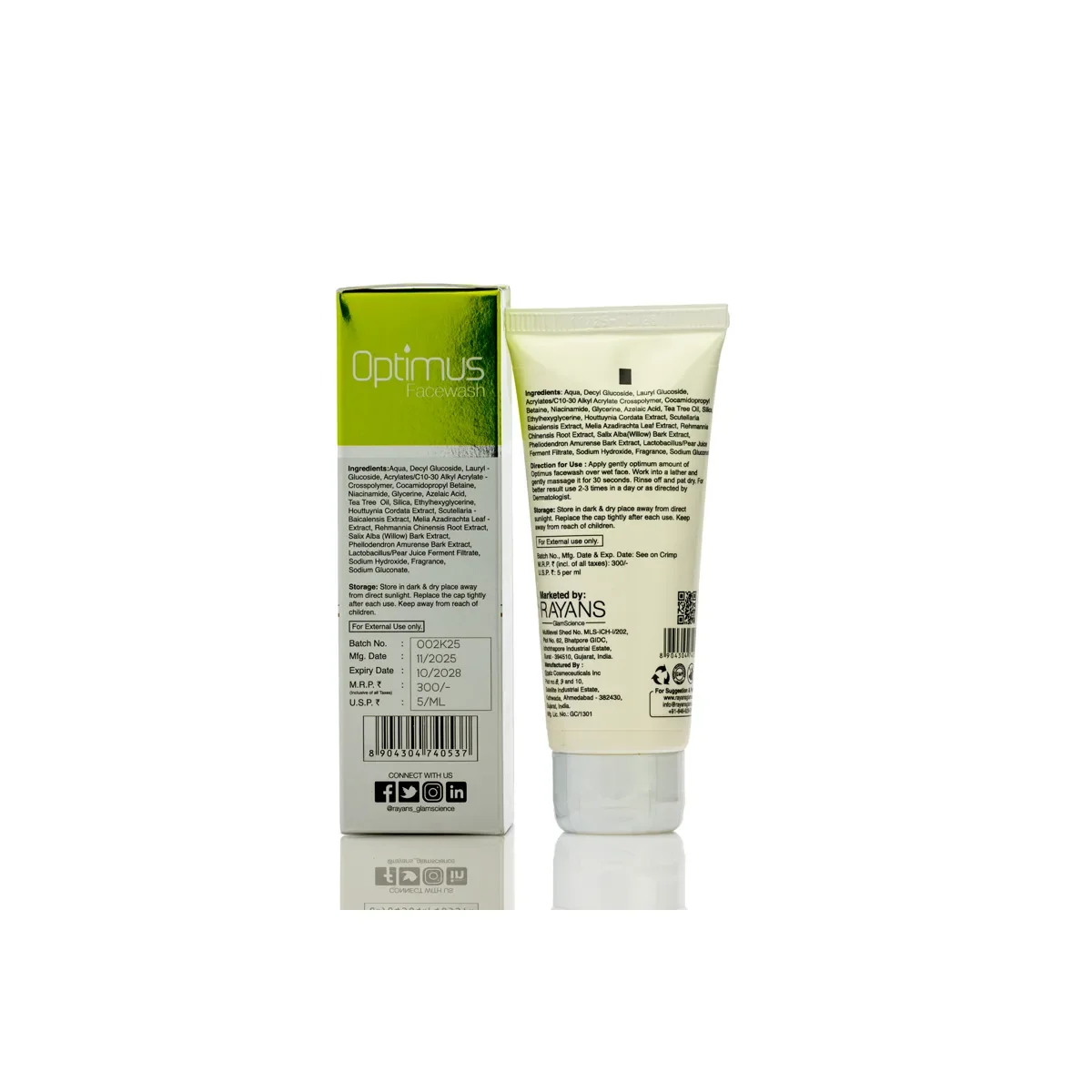
RAYANS OPTIMUS FACEWASH (60 ml). Topical cleansing product for controlling acne
Drug Facts
INGREDIENT · DICARBOXYLIC ACID
Azelaic Acid
Function
May help support skin brightening, anti-inflammatory, and antimicrobial effects
How it works
Azelaic acid has been shown to modulate melanin synthesis through potential PPAR-γ pathway activation and may suppress pro-inflammatory cytokines (TNF-α, IL-8, PGE-2). Research indicates the ingredient may exert antimicrobial effects against acne-associated bacteria and may help reduce inflammatory responses in hyperpigmented skin conditions. Studies suggest azelaic acid's dicarboxylic structure enables multiple bioactive sites for cellular interaction, though transdermal bioavailability has historically been limited by poor water solubility.
⚑ For Indian skin (Fitzpatrick IV–VI)
Azelaic acid may help support management of melasma and post-inflammatory hyperpigmentation (PIH), which are particularly prevalent in Fitzpatrick IV-VI skin types including Indian populations. Research suggests the ingredient's anti-melanogenic mechanisms may be beneficial for addressing hyperpigmentation disorders common in darker skin phenotypes, though individual variability in response exists. In Kerala's tropical climate with high UV exposure, azelaic acid use should be combined with strict broad-spectrum photoprotection (SPF 50+) to mitigate photosensitivity risks and prevent exacerbation of melasma. Studies indicate formulations with enhanced solubility (such as cocrystal or deep eutectic systems) may reduce skin irritation in individuals with sensitive or reactive darker skin types, making them potentially preferable for extended use in this population.
Effective concentration
15–20 % w/w (optimal ~15% w/w)
Clinical evidence
Research indicates that azelaic acid formulated as therapeutic deep eutectic systems with D-panthenol demonstrated significantly improved water solubility and transdermal permeability compared to raw azelaic acid material. Studies showed the optimized formulation (1:2 molar ratio) displayed reduced skin irritation, improved antimicrobial and anti-inflammatory efficacy, and enhanced bioactivity, suggesting advanced delivery technologies may improve clinical utility in dermatological applications.
RSC Advances Contributors RSC Advances. 2026. PubMed →
Research demonstrates that azelaic acid-nicotinamide cocrystal architecture achieved a 9.6-fold enhancement in aqueous solubility and enhanced PPAR-γ binding capacity. Studies indicate this supramolecular formulation may suppress pro-inflammatory cytokines (TNF-α, IL-8, PGE-2) and reduce melanin levels in vitro, with clinical validation suggesting 3% essence concentrations supported significant skin brightening effects in human subjects.
Journal of Materials Chemistry B Contributors Journal of Materials Chemistry B. 2026. PubMed →
Research indicates that azelaic acid in combination with natural botanical extracts showed anti-melanogenic potential in emulsion formulations. Studies suggest such combination approaches may offer sustained efficacy for addressing skin hyperpigmentation concerns with potentially enhanced tolerability profiles.
Current Pharmaceutical Design Contributors Current Pharmaceutical Design. 2026. PubMed →
Pairs well with
Niacinamide · D-Panthenol · Glycerin · Sodium Hyaluronate · Vitamin E · Allantoin
Avoid combining with
Benzoyl Peroxide (may increase irritation) · Retinoids (simultaneous high-potency use may cause cumulative irritation)
INGREDIENT · VITAMIN B COMPLEX, SKIN CONDITIONING AGENT
Niacinamide
also known as Vitamin B3, Nicotinamide
Function
Barrier support, melanin transfer inhibition, anti-inflammatory, skin tone regulation
How it works
Niacinamide functions through multiple pathways including inhibition of melanosome transfer from melanocytes to keratinocytes, thereby potentially reducing hyperpigmentation. Research indicates it modulates skin barrier function by supporting ceramide and lipid synthesis, while simultaneously exerting anti-inflammatory effects through NAD+ pathway involvement. Studies suggest niacinamide's transdermal delivery is pH-dependent, with neutral formulation pH (7.4) facilitating approximately twofold greater skin permeation compared to acidic pH, which may enhance its biological activity.
⚑ For Indian skin (Fitzpatrick IV–VI)
Niacinamide demonstrates particular relevance for Fitzpatrick IV-VI skin types, where post-inflammatory hyperpigmentation (PIH) and melasma represent significant clinical concerns, especially in Indian populations with genetic predisposition to melanin dysregulation. In Kerala's tropical climate with high UV exposure, niacinamide's dual mechanism—supporting barrier integrity against environmental stressors while inhibiting melanin transfer—offers protective benefits without photosensitization risk. Research indicates that niacinamide formulations optimized at neutral pH may enhance efficacy in darker skin phototypes where enhanced permeation facilitates superior melanin transfer inhibition, making it particularly suitable for Indian dermatological practice where melasma prevalence ranges from 8-40% in certain populations. Local humidity and heat may increase transepidermal water loss in tropical settings; niacinamide's barrier-strengthening properties may provide compensatory protection.
Effective concentration
2–10 %w/w (optimal ~4%w/w)
Clinical evidence
Large database analysis examining niacinamide's potential role in skin cancer prevention through supplementation.
Not specified in abstract provided Journal of the American Academy of Dermatology. 2026. PubMed →
Research indicates that neutral pH (7.4) formulations increase niacinamide skin permeation approximately twofold compared to acidic pH (5.0), with corresponding changes in stratum corneum electrical properties facilitating enhanced transdermal delivery. Studies employed Franz cell diffusion experiments and electrical impedance spectroscopy using human skin models to characterize pH-dependent permeation mechanisms.
Not specified in abstract provided Scientific Reports. 2026. PubMed →
Research indicates that dissolving microneedle patches containing niacinamide exhibit greater skin-lightening effects than traditional topical formulations for treating melasma and post-inflammatory hyperpigmentation. Clinical studies have validated safety and efficacy with minimal adverse effects when using advanced transdermal delivery systems.
Not specified in abstract provided Recent Advances in Drug Delivery and Formulation. 2026. PubMed →
Systematic umbrella review evaluating nutritional supplements including niacinamide for primary prevention of skin diseases across 9,229 participants, examining preventive effects against ultraviolet radiation-induced skin pathology and other dermatological conditions.
Not specified in abstract provided Preventive Nutrition and Food Science. 2026. PubMed →
Research comparing glabridin with niacinamide as recognized inhibitor of melanosome transfer in UVB-irradiated co-culture systems demonstrated complementary mechanisms for reducing melanin transfer from melanocytes to keratinocytes through dendrite suppression pathways.
Not specified in abstract provided Pharmaceuticals (Basel, Switzerland). 2026. PubMed →
Pairs well with
Glabridin · Tranexamic acid · Ceramides · Hyaluronic acid · Panthenol · Zinc compounds