EV
01 / 04 Sunscreens
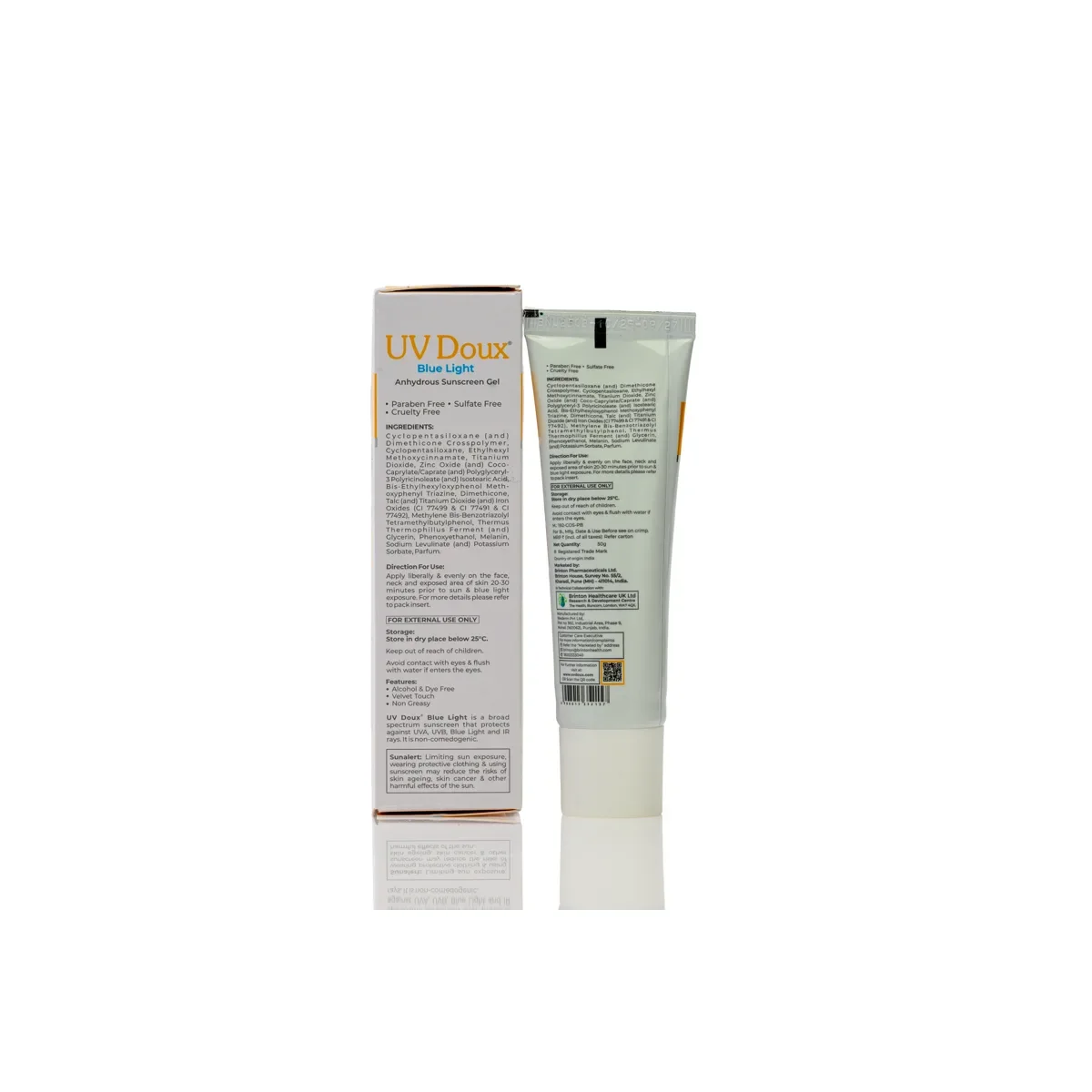
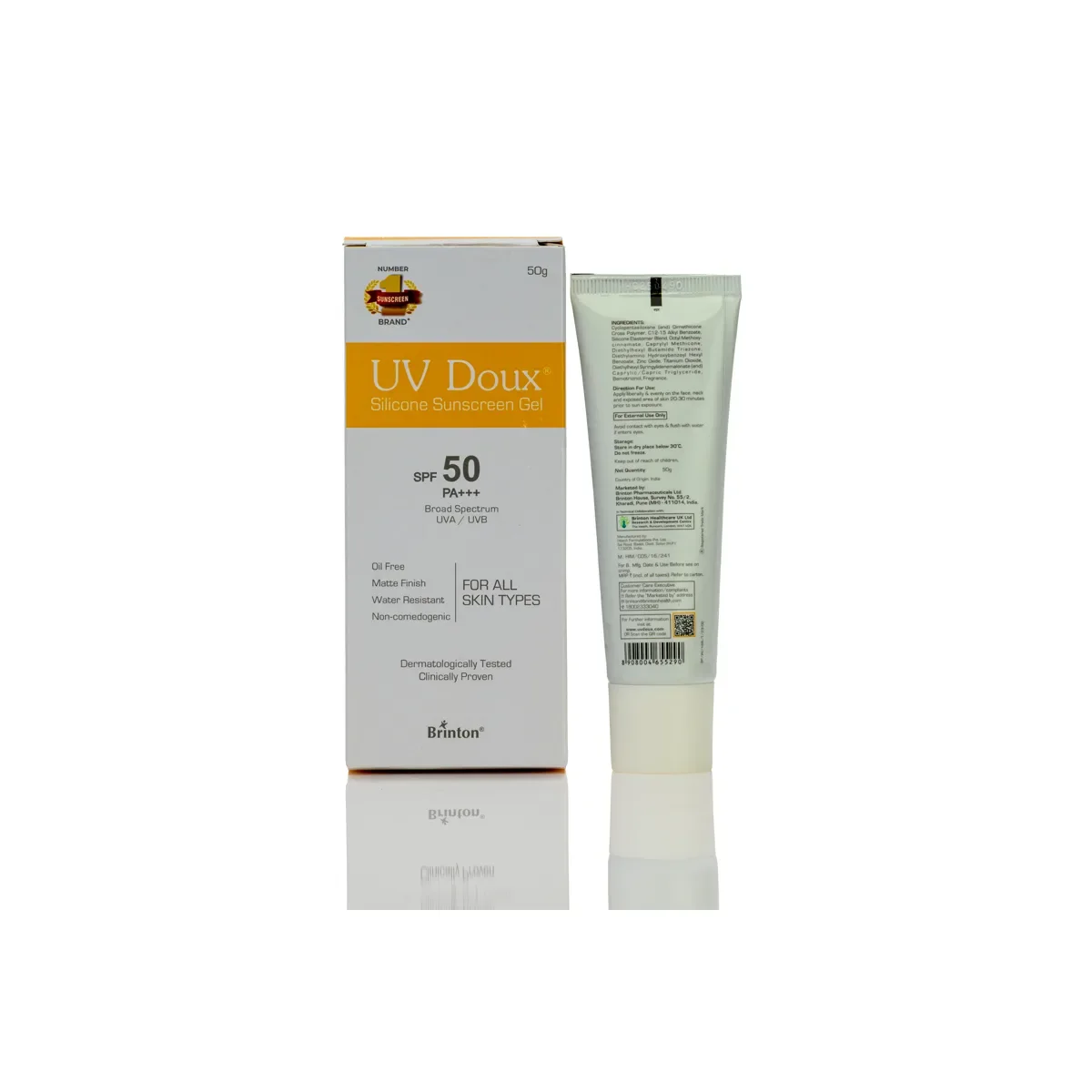
UV Doux Blue Light Anti-Pollution Sunscreen Gel
BRINTON
50G
The Science of Sunscreens
BRINTON UV Doux Blue Light Anti-Pollution Sunscreen Gel (50G)
Drug Facts
INGREDIENT · ANTIOXIDANT, ANTI-AGING, SKIN BRIGHTENING
Ascorbic Acid
also known as Vitamin C
Function
Antioxidant protection, collagen synthesis support, and melanin regulation
How it works
Ascorbic acid functions as a free radical scavenger, reducing oxidative stress that contributes to photoaging and hyperpigmentation. Research indicates it may support collagen cross-linking and stabilization through its role as a cofactor in hydroxylation reactions. Studies suggest ascorbic acid derivatives may suppress inflammatory cytokine pathways including interleukin-33, potentially benefiting barrier-compromised skin states. Evidence indicates it may modulate melanin synthesis pathways, though efficacy is dependent on formulation stability and skin penetration.
⚑ For Indian skin (Fitzpatrick IV–VI)
Ascorbic acid has been shown to support barrier function and may help address post-inflammatory hyperpigmentation (PIH), a significant concern in Fitzpatrick IV-VI skin types prevalent in Kerala. Studies on ascorbic acid derivatives suggest they may suppress inflammatory mediators that exacerbate PIH development in darker skin tones. In Kerala's humid tropical climate, the high instability of pure ascorbic acid necessitates stabilized derivatives such as tetrahexyldecyl ascorbate for effective formulation and penetration. Patients with Fitzpatrick IV-VI skin should be monitored for potential irritation during initial use, particularly in combination with other actives, and formulations should be pH-controlled (pH 3.5 or lower for efficacy without excessive irritation). Evidence suggests that well-formulated ascorbic acid preparations may support epidermal turnover and dermal matrix organization, which may help improve barrier resilience in darker skin types prone to reactive conditions.
Effective concentration
10–20 % (for pure ascorbic acid; derivatives may be effective at lower concentrations) (optimal ~15% (for pure ascorbic acid; derivatives may be effective at lower concentrations))
Clinical evidence
Tetrahexyldecyl ascorbate, a lipid-soluble derivative of ascorbic acid, has been shown to have superior stability and skin-mimicking properties compared to native ascorbic acid. Studies suggest this derivative may address both extrinsic photoaging and intrinsic hyperpigmentation without the formulation challenges of parent compound ascorbic acid.
Not specified in abstract Journal of Cosmetic Dermatology. 2026. PubMed →
Glyceryl ascorbate derivatives (2GA16) demonstrated dose-dependent suppression of interleukin-33 expression and increased expression of filaggrin and involucrin in keratinocytes. Research indicates these modifications may support epidermal barrier formation and reduce inflammatory cytokine production relevant to atopic and reactive dermatitis.
Not specified in abstract Skin Pharmacology and Physiology. 2026. PubMed →
Ascorbic acid has been shown to induce epidermal turnover and support synthesis of well-aligned extracellular matrix through perivascular niche cells in human skin equivalents. Evidence suggests these mechanisms may improve skin barrier function and dermal elasticity through cell-to-cell communication pathways.
Not specified in abstract EMBO Reports. 2026. PubMed →
Ascorbic acid showed linear concentration-response antioxidant activity in FRAP assays with half-maximal effective concentration values consistent with literature standards. Research indicates ascorbic acid demonstrates reliable measurable antioxidant capacity suitable for cosmetic formulation stability profiling and comparative analysis.
Not specified in abstract MethodsX. 2026. PubMed →
Pairs well with
Hyaluronic Acid · Glycerin · Vitamin E · Ferulic Acid · Niacinamide · Peptides
Avoid combining with
Benzoyl Peroxide · High pH ingredients · Retinol (may reduce stability; use in separate formulations) · Sodium Bicarbonate · Iron or copper ions (destabilizing)