EV
01 / 03 Cleansers
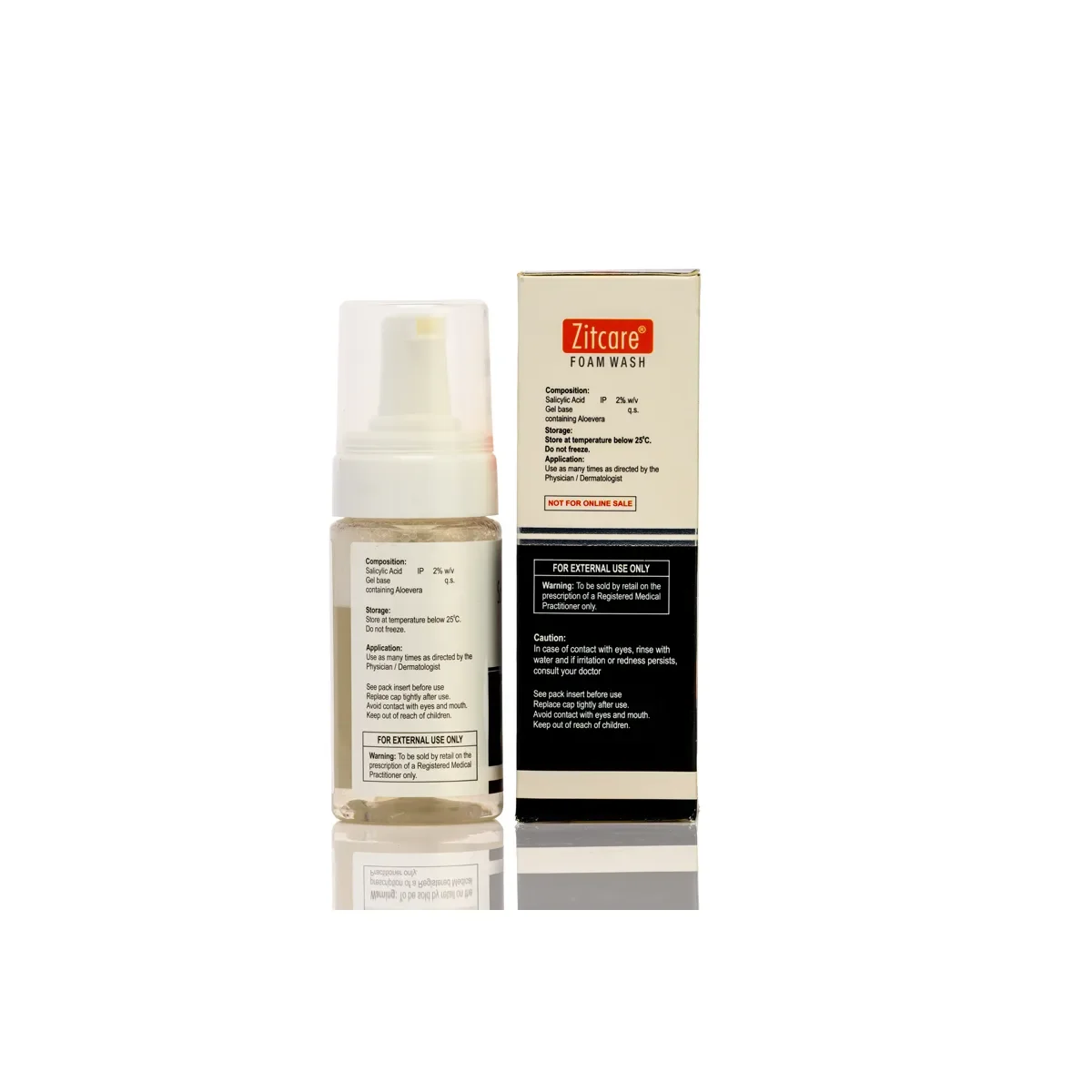
ZITCARE FOAMING FACEWASH
CANIXA
100ml
Clinical Efficacy Markers
- Salicylic Acid 2%
The Science of Cleansers
CANIXA ZITCARE FOAMING FACEWASH (100ml)
Drug Facts
Salicylic Acid IP 2% w/v, Gel base q.s., Cleansing Elements
INGREDIENT · BETA-HYDROXY ACID (BHA), KERATOLYTIC AGENT
Salicylic Acid
also known as 2-hydroxybenzoic acid
Function
Keratolytic exfoliation and comedolytic agent with potential anti-inflammatory and antimicrobial properties
How it works
Salicylic acid penetrates the lipophilic stratum corneum to dissolve intercellular cement and promote desquamation of hyperkeratinized skin. Research indicates the ingredient may modulate sebum production and reduce comedone formation through keratin dissolution. Studies suggest it may help support skin barrier function normalization and have been shown to support adjunctive roles in combination protocols for various keratotic and inflammatory conditions. The mechanism involves both mechanical exfoliation and potential immunomodulatory effects when combined with debridement or occlusion strategies.
⚑ For Indian skin (Fitzpatrick IV–VI)
Salicylic acid may be utilized in Fitzpatrick IV-VI skin types, though careful monitoring is essential given the elevated risk of post-inflammatory hyperpigmentation (PIH) in individuals with skin of color. Research indicates patients with darker skin phototypes demonstrate heightened susceptibility to dyspigmentation following keratolytic treatments, particularly when combined with mechanical trauma or inadequate sun protection. In Kerala's tropical humid climate, occlusive formulations may increase absorption and irritation risk; lower starting concentrations (0.5-2%) are suggested with gradual titration. Sun protection (SPF 30+) is crucial post-treatment, as UVB exposure may exacerbate PIH risk. Discontinuation should be considered if erythema, irritation, or pigmentary changes develop.
Effective concentration
0.5–6 %w/w (optimal ~2%w/w)
Clinical evidence
Research indicates that salicylic acid, when combined with systematic mechanical debridement and occlusion therapy, may help support enhanced wart clearance with observable softening and size reduction within 6-12 weeks. Studies suggest that precise debridement coupled with adjunctive salicylic acid application may improve therapeutic penetration and support immune activation while maintaining safety through structured endpoint recognition.
Study authors not specified Advances in Skin & Wound Care. 2026. PubMed →
Evidence indicates that salicylic acid peels, when combined with modern tranexamic acid formulations in integrated skincare regimens, may help support improved pigmentary outcomes and skin texture improvements. Research suggests that pairing salicylic acid procedures with complementary topical agents may accelerate improvement in dyspigmentation and offer added benefits for skin radiance.
Study authors not specified Journal of Drugs in Dermatology. 2026. PubMed →
Systematic review findings indicate that topical salicylic acid, particularly when combined with complementary ingredients such as L-carnitine and licochalcone-A, may help support reduction in acne lesions and post-inflammatory hyperpigmentation. Research suggests synergistic formulations may enhance efficacy in management of multiple skin concerns simultaneously.
Study authors not specified Journal of Cutaneous Medicine and Surgery. 2026. PubMed →
Literature review indicates that topical salicylic acid has been shown as a conventional therapeutic option for aquagenic palmoplantar keratoderma management. Research suggests it may help support symptom mitigation in keratotic disorders, though efficacy varies by patient and may require combination approaches with barrier agents and other adjunctive therapies.
Study authors not specified Clinical, Cosmetic and Investigational Dermatology. 2026. PubMed →
Research review emphasizes that post-inflammatory hyperpigmentation risk is significantly elevated in Fitzpatrick IV-VI individuals, highlighting the need for careful consideration when utilizing keratolytic agents. Studies indicate that prompt diagnosis and management, including judicious use of keratolytic treatments alongside protective measures, may help support improved outcomes and quality of life in individuals with skin of color.
Study authors not specified Journal of Cutaneous Medicine and Surgery. 2026. PubMed →
Pairs well with
Niacinamide · Centella Asiatica Extract · Azelaic Acid · Glycolic Acid · L-Carnitine · Tranexamic Acid · Licochalcone A · Sunscreen agents (mineral and chemical)
Avoid combining with
Benzoyl Peroxide (may be less stable in combination) · Vitamin C (L-Ascorbic Acid, pH-dependent interaction) · Strong Retinoids (increased irritation risk) · Aluminium Chloride (may increase keratolytic effect excessively)