Author: Dr. Minu Liz Mathew, MD DVL Consultant Dermatologist, DermaVue Skin & Hair Clinics, Gandhipuram, Coimbatore
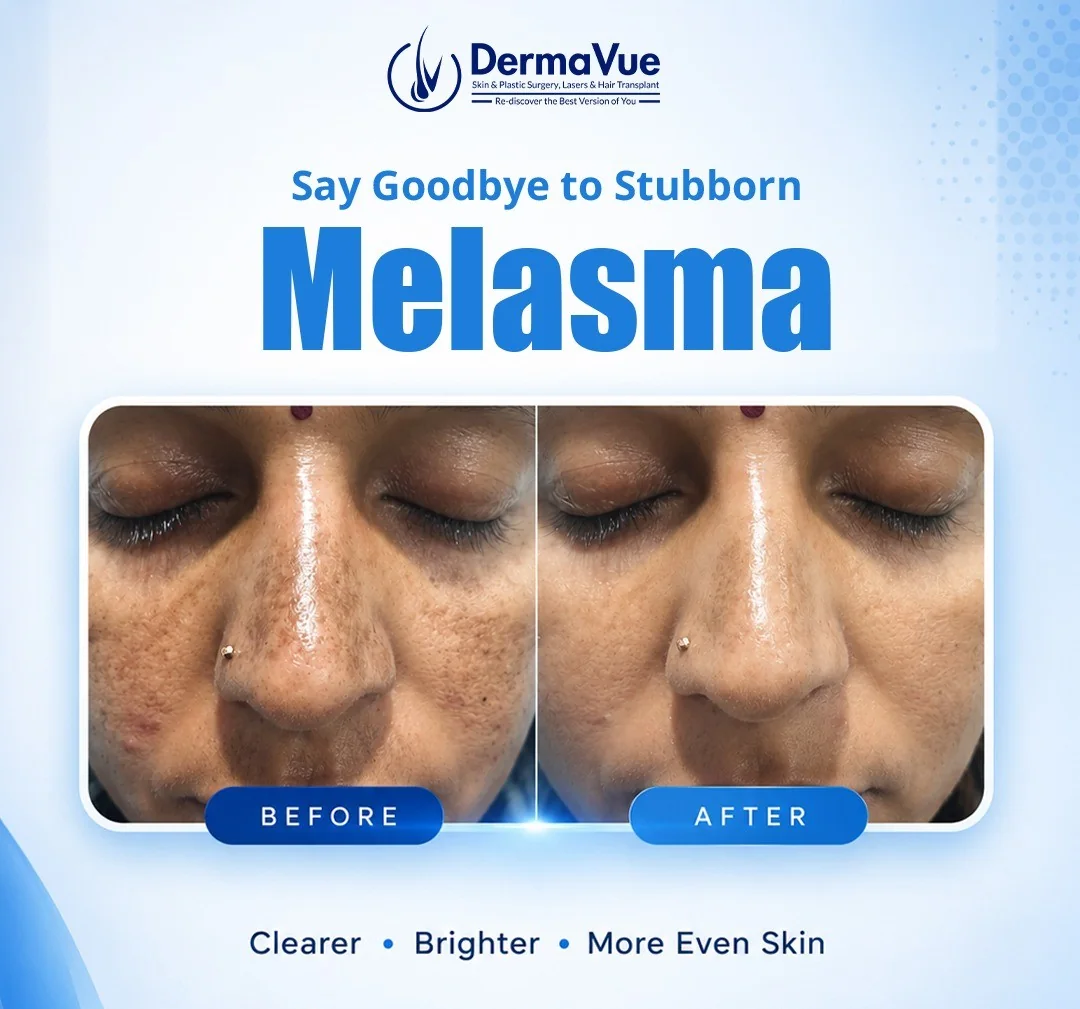
If you are dealing with symmetrical brown or grey-brown patches on your cheeks, forehead, upper lip, or nose that seem to darken every time you step outside in Coimbatore’s relentless sun, you are very likely dealing with melasma. It is one of the most common and most frustrating pigmentation disorders we treat at DermaVue Skin Clinic in Gandhipuram - and one of the most misunderstood.
The frustration is understandable. Over-the-counter “fairness creams” do not address the underlying mechanism. Home remedies often worsen it. Aggressive treatments chosen without dermatological guidance can trigger rebound darkening that leaves the skin worse than before.
Melasma is a chronic, relapsing condition that requires a structured, multi-modal treatment approach - not a single cream, not a single laser session, but a coordinated protocol that addresses the biology driving the pigmentation. This article explains the condition, the evidence behind each treatment modality, and how we approach melasma management at DermaVue Coimbatore.
Understanding Melasma: Why It Happens
Melasma is a disorder of melanocyte hyperactivity - the pigment-producing cells in your skin are not increased in number, but they are producing melanin at an abnormally high rate. Recent research has added complexity to this picture: the condition involves not just melanocytes but also the surrounding keratinocytes, fibroblasts, mast cells, and even the vascular network beneath the pigmented areas.
The Triggers
Melasma is multifactorial. Rarely does a single cause explain a patient’s condition.
Ultraviolet radiation: The primary and most persistent trigger. UV light directly stimulates melanocyte activity through multiple pathways, including stem cell factor, endothelin-1, and alpha-melanocyte-stimulating hormone. Coimbatore’s tropical climate, with a UV index reaching 8-11+ throughout the year, creates year-round exposure risk - not just during summer. Daily commutes, even brief outdoor exposure during mid-day, can sustain or worsen melasma.
Visible light: A critical and often overlooked factor. Blue and violet wavelengths (400-500 nm) from sunlight and digital screens can stimulate melanogenesis in darker skin types, independent of UV exposure. This is why conventional sunscreens alone may be insufficient; iron oxide-containing formulations that block visible light are increasingly recommended.
Hormonal influences: Oestrogen and progesterone significantly influence melanocyte activity. Pregnancy-related melasma (“chloasma”) affects 15-50% of pregnant women. Oral contraceptive pills and hormone replacement therapy are well-established triggers. PCOS (polycystic ovary syndrome), which has a high prevalence in urban Tamil Nadu, creates a chronic hormonal environment that predisposes to melasma.
Genetic predisposition: Approximately 40-60% of melasma patients report a family history. South Indian skin types (Fitzpatrick IV-V) have a higher baseline melanocyte density and reactivity, contributing to the elevated incidence in our population.
Heat exposure: Thermal radiation - from kitchen cooking, industrial environments, or simply prolonged exposure to Coimbatore’s 35-40°C temperatures - can activate melanocytes independently of UV. This “heat-induced melasma” is particularly relevant for homemakers and outdoor workers.
Environmental pollution: Particulate matter and polycyclic aromatic hydrocarbons activate the aryl hydrocarbon receptor on melanocytes, stimulating pigment production. Urban areas with high traffic density contribute to this exposure.
Types of Melasma
Melasma is classified by the depth of pigment deposition, which directly influences treatment selection:
- Epidermal melasma: Pigment confined to the upper skin layers. Appears brown under Wood’s lamp examination. Responds best to topical therapy and superficial procedures.
- Dermal melasma: Pigment deposited deeper, in the dermis. Appears grey-blue or unchanged under Wood’s lamp. More resistant to treatment; requires combination approaches.
- Mixed melasma: The most common presentation. Involves both epidermal and dermal components.
At DermaVue, every melasma consultation begins with a Wood’s lamp examination and sometimes dermatoscopy to classify the type and depth, because this classification determines the treatment protocol.
DermaVue’s Evidence-Based Melasma Treatment Protocol
Effective melasma management requires addressing the condition at multiple levels simultaneously. No single treatment modality is sufficient. Our approach at DermaVue Coimbatore combines topical therapy, procedural interventions, oral medication where appropriate, and rigorous photoprotection - adjusted to each patient’s melasma type, severity, and lifestyle.
1. Photoprotection: The Non-Negotiable Foundation
No treatment protocol can succeed without aggressive, consistent sun protection. In Coimbatore’s climate, this is not optional - it is the cornerstone.
- Broad-spectrum SPF 50+ sunscreen with UVA, UVB, and visible light protection
- Iron oxide-containing formulations for visible light blocking (especially important for Fitzpatrick IV-V skin)
- Reapplication every 2-3 hours during daylight, regardless of indoor or outdoor setting
- Physical measures: Wide-brimmed hats, UV-protective scarves, seeking shade during 10 AM - 4 PM
- Screen habits: Blue-light filters on digital devices for patients with screen-intensive occupations
2. Topical Therapy (First-Line)
Triple combination cream (hydroquinone + tretinoin + fluocinolone acetonide): Remains the gold standard first-line treatment based on extensive clinical trial data. The three agents work synergistically - hydroquinone inhibits tyrosinase (the rate-limiting enzyme in melanin production), tretinoin accelerates epidermal turnover to shed pigmented cells, and the mild corticosteroid reduces irritation and inflammation that can worsen pigmentation.
Protocol: Apply nightly for 8-12 weeks, followed by a “holiday” period using non-hydroquinone maintenance agents. Cyclic use prevents the ochronosis risk associated with prolonged continuous hydroquinone application.
Tranexamic acid (topical 3-5%): A lysine analogue that inhibits plasmin activity, reducing melanocyte stimulation. Growing evidence supports its efficacy as both a stand-alone and adjunctive topical agent, with a favourable safety profile for long-term use.
Azelaic acid (15-20%): Inhibits tyrosinase and has anti-inflammatory properties. Safe during pregnancy - an important consideration given melasma’s association with hormonal changes.
Cysteamine 5%: A newer depigmenting agent with a mechanism distinct from hydroquinone. Randomised controlled trials demonstrate efficacy comparable to hydroquinone 4% without the safety concerns of long-term hydroquinone use.
Adjunctive agents: Vitamin C (L-ascorbic acid 10-20%), niacinamide (4-5%), arbutin, and kojic acid serve supporting roles in a comprehensive topical regimen.
3. Oral Tranexamic Acid: A Significant Advance
Oral tranexamic acid (250 mg twice daily) has emerged as one of the most important additions to the melasma treatment toolkit in recent years. Multiple randomised controlled trials (2018-2024) demonstrate significant improvement in melasma severity indices, particularly for mixed and dermal-type melasma that responds poorly to topical therapy alone.
The mechanism involves systemic reduction of plasminogen activator activity, which decreases melanocyte stimulation through the plasmin pathway. It also reduces the vascular component of melasma - the abnormal blood vessel proliferation beneath pigmented areas that contributes to recurrence.
Important safety considerations: Oral tranexamic acid is generally well-tolerated at the low doses used for melasma. However, it is contraindicated in patients with a history of thromboembolic disease (deep vein thrombosis, pulmonary embolism), and we screen for risk factors before prescribing. Regular follow-up is standard during treatment.
4. Chemical Peels
Peels accelerate the removal of pigmented epidermal cells and enhance the penetration of topical depigmenting agents. Our dermatologists in Gandhipuram customise peel protocols based on melasma depth and individual skin sensitivity.
Glycolic acid peels (30-50%): Entry-level treatment for superficial epidermal melasma. Well-tolerated, minimal downtime. Monthly sessions for 4-6 months.
Modified Jessner’s peel: Combines lactic acid, salicylic acid, and resorcinol. Effective for moderate melasma with established safety in Indian skin types.
TCA peels (15-25%): Medium-depth peels for persistent mixed melasma. Performed by senior dermatologists only, with 5-7 days of visible peeling. Requires strict post-peel sun avoidance.
Combination peels (kojic acid + lactic acid + glycolic acid): Our multi-pathway approach targets tyrosinase inhibition, melanin dispersion, and epidermal turnover simultaneously.
Yellow peel (retinol-based): For deep, treatment-resistant melasma. Requires a 3-day home protocol with prescribed application and produces significant peeling - but with correspondingly significant results in 2-3 sessions.
5. Low-Fluence Q-Switched Nd:YAG Laser Toning
The Q-switched Nd:YAG laser at 1064 nm wavelength, used at low fluence settings (1.6-3.5 J/cm²), targets melanin within melanosomes without generating sufficient heat to trigger an inflammatory response. This “laser toning” approach gradually fragments and clears excess pigment over 6-10 sessions at 2-week intervals.
Key safety notes for Indian skin:
- Low-fluence settings are essential. High-fluence or aggressive protocols can cause rebound hyperpigmentation - the opposite of the intended effect
- We always perform a test patch at the first session
- Laser toning is used as an adjunct to topical therapy, not as a standalone treatment
- Clinical evidence supports 60-80% improvement when combined with topical and oral protocols
6. Mesotherapy and Intradermal Tranexamic Acid
Intradermal microinjections of tranexamic acid deliver the active agent directly to the dermis, bypassing the epidermal barrier. This technique is particularly useful for dermal-type melasma and mixed presentations with a significant dermal component. Monthly sessions for 4-6 months, combined with topical maintenance.
7. HydraFacial with Brightening Protocol
Our medical-grade HydraFacial treatment with customised brightening boosters provides:
- Deep cleansing with AHA/BHA exfoliation
- Vortex extraction of impurities
- Glycolic acid and vitamin C infusion
- Antioxidant and peptide serum application
- LED light therapy
This serves as a maintenance treatment between more intensive procedures and helps sustain results achieved through the primary protocol.
The Maintenance Phase: Why Long-Term Management Matters
Melasma is a chronic condition with a tendency to relapse, particularly in response to UV exposure, hormonal changes, and heat. Achieving clearance is only the first objective - maintaining that clearance requires an ongoing strategy.
Our maintenance protocol includes:
- Non-hydroquinone depigmenting agents (tranexamic acid, azelaic acid, vitamin C, niacinamide) used cyclically
- Strict year-round photoprotection - this is not seasonal
- Periodic maintenance peels or laser toning sessions every 2-3 months
- Hormonal assessment and management where relevant (in consultation with endocrinology if indicated)
- Lifestyle modifications: minimising heat exposure, incorporating antioxidant-rich diet
The patients who maintain their results long-term are, without exception, the ones who commit to photoprotection and maintenance topicals after the active treatment phase ends.
When to See a Dermatologist
Schedule a consultation at DermaVue Coimbatore if:
- Dark patches are spreading or darkening despite over-the-counter products
- Previous treatments (creams, home remedies, salon treatments) have not produced results - or have made the condition worse
- The pigmentation is affecting your confidence or quality of life
- You are planning pregnancy and want to address melasma proactively
- You have a family history of melasma and want preventive guidance
- You have been using hydroquinone creams without medical supervision for more than 8 weeks
Related DermaVue Services
Frequently Asked Questions
1. Can melasma be permanently cured?
Melasma is a chronic, relapsing condition - not a one-time problem with a permanent fix. With structured treatment at DermaVue, we routinely achieve 70-85% clearance. Of these patients, approximately 70% maintain their results long-term with proper maintenance (sunscreen, topical agents, periodic in-clinic sessions). Recurrence is possible, particularly with pregnancy, hormonal changes, or sun exposure lapses, but it typically responds more quickly to retreatment than the initial episode.
2. Is laser treatment safe for melasma on Indian skin?
Yes, when performed correctly. The Q-switched Nd:YAG laser at low-fluence settings is specifically calibrated for Indian skin types (Fitzpatrick IV-V) and does not carry the hyperpigmentation risk associated with ablative lasers. At DermaVue, we always start with conservative parameters, perform a test patch, and use laser toning as part of a combination protocol - never as standalone treatment. Avoid non-medical facilities offering unregulated laser treatments, as improper settings can trigger significant worsening.
3. How long does melasma treatment take to show visible results?
Initial improvement is typically visible within 2-4 weeks of starting a combination protocol. Significant clearing (50-70%) is generally achieved by 8-12 weeks. Maximum improvement (70-85%) requires 3-5 months of consistent treatment. The timeline varies based on melasma type - epidermal melasma responds faster than dermal or mixed types. Patience and consistency are essential; irregular treatment or inconsistent sunscreen use delays results substantially.
4. Is oral tranexamic acid safe for melasma? What are the side effects?
Oral tranexamic acid at 250 mg twice daily has been studied in multiple clinical trials and is generally well-tolerated for melasma treatment courses of 3-6 months. Common mild side effects include occasional stomach discomfort and menstrual flow changes. The primary safety concern is thromboembolic risk, which is why we screen all patients for personal and family history of blood clots, and the medication is contraindicated in patients with DVT, pulmonary embolism, or active clotting disorders. Regular follow-up during treatment is standard practice at DermaVue.
5. Why did my melasma suddenly appear, and can men get it too?
Melasma often appears to develop “suddenly” but is actually the result of cumulative triggers reaching a threshold: years of sun exposure combined with a hormonal event (pregnancy, starting oral contraceptives, PCOS) or genetic predisposition finally activating visible pigment overproduction. And yes, men absolutely develop melasma - approximately 10-20% of melasma cases occur in men, particularly those with outdoor occupations, family history, or hormonal imbalances. We treat many male patients at DermaVue, and the treatment protocols are equally effective regardless of gender.
The DermaVue Advantage in Coimbatore
At DermaVue’s Gandhipuram clinic, melasma treatment is delivered by board-certified dermatologists who specialise in pigmentation disorders affecting South Indian skin types. Our approach is grounded in accurate diagnosis (Wood’s lamp examination, dermatoscopy), customised multi-modal protocols, and a commitment to evidence-based treatment rather than trend-chasing.
We understand that melasma affects more than skin colour - it affects confidence. Our goal is not just clearing pigmentation but equipping you with the knowledge and maintenance tools to sustain results long-term, even in Coimbatore’s challenging tropical climate.
Book your melasma consultation today at DermaVue Coimbatore.
This article is written for informational purposes and does not constitute medical advice. Individual responses to treatment vary based on melasma type, severity, skin type, and adherence to prescribed protocols. All treatments at DermaVue are performed by board-certified dermatologists following evidence-based guidelines. Results described are based on clinical experience and published literature; individual outcomes may differ.