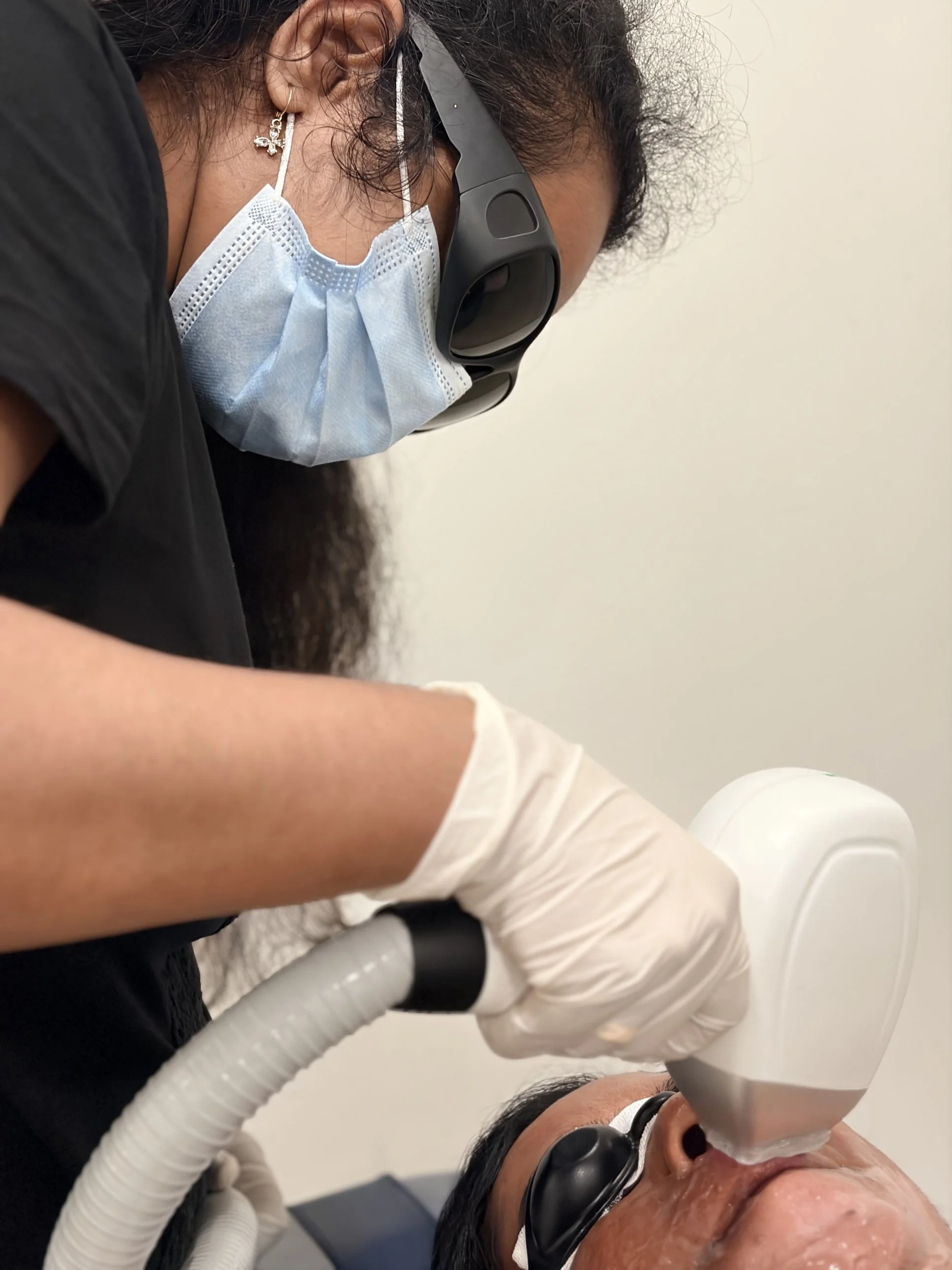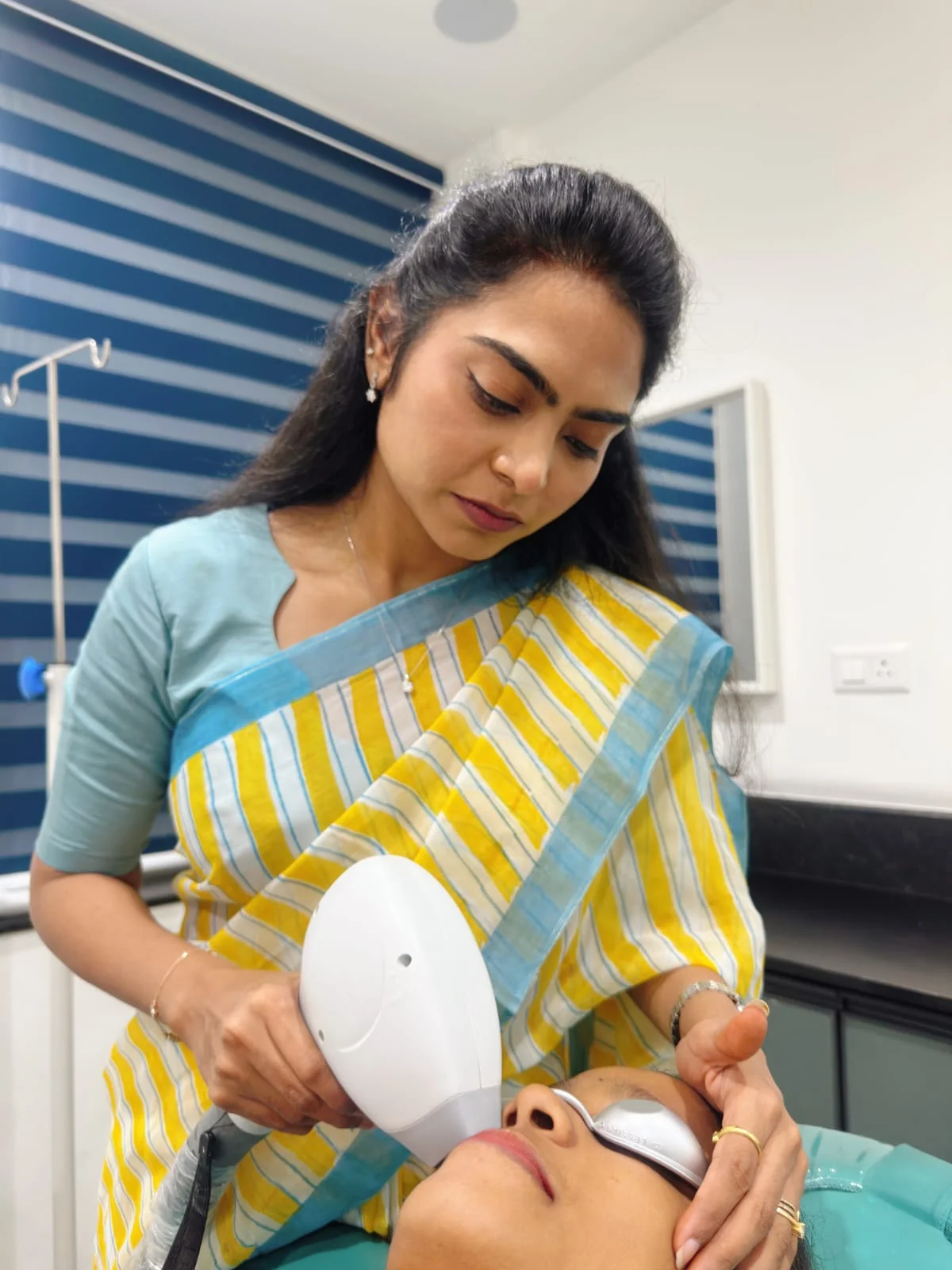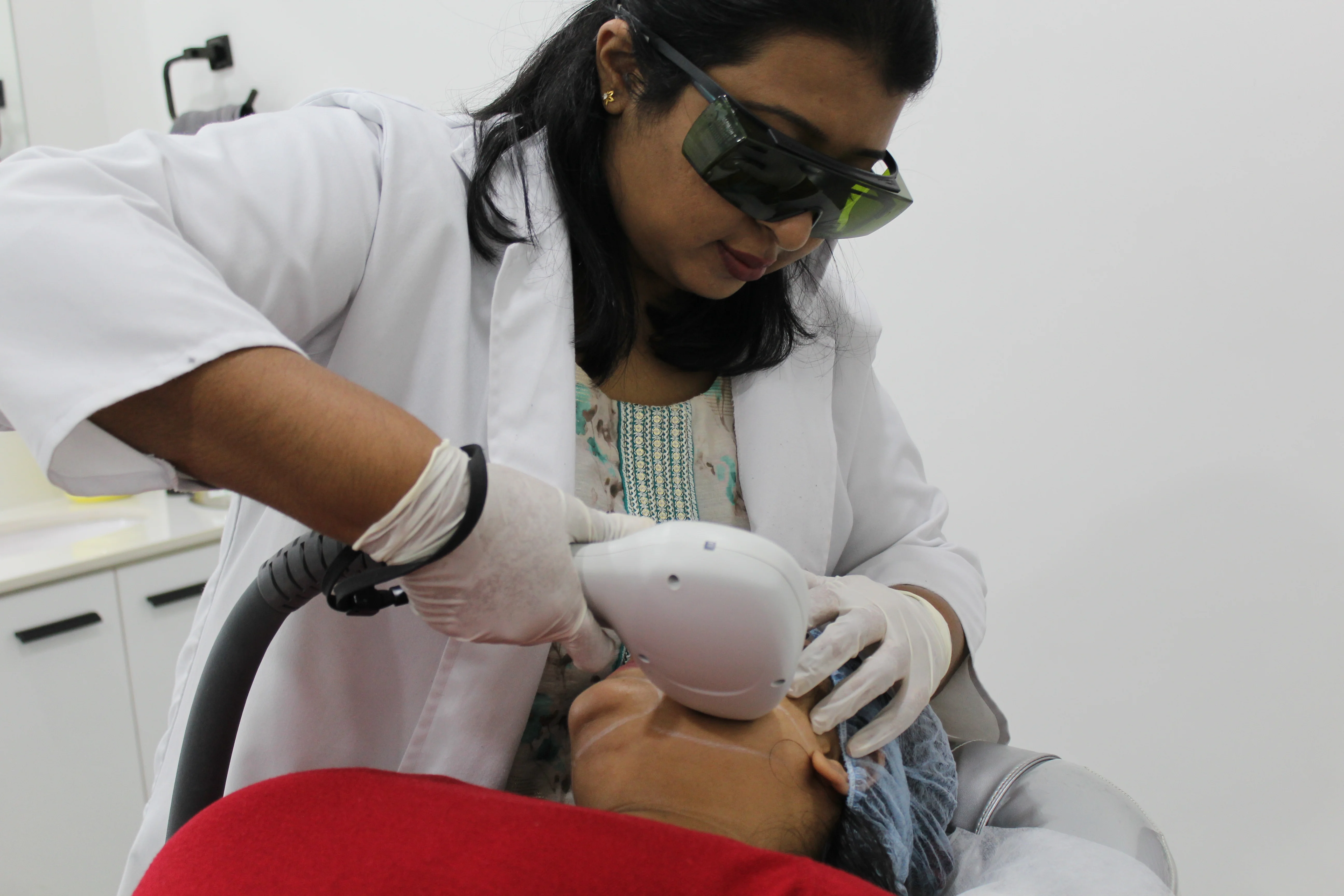
Quick answer: Carbon laser facial is a no-downtime laser treatment that exfoliates the skin, reduces oiliness, tightens enlarged pores, and improves dull complexion in one session. It uses a Q-switched Nd:YAG laser targeted at a layer of liquid carbon applied to the skin. It is safe for Indian skin tones and takes 30 to 45 minutes. Most patients need 4 to 6 sessions for sustained results. It is not a treatment for deep scars or melasma.
In consultations at our Coimbatore clinic, the carbon laser facial comes up in almost every skin brightening conversation. Patients have usually seen it on social media under the name Hollywood peel or charcoal facial, and they want to know two things: does it work, and will it work on their skin type.
The short answer is yes on both counts, with some important qualifications about what it treats effectively and what it does not.
Written by Dr. Minu Liz Mathew, MD DVL, IADVL-registered dermatologist and Clinical Director, DermaVue Kochi. Peer reviewed by Dr. Sarath Chandran, MD DVL, Managing Director, DermaVue Clinics.
Table of Contents
- What the Carbon Laser Facial Actually Does to the Skin
- Why It Suits Coimbatore’s Climate and Skin Types
- How It Compares to Laser Toning and Other Treatments
- Who Benefits Most from Carbon Laser Facial
- Who Should Consider a Different Treatment Instead
- What Happens During a Session at DermaVue Coimbatore
- How Many Sessions Are Needed and How Long Results Last
- Carbon Laser Facial at DermaVue Coimbatore
- Frequently Asked Questions
What the Carbon Laser Facial Actually Does to the Skin
The carbon laser facial uses a two-step mechanism. First, a layer of liquid carbon is applied to the face and allowed to penetrate into the pores. Carbon is highly absorptive of laser energy. Second, a US-FDA approved Q-switched Nd:YAG laser (1064nm wavelength) is passed over the skin. The laser energy is absorbed by the carbon particles, vaporising them instantly. This vaporisation carries away dead skin cells, excess sebum, and debris trapped in the pores along with the carbon.
The result of this mechanism is threefold. First, exfoliation - the outermost layer of dead skin cells is removed, producing the immediate brightening and smoothing effect patients notice right after the session. Second, pore cleansing - the carbon draws out and the laser vaporises the debris inside enlarged pores, temporarily reducing their appearance. Third, mild thermal stimulation - the laser energy also produces mild heat in the dermis that stimulates collagen production over time, which gradually improves skin texture and firmness with repeated sessions.
The entire process takes 30 to 45 minutes and produces no open wounds, no bleeding, and no recovery period. Patients experience mild warmth during the session and leave with slightly pink skin that typically settles within 1 to 2 hours.
Why It Suits Coimbatore’s Climate and Skin Types
Coimbatore’s semi-arid climate, high year-round UV index, and hard water create a specific set of skin challenges that the carbon laser facial addresses directly.
The combination of high heat and UV exposure drives sebum overproduction in most skin types. Enlarged, congested pores are one of the most common complaints in Coimbatore dermatology consultations. The carbon laser facial’s pore-cleansing mechanism directly addresses this.
Hard water mineral deposits (calcium and magnesium) accumulate on the skin surface and contribute to dullness and uneven texture over time. The exfoliation component of the carbon laser facial removes this surface buildup more effectively than most topical cleansers.
For Indian skin tones (Fitzpatrick IV to VI), which represent the majority of patients in Coimbatore, the carbon laser facial has a particularly favourable safety profile. The laser targets the carbon particles rather than the skin’s own melanin. This means the risk of post-inflammatory hyperpigmentation, which is the most common adverse effect of laser treatments on darker skin tones, is significantly lower than with higher-energy procedures. Studies published in the Indian Journal of Dermatology, Venereology and Leprology have confirmed the safety and efficacy of low-fluence Q-switched Nd:YAG laser on Indian skin for both pigmentation and textural concerns.
How It Compares to Laser Toning and Other Treatments
| Treatment | Primary benefit | Downtime | Sessions needed | Best for |
|---|---|---|---|---|
| Carbon laser facial | Oiliness, pores, dullness, mild acne | None | 4 to 6 | Oily skin, congested pores, dull complexion |
| Laser toning (Q-switched low fluence) | Pigmentation, melasma, brightening | None to minimal | 6 to 10 | Melasma, pigmentation, overall brightening |
| Chemical peel | Texture, pigmentation, acne | 1 to 5 days | 3 to 6 | Surface pigmentation, acne scars, texture |
| Hydrafacial | Hydration, congestion, brightness | None | Monthly | Dehydrated, dull, congested skin |
| Fractional CO2 laser | Deep acne scars, skin resurfacing | 5 to 7 days | 1 to 3 | Deep acne scars, significant texture issues |
Carbon laser facial and laser toning are sometimes confused because both use Q-switched Nd:YAG technology. The key difference is the carbon step. Laser toning without carbon targets melanin directly in the dermis for deeper pigmentation correction. Carbon laser facial uses the carbon as an intermediary target, making it gentler and more appropriate for oily skin and congestion rather than deep pigmentation.
Who Benefits Most from Carbon Laser Facial
Oily or combination skin: The sebum reduction effect is most pronounced in patients with genuinely oily skin. One session produces a visible reduction in surface shine that typically lasts 1 to 2 weeks. With repeated sessions, the sebaceous glands become less overactive and the improvement becomes more sustained.
Enlarged pores: Patients with visibly enlarged pores on the nose, cheeks, and forehead see consistent improvement. The pores do not shrink permanently but appear smaller as debris is removed and mild collagen stimulation tightens the surrounding skin over time.
Dull or uneven complexion: The exfoliation component immediately brightens the skin by removing the outer layer of dead cells. Patients often describe looking fresher and more even immediately after the session.
Mild comedonal or inflammatory acne: The pore-cleansing mechanism helps with blackheads and whiteheads. For moderate to severe acne, prescription treatment is more appropriate as the primary approach, with carbon laser as a supporting procedure.
Post-acne redness: The vascular component of the Q-switched laser reduces the post-inflammatory redness that remains after acne spots resolve, improving overall skin tone.
Maintenance between deeper procedures: Patients who have completed a course of chemical peels or fractional CO2 laser use carbon laser facial as a monthly maintenance treatment to sustain results without additional downtime.
Who Should Consider a Different Treatment Instead
Deep acne scars: Carbon laser facial does not resurface the dermis. Patients with ice pick, boxcar, or rolling acne scars need fractional CO2 laser or microneedling RF for meaningful improvement.
Melasma: Carbon laser facial alone is not appropriate for melasma. Melasma has a vascular and hormonal component that requires a different treatment approach. See our post on what causes melasma in Indian women for the correct treatment pathway.
Significant pigmentation or sun damage: For deeper pigmentation concerns, laser toning or a combination chemical peel protocol is more appropriate.
Very dry or sensitive skin: The exfoliation component can temporarily increase dryness in patients with a compromised skin barrier. A clinical assessment determines whether the treatment is appropriate and what pre-treatment barrier repair is needed.
Active inflammatory acne with cysts or pustules: An active cystic acne flare is a relative contraindication. Prescription acne treatment should be initiated first, with carbon laser introduced as an adjunct once the active flare is controlled.
What Happens During a Session at DermaVue Coimbatore
Before the session: Arrive with clean skin, no makeup, no sunscreen. Avoid retinoids and AHAs for 3 days before the session. Inform the dermatologist of all current skincare products and any recent procedures.
Carbon application: A thin layer of liquid carbon is applied to the face and left for 10 to 15 minutes. During this time, the carbon penetrates into the pores. The skin appears dark grey.
Pre-heat pass: A low-energy pass of the laser is made across the skin to heat the carbon gently and enhance penetration.
Treatment pass: A higher-energy pass vaporises the carbon, producing the characteristic crackling sound. Patients feel mild warmth or a light snapping sensation. Topical anaesthetic is not typically required, though it can be applied for sensitive patients.
Post-treatment: The skin is cleansed, a calming serum is applied, and SPF is put on before the patient leaves. The skin appears slightly pink for 1 to 2 hours. Normal activities can be resumed immediately.
Total session time: 30 to 45 minutes.
How Many Sessions Are Needed and How Long Results Last
| Phase | Sessions | Interval | What to expect |
|---|---|---|---|
| Initial course | 4 to 6 sessions | Every 2 to 3 weeks | Progressive improvement in oiliness, pore size, and complexion brightness |
| Visible results | From session 2 to 3 | Sustained oil reduction, smoother texture, more even tone | |
| Maintenance | 1 session monthly | Every 4 to 6 weeks | Sustains results; prevents pore congestion from returning |
Results from individual sessions are visible immediately but last 1 to 2 weeks for the oil reduction effect and 3 to 4 weeks for the brightening effect. Sustained improvement in pore size and skin texture requires the full initial course of 4 to 6 sessions.
Coimbatore’s climate means that sebum production returns relatively quickly between sessions due to heat and humidity. Monthly maintenance sessions are more consistently beneficial in Coimbatore than in cooler climates.
Carbon Laser Facial at DermaVue Coimbatore
Carbon laser facial is available at DermaVue’s Gandhipuram clinic in Coimbatore. All sessions are performed or supervised by IADVL-registered MD DVL dermatologists using US-FDA approved Q-switched Nd:YAG laser equipment calibrated for Indian skin types. Settings are individually assessed at each session based on skin condition, oiliness level, and treatment history.
A clinical consultation before the first session confirms whether carbon laser facial is the most appropriate treatment for your specific skin concerns, or whether a different procedure would produce better results.
| Branch | Address | Phone / WhatsApp |
|---|---|---|
| Coimbatore (Gandhipuram) | 460, Ponnaiyan St, Cross Cut Rd, Ram Nagar, Gandhipuram, Coimbatore, Tamil Nadu 641009 | +91 80868 60018 |
Book a carbon laser facial consultation at our Coimbatore clinic. Call +91 80868 60018, WhatsApp our Coimbatore team, or visit DermaVue Coimbatore to book online.
Related Reading
- Carbon Laser Peel at DermaVue: Full Procedure Guide
- Laser Toning in Coimbatore
- Acne Treatment in Coimbatore
- What Causes Melasma in Indian Women
- Chemical Peel at DermaVue
Frequently Asked Questions
What is a carbon laser facial? A carbon laser facial (also called carbon laser peel, Hollywood peel, or charcoal laser facial) is a no-downtime laser skin treatment. A layer of liquid carbon is applied to the face, which penetrates into the pores. A Q-switched Nd:YAG laser then vaporises the carbon, removing dead skin cells, excess oil, and debris from the pores in the process. The result is exfoliation, oil reduction, pore cleansing, and mild collagen stimulation in a single 30 to 45 minute session.
Is carbon laser facial safe for Indian skin in Coimbatore? Yes. Carbon laser facial is one of the safer laser treatments for Indian skin tones (Fitzpatrick IV to VI). The laser targets the carbon particles rather than the skin’s own melanin, which significantly reduces the risk of post-inflammatory hyperpigmentation compared to higher-energy laser procedures. DermaVue Coimbatore uses US-FDA approved Q-switched Nd:YAG equipment with settings calibrated for Indian skin types at each session.
How many sessions of carbon laser facial are needed? Most patients need 4 to 6 sessions spaced 2 to 3 weeks apart for the initial course. Results begin to show from the second or third session. After the initial course, monthly maintenance sessions sustain the improvement. In Coimbatore’s climate, where heat and humidity drive faster sebum return, monthly maintenance is more beneficial than in cooler climates.
What does carbon laser facial treat? Carbon laser facial is most effective for oily or combination skin, enlarged pores, dull or uneven complexion, mild comedonal acne (blackheads and whiteheads), post-acne redness, and as a maintenance treatment between deeper procedures. It is not effective for deep acne scars, melasma, or significant pigmentation - those concerns require different treatments such as fractional CO2 laser, laser toning, or chemical peels.
What is the difference between carbon laser facial and laser toning? Both use Q-switched Nd:YAG laser technology, but with different mechanisms. Carbon laser facial uses liquid carbon as an intermediary target - the laser vaporises the carbon and the debris it has absorbed from the skin. Laser toning targets melanin directly in the dermis for deeper pigmentation correction. Carbon laser facial is better suited for oiliness, pores, and congestion. Laser toning is better suited for melasma, pigmentation, and overall brightening.
Is there any downtime after carbon laser facial? No. Carbon laser facial has no downtime. The skin appears slightly pink for 1 to 2 hours after the session, which settles on its own. Patients return to normal activities immediately. Sunscreen must be applied before going outdoors after the session and throughout the treatment course.
Can I get a carbon laser facial if I have active acne? Mild comedonal acne (blackheads, whiteheads) is one of the conditions the carbon laser facial benefits. However, active inflammatory acne with cysts or pustules is a relative contraindication. Prescription acne treatment should be initiated first to control the active flare before carbon laser facial is introduced as a supporting procedure.
How do I book a carbon laser facial in Coimbatore? Call or WhatsApp our Coimbatore clinic on +91 80868 60018. Our clinic is at 460, Ponnaiyan St, Cross Cut Rd, Ram Nagar, Gandhipuram, Coimbatore 641009. A consultation before the first session confirms whether the carbon laser facial is the most appropriate treatment for your skin concerns.
Authored by Dr. Minu Liz Mathew, MD DVL, IADVL-registered dermatologist and Clinical Director, DermaVue Kochi. Peer reviewed by Dr. Sarath Chandran, MD DVL, Managing Director, DermaVue Clinics. Published September 2026. This article is for general information and does not substitute a clinical consultation. Individual results vary based on skin type, concern, and treatment adherence.