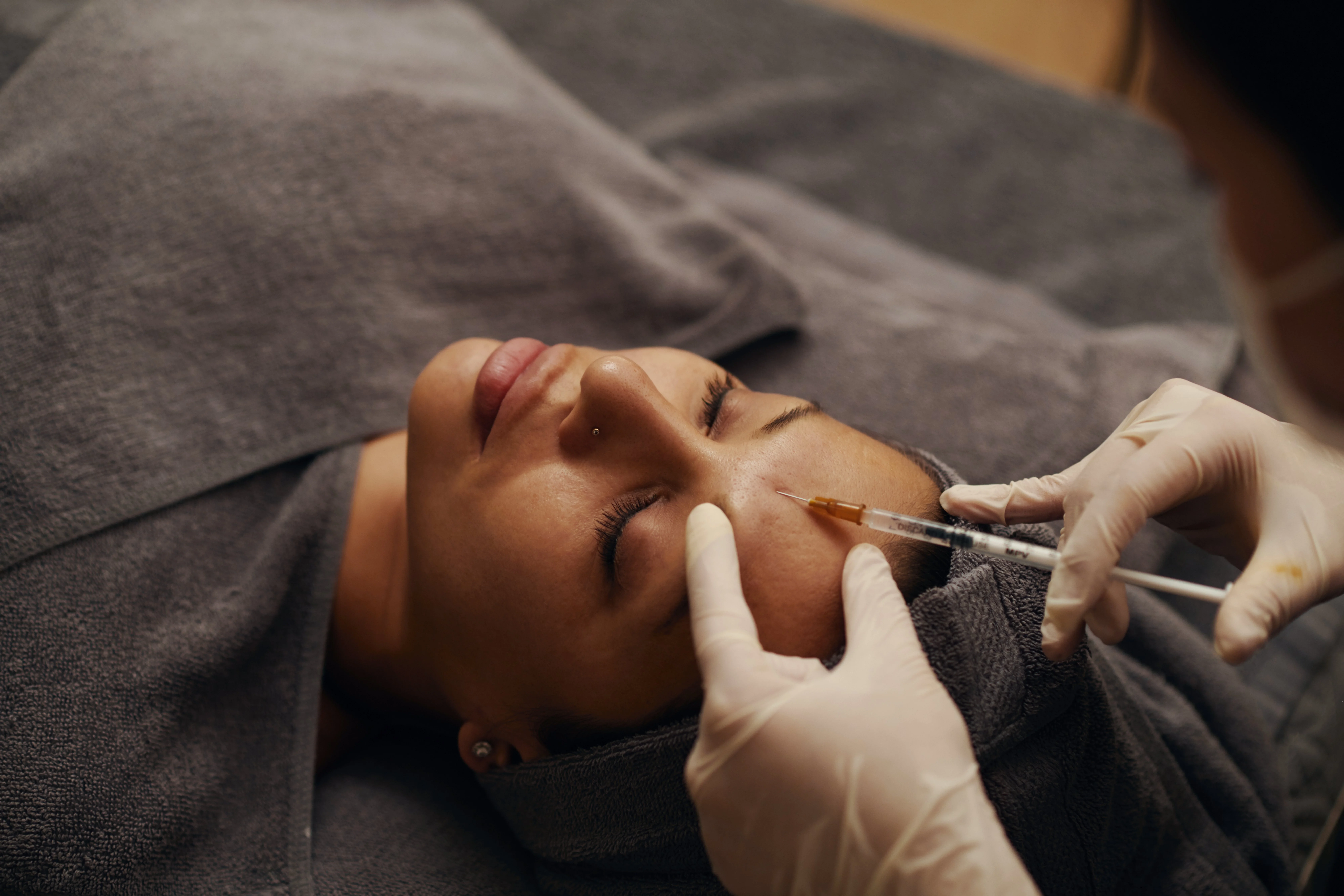
Few treatments in aesthetic medicine have the track record of botulinum toxin. Known commercially as Botox (among other brand names), this injectable has been used in clinical practice for over three decades, initially for neurological and ophthalmological conditions, and since the early 2000s as an approved cosmetic treatment for facial wrinkles. It remains the most widely performed non-surgical aesthetic procedure worldwide, with millions of treatments administered annually.
Yet misconceptions persist. Patients worry about looking “frozen,” fear addiction, or believe that Botox is only for people who are already visibly aged. In reality, botulinum toxin is a remarkably precise tool that, when administered correctly, produces natural-looking results while preserving facial expressiveness.
In this guide, I will explain exactly how botulinum toxin works at a neuromuscular level, what conditions it addresses, how we approach treatment at DermaVue, and what the evidence says about safety and efficacy.
What Is Botulinum Toxin?
Botulinum toxin is a neurotoxic protein produced by the bacterium Clostridium botulinum. In clinical use, purified botulinum toxin type A is injected in extremely small, controlled doses into specific facial muscles. At these therapeutic doses, it temporarily blocks the nerve signals that cause targeted muscles to contract.
There are several commercially available formulations, including onabotulinumtoxinA (Botox), abobotulinumtoxinA (Dysport), and incobotulinumtoxinA (Xeomin). While they differ slightly in formulation and dosing, they share the same fundamental mechanism. At DermaVue, we use FDA-approved products that meet rigorous quality and safety standards.
It is worth noting that the doses used in cosmetic treatment are a tiny fraction of those that would cause any systemic toxicity. The safety margin is substantial, and the localised nature of the injection means the toxin acts only on the targeted muscles.
How Does Botulinum Toxin Work? The Mechanism
The Neuromuscular Junction
To understand Botox, you need to understand how muscles contract. At the neuromuscular junction, nerve endings release a chemical messenger called acetylcholine. Acetylcholine crosses the synaptic gap and binds to receptors on the muscle fibre, triggering contraction.
Botulinum toxin type A works by cleaving a protein called SNAP-25, which is essential for the vesicles containing acetylcholine to fuse with the nerve terminal membrane and release their contents. Without functional SNAP-25, acetylcholine cannot be released, and the muscle cannot receive the signal to contract.
The Clinical Effect
When botulinum toxin is injected into a specific facial muscle, that muscle’s ability to contract is temporarily reduced. Since dynamic wrinkles (forehead lines, frown lines, crow’s feet) are caused by repetitive muscle contraction over years, relaxing these muscles smooths existing lines and prevents them from deepening.
The effect is not immediate. Botulinum toxin begins to take effect within 2 to 5 days, with full results visible at 10 to 14 days. The nerve terminals gradually regenerate new SNAP-25 proteins over 3 to 6 months, at which point muscle function returns and the treatment effect wears off.
Preventive vs. Corrective
An important clinical concept is the difference between preventive and corrective Botox:
Preventive use: In younger patients (late 20s to early 30s) who have dynamic lines that appear during expression but disappear at rest, botulinum toxin prevents these lines from becoming etched into the skin as static wrinkles. This is an increasingly popular approach.
Corrective use: In patients with established static wrinkles (visible even without expression), botulinum toxin softens the lines but may not eliminate them completely. Deeper static lines often benefit from a combination of botulinum toxin and complementary treatments such as dermal fillers or laser resurfacing.
What Does Botulinum Toxin Treat?
Cosmetic Indications
Forehead lines (frontalis muscle). Horizontal lines across the forehead caused by raising the eyebrows. Treatment relaxes the frontalis while preserving enough function for natural brow movement.
Glabellar lines / frown lines (corrugator supercilii and procerus muscles). The vertical “11” lines between the eyebrows. This was the first FDA-approved cosmetic indication for botulinum toxin and remains one of the most commonly treated areas.
Crow’s feet (orbicularis oculi). The fan-shaped lines radiating from the outer corners of the eyes during smiling. Botulinum toxin softens these while maintaining a natural smile.
Bunny lines (nasalis). Lines on the sides of the nose that appear when scrunching the nose.
Lip lines / smoker’s lines (orbicularis oris). Subtle treatment of the muscle around the lips can soften fine vertical lines, though this requires conservative dosing to avoid affecting lip function.
Chin dimpling (mentalis). An orange-peel texture on the chin caused by mentalis muscle hyperactivity.
Masseter reduction (jaw slimming). Injecting the masseter muscle can reduce jaw width in patients with masseteric hypertrophy, creating a more V-shaped facial contour. This also helps patients who clench or grind their teeth (bruxism).
Nefertiti lift (platysma bands). Strategic injection along the jawline and platysmal bands can improve jawline definition and reduce the appearance of neck bands.
Therapeutic Indications
Botulinum toxin has established medical applications beyond cosmetics:
- Chronic migraine (approved indication)
- Hyperhidrosis (excessive sweating of the underarms, palms, or soles)
- Bruxism (teeth grinding and jaw clenching)
- TMJ dysfunction
The Treatment Process at DermaVue
Consultation
Every Botox treatment at DermaVue begins with a detailed facial assessment. We analyse your facial anatomy, muscle strength, skin quality, and the specific lines you want to address. We discuss your goals and set realistic expectations. Photographs are taken under standardised lighting for progress tracking.
Understanding facial anatomy is critical. The face is not symmetric, muscles vary in strength between individuals, and over-treatment of one area can create undesirable compensatory effects elsewhere. This is why Botox should always be administered by a physician with thorough knowledge of facial anatomy.
Pre-Treatment
- Avoid blood-thinning medications and supplements (aspirin, fish oil, vitamin E, ginkgo biloba) for 3 to 5 days before to reduce bruising risk
- No alcohol for 24 hours before
- Inform your doctor about any neuromuscular disorders, pregnancy, or breastfeeding (these are contraindications)
During the Procedure
No anaesthesia is typically needed; the injections use ultra-fine needles (30 to 32 gauge) and are well-tolerated. Some patients describe a brief pinching sensation. The entire treatment takes 10 to 20 minutes.
The number and location of injection points are mapped based on your consultation assessment. Typical units per area:
- Forehead lines: 10 to 20 units
- Glabellar (frown) lines: 15 to 25 units
- Crow’s feet: 6 to 15 units per side
- Masseter: 25 to 50 units per side
These are general ranges; exact dosing is individualised.
Post-Treatment
- Remain upright for 4 hours after treatment
- Avoid rubbing or massaging the treated areas for 24 hours
- No intense exercise, hot baths, or sauna for 24 hours
- Minor redness or pinpoint bruising at injection sites is normal and resolves quickly
- Return to normal activities immediately; there is no downtime
Results Timeline
| Milestone | Timeframe |
|---|---|
| First effects noticeable | 2 to 5 days |
| Full effect | 10 to 14 days |
| Peak results | 2 to 4 weeks |
| Gradual return of movement | 3 to 4 months |
| Full effect worn off | 4 to 6 months |
| Recommended retreatment | Before full return of movement |
Results and Expectations
Botulinum toxin is highly effective for dynamic wrinkles. Published clinical trials demonstrate:
- Forehead lines: Significant improvement in wrinkle severity scores in over 90% of treated patients
- Glabellar lines: Robust efficacy data from multiple large RCTs (randomised controlled trials) supporting visible improvement lasting 3 to 4 months
- Crow’s feet: Significant reduction in wrinkle severity during animation, with high patient satisfaction
What Botox will achieve: Smoother skin in the treated areas, prevention of wrinkle deepening, and a more rested, refreshed appearance. The best results look natural; people notice you look well, not that you have had a procedure.
What Botox will not do: It does not address volume loss (hollow cheeks, thin lips), skin laxity (sagging), textural changes (acne scars, sun damage), or static wrinkles that are deeply etched. These concerns require complementary approaches such as dermal fillers, laser treatments, or skin tightening procedures.
Safety Profile
Botulinum toxin has one of the most extensive safety databases in aesthetic medicine:
- Very common: Mild redness and pinpoint bruising at injection sites (resolves within days)
- Common: Mild headache on the day of treatment
- Uncommon: Temporary asymmetry (adjustable at a 2-week review), mild eyelid heaviness (occurs in approximately 1 to 2% of cases with glabellar treatment, resolves spontaneously within 2 to 4 weeks)
- Rare: Allergic reaction, distant spread of toxin (extremely rare at cosmetic doses)
Contraindications: Pregnancy, breastfeeding, known hypersensitivity to botulinum toxin, neuromuscular disorders (myasthenia gravis, Lambert-Eaton syndrome), active infection at the injection site.
Common Myths About Botox
“Botox will make me look frozen.” This is a result of over-treatment, not an inherent property of Botox. At DermaVue, we follow a “less is more” philosophy, using the minimum effective dose to achieve natural results. A properly treated face retains full expressiveness.
“If I stop Botox, my wrinkles will be worse than before.” This is false. When Botox wears off, your muscles return to their normal function and your wrinkles return to their pre-treatment state. They do not worsen. In fact, regular treatment can prevent wrinkles from deepening over time.
“Botox is only for older people.” Preventive Botox in the late 20s and 30s is now well-established. Starting earlier, when lines are dynamic (only appearing during expression), prevents them from becoming static (permanent) wrinkles.
“Botox is toxic and dangerous.” At cosmetic doses, botulinum toxin has an excellent safety record. The doses used are a fraction of what would cause any systemic effect. It has been used medically since the 1980s with millions of treatments performed.
Related DermaVue Services
Frequently Asked Questions
How long does Botox last? Results typically last 3 to 4 months for most patients, with some experiencing effects up to 6 months. Duration can vary based on the individual’s metabolism, muscle mass, dose, and treatment area.
Is Botox painful? Most patients describe only a mild pinching sensation. The needles used are extremely fine (30-32 gauge), and the injection itself takes seconds per site. No anaesthesia is usually required.
Can Botox be combined with other treatments? Yes. At DermaVue, we commonly combine Botox with dermal fillers for a comprehensive approach: Botox addresses dynamic wrinkles while fillers restore volume and treat static lines. This combination is often called a “liquid facelift.”
How often should I get Botox? Most patients return every 3 to 4 months initially. Over time, with consistent treatment, some patients find they can extend the interval as their muscles gradually weaken with less habitual contraction.
What is the right age to start Botox? There is no single right age. The decision depends on when dynamic lines become bothersome to you. Preventive treatment in the late 20s to early 30s can prevent lines from becoming permanent. Corrective treatment can be effective at any age.
Making an Informed Decision
Botulinum toxin is a well-studied, safe, and effective treatment when performed by a qualified physician with knowledge of facial anatomy and appropriate dosing. It is not about changing who you are; it is about softening the signs of repetitive muscle movement so your skin reflects how you feel.
If you are considering Botox, schedule a consultation at DermaVue. We will assess your facial anatomy, discuss your goals, and create a treatment plan that delivers natural, balanced results.