EV
01 / 04 Anti-Pigmentation
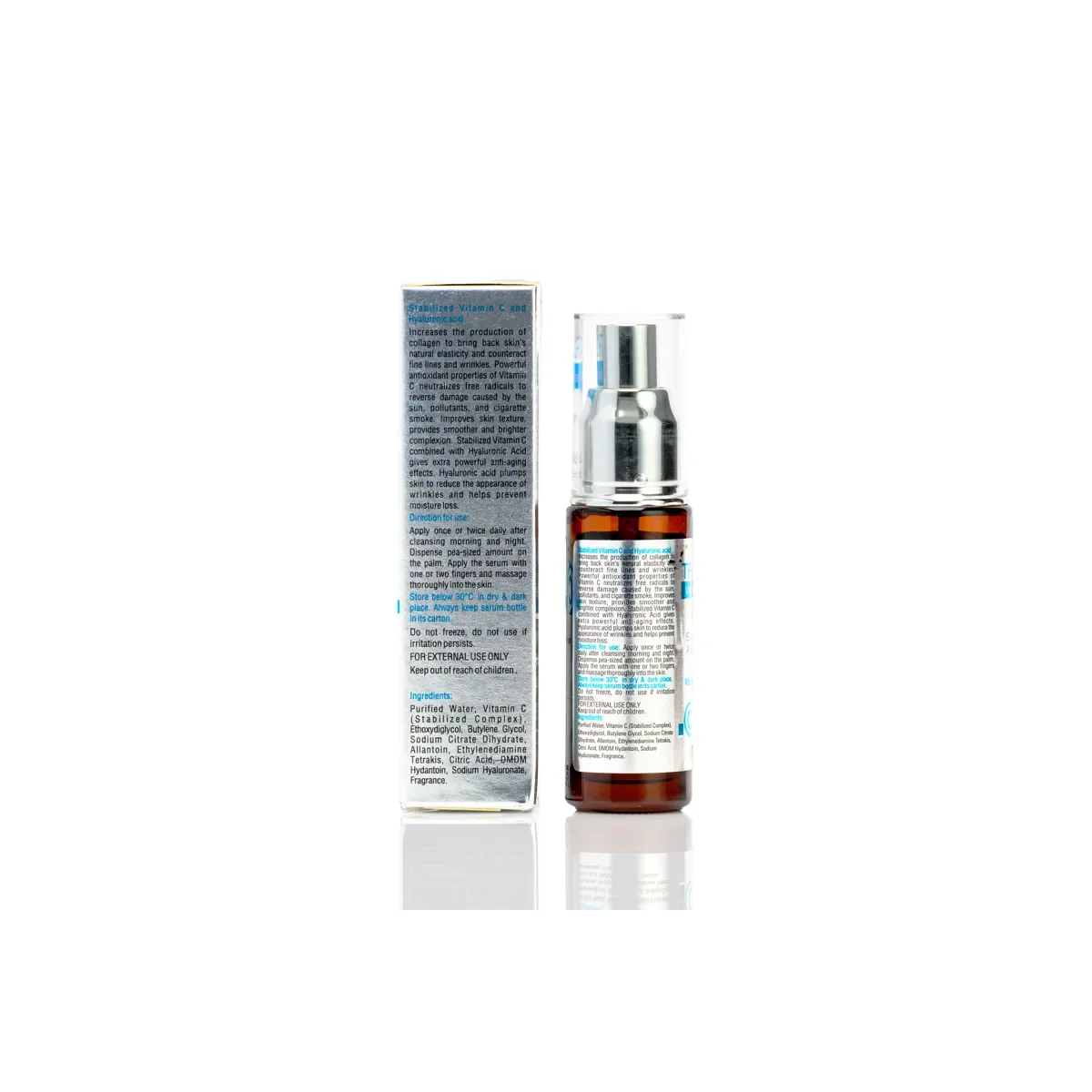
TRUDERMA VIT C SERUM
REGALIZ
20ML
The Science of Anti-Pigmentation
REGALIZ TRUDERMA VIT C SERUM (20ML)
Drug Facts
⚑ Contains photosensitising ingredient(s) — pair with SPF 50+.
INGREDIENT · ANTIOXIDANT, ANTI-AGING, SKIN BRIGHTENING
Ascorbic Acid
also known as Vitamin C
Function
Antioxidant protection, collagen synthesis support, and melanin regulation
How it works
Ascorbic acid functions as a free radical scavenger, reducing oxidative stress that contributes to photoaging and hyperpigmentation. Research indicates it may support collagen cross-linking and stabilization through its role as a cofactor in hydroxylation reactions. Studies suggest ascorbic acid derivatives may suppress inflammatory cytokine pathways including interleukin-33, potentially benefiting barrier-compromised skin states. Evidence indicates it may modulate melanin synthesis pathways, though efficacy is dependent on formulation stability and skin penetration.
⚑ For Indian skin (Fitzpatrick IV–VI)
Ascorbic acid has been shown to support barrier function and may help address post-inflammatory hyperpigmentation (PIH), a significant concern in Fitzpatrick IV-VI skin types prevalent in Kerala. Studies on ascorbic acid derivatives suggest they may suppress inflammatory mediators that exacerbate PIH development in darker skin tones. In Kerala's humid tropical climate, the high instability of pure ascorbic acid necessitates stabilized derivatives such as tetrahexyldecyl ascorbate for effective formulation and penetration. Patients with Fitzpatrick IV-VI skin should be monitored for potential irritation during initial use, particularly in combination with other actives, and formulations should be pH-controlled (pH 3.5 or lower for efficacy without excessive irritation). Evidence suggests that well-formulated ascorbic acid preparations may support epidermal turnover and dermal matrix organization, which may help improve barrier resilience in darker skin types prone to reactive conditions.
Effective concentration
10–20 % (for pure ascorbic acid; derivatives may be effective at lower concentrations) (optimal ~15% (for pure ascorbic acid; derivatives may be effective at lower concentrations))
Clinical evidence
Tetrahexyldecyl ascorbate, a lipid-soluble derivative of ascorbic acid, has been shown to have superior stability and skin-mimicking properties compared to native ascorbic acid. Studies suggest this derivative may address both extrinsic photoaging and intrinsic hyperpigmentation without the formulation challenges of parent compound ascorbic acid.
Not specified in abstract Journal of Cosmetic Dermatology. 2026. PubMed →
Glyceryl ascorbate derivatives (2GA16) demonstrated dose-dependent suppression of interleukin-33 expression and increased expression of filaggrin and involucrin in keratinocytes. Research indicates these modifications may support epidermal barrier formation and reduce inflammatory cytokine production relevant to atopic and reactive dermatitis.
Not specified in abstract Skin Pharmacology and Physiology. 2026. PubMed →
Ascorbic acid has been shown to induce epidermal turnover and support synthesis of well-aligned extracellular matrix through perivascular niche cells in human skin equivalents. Evidence suggests these mechanisms may improve skin barrier function and dermal elasticity through cell-to-cell communication pathways.
Not specified in abstract EMBO Reports. 2026. PubMed →
Ascorbic acid showed linear concentration-response antioxidant activity in FRAP assays with half-maximal effective concentration values consistent with literature standards. Research indicates ascorbic acid demonstrates reliable measurable antioxidant capacity suitable for cosmetic formulation stability profiling and comparative analysis.
Not specified in abstract MethodsX. 2026. PubMed →
Pairs well with
Hyaluronic Acid · Glycerin · Vitamin E · Ferulic Acid · Niacinamide · Peptides
Avoid combining with
Benzoyl Peroxide · High pH ingredients · Retinol (may reduce stability; use in separate formulations) · Sodium Bicarbonate · Iron or copper ions (destabilizing)
INGREDIENT · HUMECTANT, HYDRATING AGENT
Sodium Hyaluronate
also known as Hyaluronic Acid Sodium Salt
Function
May help support skin hydration and moisture retention through hygroscopic properties
How it works
Sodium hyaluronate is a sodium salt of hyaluronic acid that may help bind water molecules in the stratum corneum and dermis, potentially enhancing skin hydration. Research indicates it can penetrate the skin barrier when formulated with appropriate adjuvants and amino acids. Studies suggest the ingredient maintains structural stability during gastrointestinal transit and may exert antioxidant and anti-inflammatory effects when combined with complementary actives. The molecule's ability to modulate CD44 receptor expression has been shown in in vitro keratinocyte models.
⚑ For Indian skin (Fitzpatrick IV–VI)
Sodium hyaluronate has been shown to support hydration in deeper skin tones where transepidermal water loss may be elevated, particularly relevant in Kerala's humid tropical climate where excessive moisture can paradoxically lead to dehydration due to osmotic stress. Research indicates the ingredient does not increase melanin synthesis or phototoxic potential in Fitzpatrick IV-VI skin types. However, formulations should be carefully evaluated as combination products (particularly those with amino acids or cross-linked derivatives) may require stability testing under tropical humidity and heat conditions to prevent degradation. Clinical consideration should be given to post-inflammatory hyperpigmentation risk with injectable formulations in darker skin types, requiring careful injection technique and avoidance of trauma.
Effective concentration
0.1–2 %w/w (optimal ~0.5%w/w)
Clinical evidence
Research indicates that sodium hyaluronate combined with amino acids (glycine, alanine, proline) may enhance moisturizing performance compared to mono-component formulations. Studies suggest this combination strategy may reduce dosing frequency and improve hydration efficacy in skin rejuvenation applications.
Not specified in abstract Journal of Cosmetic Dermatology. 2026. PubMed →
Research suggests that hyaluronic acid derivatives demonstrate high structural stability across gastrointestinal stages and may exert superior antioxidant and anti-inflammatory activity. Studies indicate efficient intestinal barrier penetration without increased enzymatic degradation, with potential upregulation of CD44 receptor expression in keratinocytes.
Not specified in abstract Foods (Basel, Switzerland). 2026. PubMed →
Studies indicate sodium hyaluronate can be successfully formulated in hydrogel systems with complementary ingredients such as xanthan gum, demonstrating adequate physical and microbiological stability over extended storage periods. Research suggests these formulations maintain tunable rheological properties suitable for dermal administration.
Not specified in abstract Gels (Basel, Switzerland). 2026. PubMed →
Pairs well with
Glycerin · Propylene Glycol · Amino Acids (Glycine, Alanine, Proline) · Xanthan Gum · Panthenol · Niacinamide · Ceramides · Lactic Acid
Avoid combining with
High concentrations of alcohol (may cause osmotic dehydration) · Strong chemical exfoliants at high pH (may impair hyaluronic acid stability) · BDDE cross-linked derivatives in certain formulations (safety considerations)
INGREDIENT · ALPHA HYDROXY ACID (AHA), CHEMICAL EXFOLIANT
Glycolic Acid
also known as Glycolic Acid, Hydroxyacetic Acid
Function
Chemical exfoliant; may help support skin renewal and surface keratin dissolution
How it works
Glycolic acid functions as a small-molecular-weight alpha hydroxy acid that may help weaken intracellular bonds within the stratum corneum through pH-dependent hydrolysis. Research indicates the ingredient's permeability and efficacy are significantly influenced by pH dynamics, with effectiveness constrained above its pKa of 3.83. Studies suggest glycolic acid may facilitate enhanced exfoliation when formulated with novel delivery systems that optimize ion-pairing and pH stability. The mechanism involves both chemical dissolution of keratin and potential stimulation of dermal turnover at physiologically tolerable concentrations.
⚑ For Indian skin (Fitzpatrick IV–VI)
Glycolic acid carries heightened risk of post-inflammatory hyperpigmentation (PIH) in Fitzpatrick IV-VI skin types, particularly in Indian populations with darker melanin distribution. Kerala's tropical, humid climate and intense UV exposure (high UVA/UVB index) necessitate strict concurrent photoprotection (SPF 50+ PA+++++) and may require lower concentration initiation (4-6%) with extended adaptation periods. Recommended use restricted to evening application with gradual frequency titration (2-3 times weekly initially), avoiding concurrent use during monsoon or high-humidity seasons when occlusion-related reactions increase. Pre-treatment skin barrier assessment is essential; compromised skin warrants deferral. Patients should receive explicit counseling on mandatory sunscreen compliance and discontinuation at first signs of erythema or dyschromia.
Effective concentration
4–15 % w/w (optimal ~8% w/w)
Clinical evidence
Research indicates that chemical exfoliation efficacy of glycolic acid is significantly limited by pH-dependent permeability reduction above the ingredient's pKa of 3.83, constraining formulation development. Studies suggest that novel biphasic delivery systems utilizing ion-pairing mechanisms may help enhance glycolic acid's exfoliating performance through optimization of pH stability and skin penetration. The findings underscore the critical importance of pH formulation in determining glycolic acid efficacy in topical skincare products.
Not specified in abstract Skin Research and Technology. 2026. PubMed →
Pairs well with
Niacinamide · Ceramides · Hyaluronic Acid · Panthenol · Centella Asiatica Extract · Allantoin
Avoid combining with
Retinol and Retinoids · Salicylic Acid and other BHAs (if same application) · Vitamin C (L-Ascorbic Acid) · Strong oxidizing agents