Acne scars that have lingered for years. Fine lines that deepened faster than expected. Uneven texture that no serum seems to improve. If these describe your skin, fractional CO2 laser treatment may be the intervention that finally makes a measurable difference. Among all the resurfacing technologies available in modern dermatology, fractional CO2 laser remains one of the most studied and consistently effective tools for addressing scarring, photoaging, and textural irregularities.
In this guide, I will break down how fractional CO2 laser works at a tissue level, what conditions it treats, who it is suited for, what the treatment experience involves, and what the published evidence tells us about outcomes and safety.
What Is Fractional CO2 Laser?
A CO2 (carbon dioxide) laser emits light at a wavelength of 10,600 nanometres, which is strongly absorbed by water in skin tissue. When this energy is delivered to the skin, it vaporises the targeted tissue in a controlled manner, creating a wound-healing response that drives new collagen formation and skin remodelling.
The word “fractional” is critical. Unlike older ablative CO2 lasers that resurfaced the entire skin surface (causing significant downtime and risk), fractional technology delivers the laser in thousands of tiny, evenly spaced columns called microthermal treatment zones (MTZs). Between each MTZ, islands of untreated skin remain intact. These untreated zones serve as reservoirs of healthy cells that accelerate healing and reduce recovery time dramatically compared to full-field ablation.
This fractional approach, first introduced in the early 2000s, represented a paradigm shift in laser dermatology. It preserved much of the efficacy of traditional ablative resurfacing while reducing downtime from weeks to days.
How Does Fractional CO2 Laser Work? The Mechanism
When the fractional CO2 laser creates MTZs in the skin, three biological processes are triggered:
1. Controlled tissue ablation. The laser energy vaporises columns of damaged skin tissue, including scar tissue, sun-damaged cells, and irregular collagen architecture. This removes the old, disorganised tissue that contributes to visible scarring and uneven texture.
2. Thermal coagulation. The heat generated around each MTZ causes controlled thermal injury to the surrounding dermis. This thermal zone does not destroy tissue but instead triggers a potent wound-healing cascade.
3. Neocollagenesis and remodelling. The wound-healing response stimulates fibroblasts (the cells responsible for producing collagen and elastin) to generate new, organised collagen. This remodelling process continues for 3 to 6 months after treatment, which is why results improve progressively over time rather than appearing immediately.
The net effect is that damaged, scarred, or photoaged skin is replaced by newer, healthier tissue with improved collagen architecture, better texture, and more even pigmentation.
What Conditions Does Fractional CO2 Laser Treat?
Acne Scars
This is one of the most common indications. Atrophic acne scars (boxcar, rolling, and ice pick types) result from collagen loss during the inflammatory healing of cystic or nodular acne. Fractional CO2 laser ablates scar margins and stimulates new collagen to fill depressed areas. Published studies report 50 to 70 percent improvement in acne scar severity scores after 2 to 3 sessions.
Ice pick scars, being narrow and deep, may require combination approaches such as punch excision followed by fractional laser for the surrounding skin.
Fine Lines and Wrinkles
Dynamic wrinkles (those caused by muscle movement) are better addressed with botulinum toxin. However, static fine lines around the eyes (periorbital lines), mouth (perioral lines), and forehead respond well to fractional CO2 laser. The collagen remodelling tightens and thickens the dermis, reducing the depth of these lines.
Sun Damage and Photoaging
Chronic UV exposure causes collagen degradation, irregular pigmentation, and textural roughness. Fractional CO2 laser addresses all three components simultaneously by removing damaged surface cells, reducing irregular melanin deposits, and stimulating fresh collagen production.
Surgical and Traumatic Scars
Hypertrophic scars and contracture scars from burns or surgery can be improved with fractional CO2 treatment. The laser remodels the disorganised collagen bundles in scar tissue, softening texture and improving pliability. Multiple sessions are typically required.
Enlarged Pores and Uneven Texture
The collagen-tightening effect of fractional CO2 treatment can reduce the appearance of enlarged pores and smooth overall skin texture, giving the skin a more refined appearance.
Who Is a Good Candidate?
Fractional CO2 laser is suitable for patients who:
- Have moderate to severe acne scarring that has not responded adequately to topical treatments or milder procedures
- Show signs of photoaging (fine lines, sun spots, textural irregularities)
- Have realistic expectations about improvement (this is a treatment that produces significant improvement, not perfection)
- Can commit to the required downtime (5 to 10 days of healing)
- Are not currently on isotretinoin (a 6-month washout period is recommended)
Important consideration for Indian skin: Patients with Fitzpatrick skin types IV and V have a higher risk of post-inflammatory hyperpigmentation (PIH) after ablative laser procedures. At DermaVue, we mitigate this risk by using conservative energy settings, pre-treating with topical depigmenting agents when indicated, and providing thorough post-treatment sun protection protocols. With appropriate precautions, fractional CO2 laser can be used safely and effectively on Indian skin.
The Treatment Process at DermaVue
Pre-Treatment Preparation
- Consultation and skin assessment to determine suitability and set expectations
- Topical retinoids may be paused 1 week before treatment
- For patients at higher risk of PIH, a pre-treatment course of hydroquinone or arbutin-based depigmenting cream may be prescribed for 2 to 4 weeks
- Antiviral prophylaxis (valacyclovir) is prescribed if treating perioral areas, to prevent herpes simplex reactivation
During the Procedure
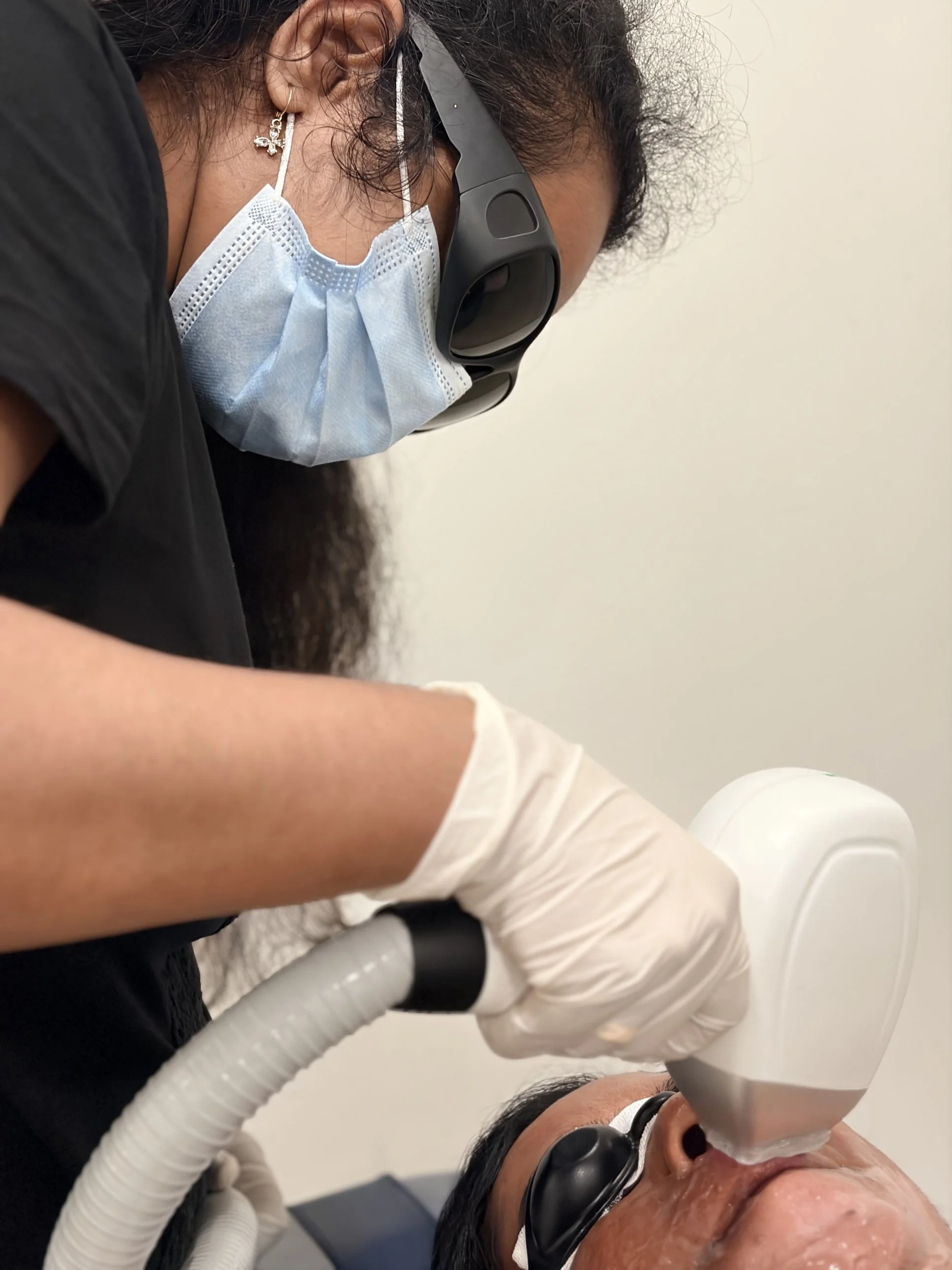
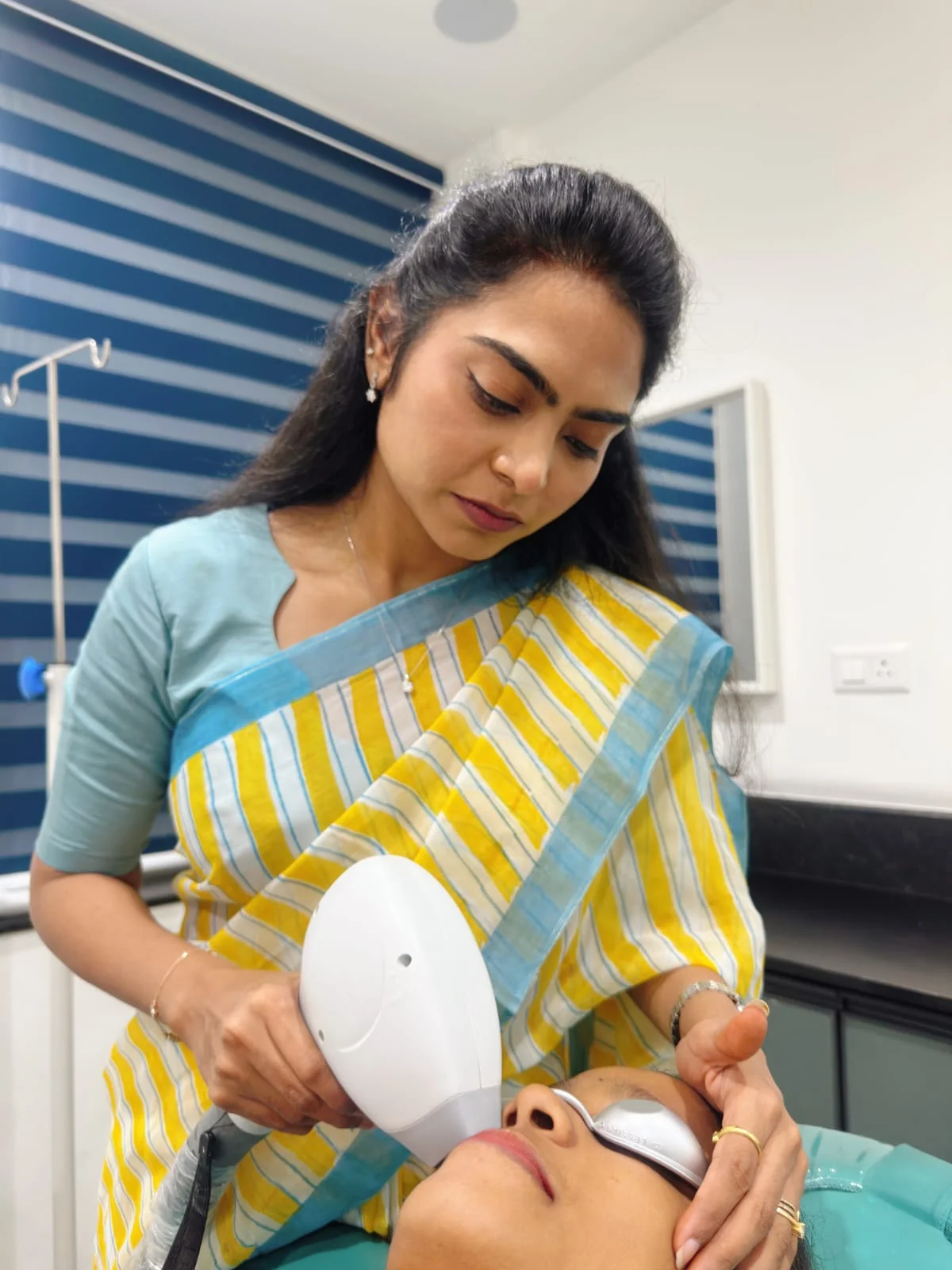
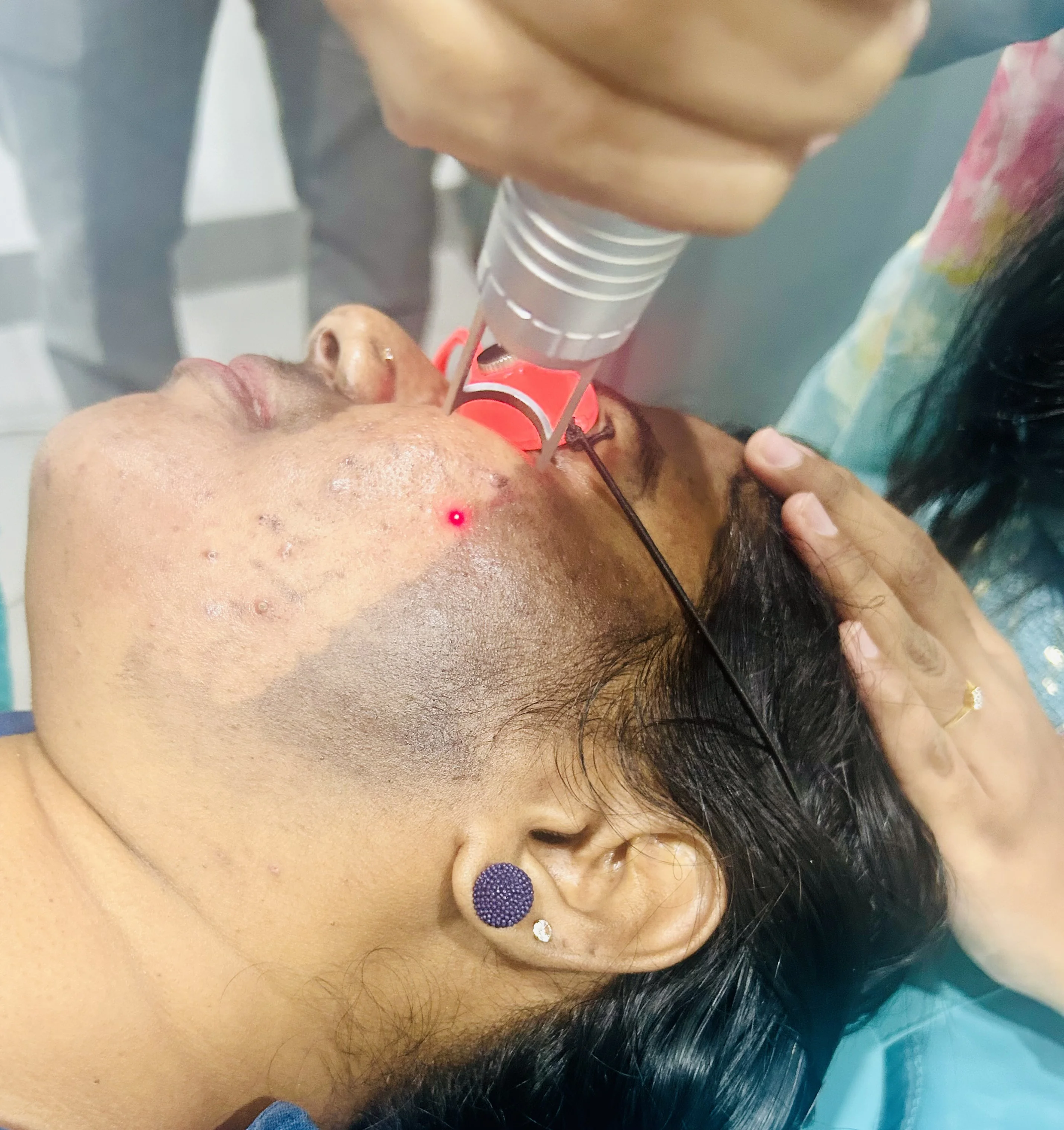
A topical anaesthetic cream (typically lidocaine-based) is applied 45 to 60 minutes before the procedure. Once the area is numb, the fractional CO2 laser is passed over the treatment zone. The device settings (power, density, dwell time) are adjusted based on the indication, skin type, and area being treated. The procedure itself takes 20 to 45 minutes depending on the treatment area.
Patients typically feel a warm, prickling sensation during treatment. The anaesthetic makes the procedure well-tolerated for most individuals.
Post-Treatment Recovery
Days 1-3: The skin appears red, swollen, and may feel warm, similar to a sunburn. A clear or slightly blood-tinged exudate is normal. Gentle cleansing with a mild cleanser and application of a prescribed emollient or healing ointment is essential.
Days 3-5: The exudate dries and the skin begins to form a fine crust. Resist the urge to pick or scrub. The skin may feel tight and dry.
Days 5-10: Crusting resolves and new pink skin emerges underneath. This new skin is delicate and photosensitive.
Weeks 2-4: Redness gradually fades. Strict sun avoidance and SPF 50+ sunscreen are mandatory during this period.
Months 1-6: Collagen remodelling continues. Progressive improvement in scar depth, skin texture, and firmness becomes apparent.
Number of Sessions
- Acne scars: 2 to 4 sessions, spaced 6 to 8 weeks apart
- Photoaging/fine lines: 1 to 2 sessions
- Surgical scars: 2 to 5 sessions depending on severity
- Texture refinement: 1 to 2 sessions
Results and What the Evidence Shows
Clinical studies consistently demonstrate:
- Acne scars: 50 to 70% improvement in scar grading scores after 2 to 3 sessions (measured using Goodman and Baron qualitative scales)
- Photoaging: Significant improvement in fine lines, skin laxity, and pigmentation irregularity
- Patient satisfaction: High satisfaction rates (above 80%) in published patient-reported outcome studies
- Collagen remodelling: Histological studies confirm new collagen type I and III deposition continuing up to 6 months post-treatment
Results are progressive and cumulative. The skin continues to improve for months after each session as the remodelling process unfolds.
Safety and Side Effects
When performed by trained dermatologists with appropriate parameters, fractional CO2 laser has a well-established safety profile. Expected effects include:
- Erythema (redness): Universal; lasts 1 to 4 weeks
- Oedema (swelling): Peaks at 48 hours, resolves within a week
- Post-inflammatory hyperpigmentation: Can occur in darker skin types; usually temporary and manageable with topical agents
- Infection: Rare with proper post-care; antiviral prophylaxis prevents herpes reactivation
Serious complications (permanent scarring, persistent pigmentation changes) are uncommon when treatment is performed by an experienced dermatologist using appropriate settings for the patient’s skin type.
Related DermaVue Services
Frequently Asked Questions
How painful is fractional CO2 laser treatment? With topical anaesthesia applied beforehand, most patients tolerate the procedure well. The sensation is typically described as a warm prickling. Post-treatment discomfort is mild and managed with over-the-counter pain relief if needed.
How long is the downtime? Plan for 5 to 10 days of social downtime. During this period, the skin will be red, crusted, and peeling. Most patients can return to desk work within a week, though outdoor activities should be limited.
Can fractional CO2 laser be used on dark Indian skin? Yes, with modifications. At DermaVue, we adjust laser parameters for Indian skin types and may include pre- and post-treatment depigmenting protocols to minimise the risk of hyperpigmentation.
How soon will I see results? Initial improvement in skin texture is visible once healing is complete (2 to 3 weeks). However, the full benefit from collagen remodelling develops over 3 to 6 months.
Can fractional CO2 laser be combined with other treatments? Yes. At DermaVue, we often combine fractional CO2 laser with PRP therapy or subcision for deep scars, or with skin boosters for enhanced hydration and glow during the healing phase.
Is Fractional CO2 Laser Right for You?
If you have been living with acne scars, sun damage, or textural concerns that have not responded to topical care, fractional CO2 laser offers a level of improvement that few other treatments can match. It requires commitment to the healing process and proper aftercare, but the results, supported by robust clinical evidence, make it one of the most worthwhile investments in your skin’s long-term health.
Schedule a consultation at DermaVue to discuss whether fractional CO2 laser is appropriate for your specific concerns, skin type, and goals.