If you have spent years cycling through shaving, waxing, threading, and depilatory creams only to see hair grow back within days, you are not alone. Unwanted body and facial hair is one of the most common concerns patients bring to our clinics, and the frustration is understandable. These temporary methods demand constant upkeep, can cause ingrown hairs and skin irritation, and never address the root cause of hair growth.
Laser hair removal offers a fundamentally different approach. Rather than cutting or pulling hair at the surface, it targets the hair follicle itself, progressively reducing hair growth over multiple sessions. In this article, I will explain exactly how the technology works, who it is suited for, what the treatment process involves, and what results you can realistically expect.
What Is Laser Hair Removal?
Laser hair removal is a medical procedure that uses concentrated light energy to reduce unwanted hair growth. The term “laser” stands for Light Amplification by Stimulated Emission of Radiation, and in this context, it refers to a device that emits a specific wavelength of light calibrated to be absorbed by melanin, the pigment in hair follicles.
When the laser energy is absorbed by the melanin in a hair follicle, it converts to thermal energy (heat), which damages the follicle’s ability to regenerate hair. This process is known as selective photothermolysis, a principle first described in dermatological literature in the 1980s. The key word is “selective” because the laser parameters are chosen so that the surrounding skin absorbs minimal energy while the pigmented hair follicle absorbs the majority.
It is important to understand that laser hair removal achieves permanent hair reduction, not permanent hair removal. Clinical studies consistently show 70 to 90 percent reduction in hair density after a complete course of treatment. Some fine or light hairs may persist, and occasional maintenance sessions may be needed over time.
How Does Laser Hair Removal Work? The Science Explained
The Hair Growth Cycle
Understanding why multiple sessions are necessary requires knowledge of the hair growth cycle. Human hair grows in three phases:
Anagen (active growth phase). The hair is attached to the follicle, contains melanin, and is actively growing. This is the only phase during which laser treatment is effective because the melanin target is present and connected to the follicle’s growth structures.
Catagen (transition phase). The hair detaches from the follicle and stops growing. Laser treatment during this phase has minimal effect.
Telogen (resting phase). The hair is dormant and eventually sheds. No melanin-rich target is available for the laser.
At any given time, only 20 to 30 percent of hair follicles in a treatment area are in the anagen phase. This is precisely why 6 to 8 sessions, spaced 4 to 6 weeks apart, are required. Each session targets a new cohort of follicles that have entered the anagen phase since the previous treatment.
Laser Wavelengths and Indian Skin
Not all lasers are created equal, and this is especially relevant for Indian skin. Indian skin types typically fall in the Fitzpatrick III to V range, meaning there is significant melanin in both the hair follicle and the surrounding skin. If the wrong laser or parameters are used, the skin melanin can absorb excessive energy, leading to burns, blistering, or post-inflammatory hyperpigmentation.
At DermaVue, we use platforms specifically suited for darker skin tones:
- Diode laser (810 nm): Penetrates deeper into the dermis with a wavelength that has a favourable ratio of absorption by hair melanin versus skin melanin. It is considered the gold standard for Indian skin types.
- Nd:YAG laser (1064 nm): Has the deepest penetration and the lowest risk of epidermal damage in dark skin. Particularly useful for patients with very dark skin (Fitzpatrick V) or tanned skin.
The choice of laser, pulse duration, fluence (energy level), and cooling mechanism are all adjusted based on your individual skin tone, hair colour, hair thickness, and the treatment area.
Who Is a Good Candidate for Laser Hair Removal?
Laser hair removal works most effectively when there is a contrast between hair colour (dark) and skin colour (lighter), because the laser needs melanin in the hair to target. However, with modern Nd:YAG and diode lasers, effective treatment is possible across a wide range of skin tones.
Ideal candidates include:
- Individuals with dark brown or black hair on any body area
- Those experiencing ingrown hairs or folliculitis from shaving or waxing
- Women with hormonal hair growth (hirsutism) related to conditions like polycystic ovarian syndrome (PCOS)
- Men seeking reduction of back, chest, or beard-area hair
- Anyone wanting long-term reduction of hair maintenance
Less ideal scenarios:
- Very light blonde, red, or grey hair (insufficient melanin for laser targeting)
- Active skin infections or open wounds in the treatment area
- Patients on photosensitizing medications (some antibiotics, retinoids)
- Recent tanning or sunburn in the treatment zone
During your consultation at DermaVue, we assess these factors and provide an honest evaluation of expected outcomes.
The Treatment Process at DermaVue
Before Your Session
- Shave the treatment area 24 hours before your appointment (the laser targets the follicle beneath the skin, not the surface hair)
- Avoid waxing, threading, or plucking for at least 4 weeks prior (these methods remove the follicle target)
- Avoid direct sun exposure and apply sunscreen to the treatment area for 2 weeks before
- Inform your dermatologist about any medications, particularly isotretinoin, which requires discontinuation before laser procedures
During the Procedure
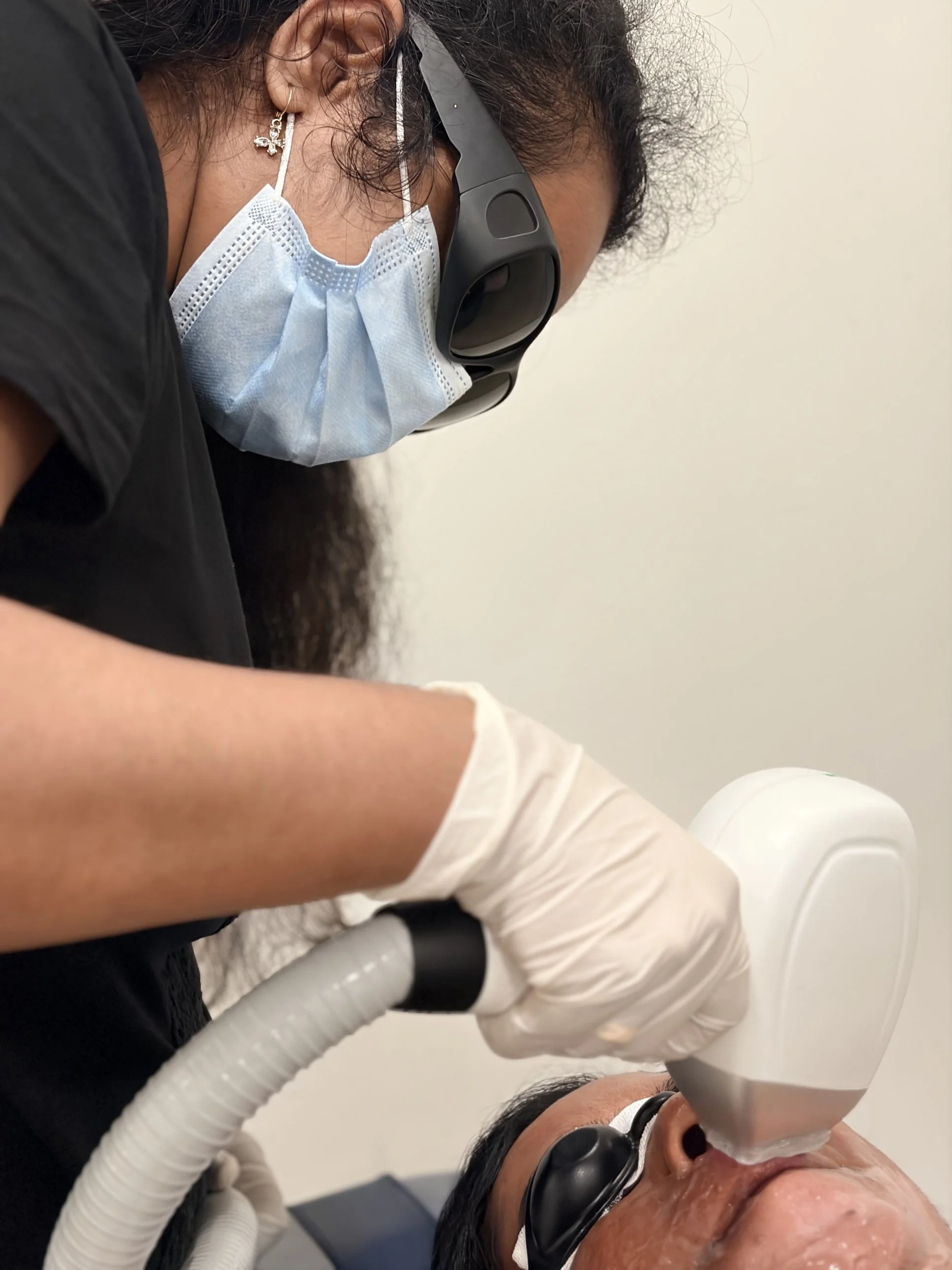
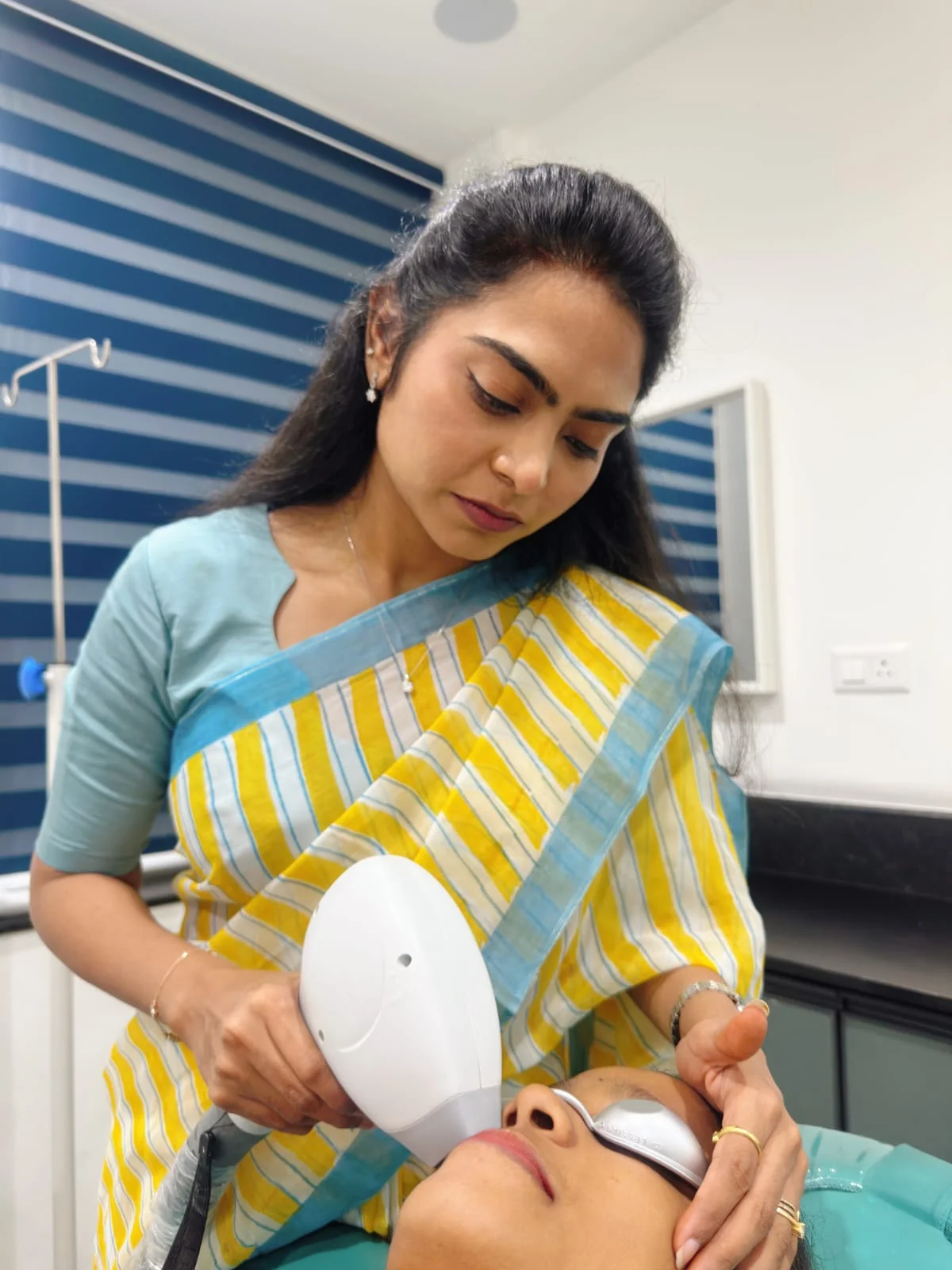
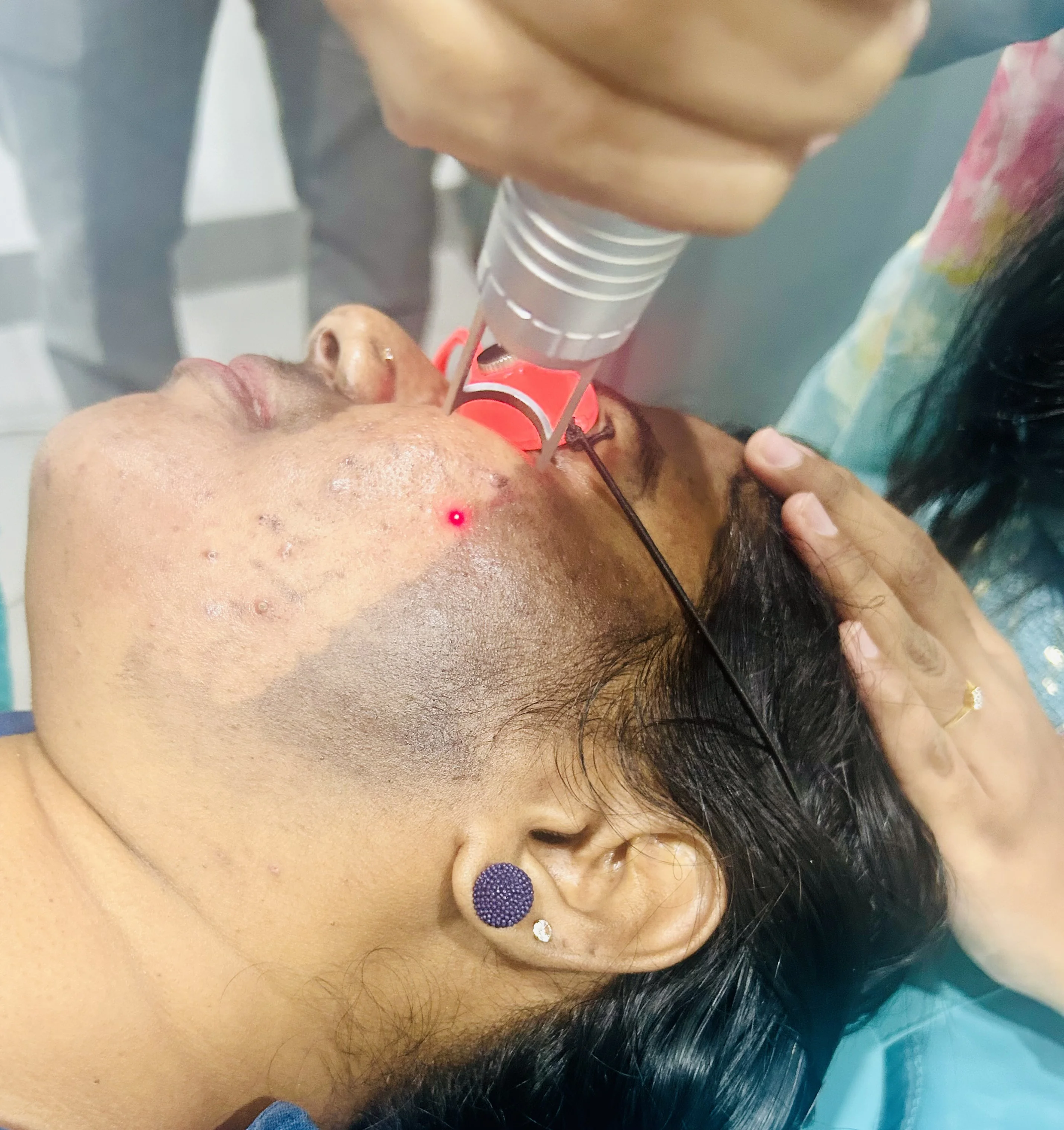
The treatment area is cleaned, and a cooling gel may be applied. The laser handpiece is passed over the skin in a systematic pattern. Most modern devices incorporate contact cooling or cryogen spray to protect the epidermis and improve comfort.
Sensations vary by area. Most patients describe it as a mild snapping or warming feeling. Areas with thinner skin (upper lip, bikini line) tend to be more sensitive than areas with thicker skin (legs, back). Each session takes 15 to 60 minutes depending on the treatment zone: the upper lip may take 10 minutes, while full legs may take 45 to 60 minutes.
After Treatment
- Mild redness and slight swelling (perifollicular oedema) are normal and typically resolve within a few hours
- Apply a soothing aloe-based gel or prescribed post-treatment cream
- Avoid sun exposure and apply SPF 30+ sunscreen diligently
- Avoid hot baths, saunas, and vigorous exercise for 24 to 48 hours
- Treated hairs will shed gradually over 1 to 3 weeks (this is normal and expected)
Treatment Schedule
| Session | Timing | Expected Outcome |
|---|---|---|
| 1-2 | Weeks 0-6 | Noticeable reduction in hair density; finer regrowth |
| 3-4 | Weeks 12-18 | Significant thinning; slower regrowth cycle |
| 5-6 | Weeks 24-30 | Majority of hair follicles disabled; sparse fine hair may remain |
| 7-8 | Weeks 36-42 | Optimal reduction achieved for most patients |
| Maintenance | Every 6-12 months | Touch-up for any hormonal or residual regrowth |
Results and Realistic Expectations
Published clinical data indicates that diode and Nd:YAG lasers achieve 70 to 90 percent reduction in hair count after 6 to 8 sessions. The remaining hair is typically finer, lighter, and slower growing.
Several factors influence individual results:
- Hormonal status: Conditions like PCOS can drive new hair growth even after successful treatment of existing follicles. Managing the underlying hormonal condition alongside laser sessions produces better outcomes.
- Treatment area: The underarms and bikini area often respond faster than the face, where hormonal influences are stronger.
- Compliance with the schedule: Skipping sessions or irregular spacing reduces cumulative efficacy.
- Skin and hair colour: Darker hair on lighter skin responds best, but modern lasers have narrowed this gap significantly.
Safety Profile
Laser hair removal has an established safety record when performed by trained dermatologists with appropriate equipment. The most common side effects are transient and include:
- Mild redness (erythema) lasting a few hours
- Perifollicular swelling that resolves within 24 hours
- Temporary pigment changes (hyperpigmentation or hypopigmentation), more common in darker skin when incorrect parameters are used
Serious complications such as burns, blistering, or scarring are rare and almost exclusively associated with untrained operators or inappropriate devices. This is why choosing a dermatologist-led clinic with the right laser platform for your skin type is essential.
Laser Hair Removal vs. Other Methods
| Method | Duration of Results | Pain Level | Ingrown Hair Risk | Skin Irritation |
|---|---|---|---|---|
| Shaving | 1-3 days | Low | High | Moderate |
| Waxing | 2-4 weeks | High | Moderate | High |
| Threading | 2-4 weeks | Moderate | Low | Low (face only) |
| Depilatory Creams | 1-2 weeks | Low | Low | High (chemical) |
| Laser Hair Removal | Long-term (years) | Low-Moderate | Very Low | Very Low |
Related DermaVue Services
Frequently Asked Questions
Is laser hair removal painful? Most patients describe the sensation as a mild snap against the skin, similar to a rubber band flick. Modern devices with integrated cooling systems have significantly improved comfort. Topical numbing cream can be applied for sensitive areas if needed.
How many sessions will I need? A typical course involves 6 to 8 sessions spaced 4 to 6 weeks apart. The exact number depends on the treatment area, your hair type, and hormonal factors. Some patients achieve satisfactory results in fewer sessions; others may need additional treatments.
Can laser hair removal be done on the face? Yes. Common facial treatment areas include the upper lip, chin, sideburns, and jawline. Facial hair is often influenced by hormones, so maintenance sessions may be needed more frequently than for body areas.
Is it safe for Indian skin tones? Absolutely, when the correct laser and parameters are used. At DermaVue, we use diode and Nd:YAG lasers that are specifically suited for Fitzpatrick skin types III to V, which covers the majority of Indian skin tones.
What areas of the body can be treated? Virtually any area with unwanted hair can be treated, including the face, underarms, arms, legs, bikini line, chest, back, and abdomen. The only areas typically excluded are directly around the eyes.
Making the Right Choice
Laser hair removal is not a trend; it is a well-established dermatological procedure backed by decades of clinical research and technological refinement. If you are spending time and money on temporary hair removal methods that irritate your skin and never truly solve the problem, a consultation with a dermatologist can help you understand whether laser hair removal is right for you.
At DermaVue, we combine the right technology with individualised treatment parameters to deliver safe, effective, and lasting results. Book a consultation to discuss your specific concerns and get a personalised treatment plan.