Laser hair removal is one of the most commonly requested procedures in my clinic at DermaVue Coimbatore, and it is also one of the most misunderstood. Patients arrive with expectations shaped by social media claims, salon advertisements, and word-of-mouth information that ranges from roughly accurate to completely misleading. As a dermatologist who performs this procedure regularly on South Indian skin types, I want to provide a comprehensive, evidence-based guide that addresses the specific considerations relevant to patients in Coimbatore.
The core message I share with every patient during consultation is this: laser hair removal is a medical procedure, not a beauty treatment. The distinction matters - because the safety, efficacy, and long-term outcomes of this procedure depend entirely on the quality of the device used, the expertise of the person operating it, and the appropriateness of the treatment parameters for your specific skin type.
How Laser Hair Removal Works: The Dermatological Science
Laser hair removal operates on the principle of selective photothermolysis - a concept first described by Anderson and Parrish in 1983. The laser emits a specific wavelength of light that is selectively absorbed by melanin (the pigment) in the hair follicle. This absorbed energy converts to heat, which damages the follicular stem cells responsible for hair regeneration, while sparing surrounding tissue.
The key factors that determine treatment efficacy are:
Hair Growth Cycle
Hair grows in three phases:
- Anagen (active growth): The only phase during which the hair follicle contains enough melanin for effective laser targeting. Approximately 20-30% of hairs are in anagen at any given time.
- Catagen (transitional): The follicle shrinks and disconnects from the blood supply.
- Telogen (resting): The hair eventually sheds, and the cycle restarts.
This is why laser hair removal requires multiple sessions - each session targets the 20-30% of follicles in anagen phase at that time. Over 6-8 sessions spaced at appropriate intervals, the cumulative effect captures the majority of follicles during their active phase.
Wavelength Selection for Indian Skin
This is where the clinical expertise becomes critical, particularly for patients in Coimbatore and South India. Most patients here fall within Fitzpatrick skin types IV-V (some extending to VI), with higher baseline epidermal melanin. This means the laser can potentially target melanin in the skin as well as in the hair - leading to burns, blistering, and post-inflammatory hyperpigmentation (PIH) if inappropriate wavelengths or parameters are used.
The IADVL Consensus Guidelines on Laser Hair Removal in Indian Skin recommend:
- 1064nm Nd:YAG laser: The safest wavelength for Fitzpatrick types IV-VI. The longer wavelength penetrates deeper into the dermis, bypassing epidermal melanin and targeting the hair bulb more selectively. This is the primary laser I use for the majority of my Coimbatore patients.
- 810nm Diode laser: Effective for Fitzpatrick types III-V. Offers a good balance between efficacy and safety for medium-toned Indian skin. Modern diode systems with contact cooling provide additional epidermal protection.
- 755nm Alexandrite laser: Most effective for lighter skin types (Fitzpatrick I-III). Generally NOT recommended as the sole treatment laser for darker South Indian skin due to higher risk of epidermal injury.
Triple-wavelength platforms that combine all three wavelengths in a single device offer versatility - allowing the dermatologist to customise treatment for different body areas and skin tones on the same patient. At DermaVue Coimbatore, we use US-FDA cleared multi-wavelength systems for this reason.
The Critical Difference: Laser vs. IPL
A common source of confusion is the difference between true laser devices and IPL (Intense Pulsed Light) machines. Many beauty salons and spas in Coimbatore offer “laser hair removal” using IPL devices - these are fundamentally different technologies.
| Parameter | Medical Laser | IPL |
|---|---|---|
| Light source | Single, coherent wavelength | Broad-spectrum, non-coherent light |
| Precision | High - targets specific chromophore | Lower - energy dispersed across wavelengths |
| Efficacy on dark hair/dark skin | High with appropriate wavelength | Limited and higher risk |
| Safety for Fitzpatrick IV-VI | High (especially Nd:YAG) | Higher risk of burns and PIH |
| Regulatory status | Classified as medical device | Often classified as cosmetic device |
| Operator requirement | Should be operated by or under dermatologist supervision | Often operated by beauticians |
Per IADVL guidelines, laser hair removal on Indian skin types should be performed by or under the direct supervision of a qualified dermatologist using appropriate medical-grade laser devices.
Coimbatore-Specific Considerations
Climate and Post-Treatment Care
Coimbatore’s climate - warm year-round with UV index frequently in the “very high” range - requires specific attention to post-treatment sun protection. The key protocols I emphasise to my Coimbatore patients:
- Strict sun protection for 2-4 weeks post-treatment: SPF 50+ broad-spectrum sunscreen applied to treated areas, reapplied every 2-3 hours if outdoors. This is critical for preventing PIH.
- Avoid excessive sweating for 48 hours: In Coimbatore’s warm climate, this means planning activities accordingly. Sweating can irritate freshly treated follicles and increase infection risk.
- Loose, breathable cotton clothing: Given that Coimbatore is India’s textile capital, cotton is readily available. Tight clothing over treated areas can cause friction-related irritation.
- Avoid swimming for 1 week: Both chlorinated pool water and natural water bodies can irritate treated skin.
Hormonal Considerations in the Local Population
PCOS (Polycystic Ovary Syndrome) is a significant factor in female hair growth patterns. Studies published in the Journal of Human Reproductive Sciences estimate PCOS prevalence at 9-22% among Indian women of reproductive age, with some urban studies suggesting higher rates.
For patients with PCOS-related hirsutism, laser hair removal addresses the cosmetic concern, but the underlying hormonal condition requires concurrent management. At DermaVue, I routinely coordinate with gynaecologists and endocrinologists to ensure that hormonal factors are addressed alongside the laser treatment. Without hormonal management, patients with PCOS may experience faster regrowth and require more frequent maintenance sessions.
Similarly, thyroid dysfunction - both hypothyroidism and hyperthyroidism - can affect hair growth patterns and should be screened for during the initial consultation.
The Treatment Journey at DermaVue Coimbatore
Initial Consultation
Every laser hair removal programme at DermaVue Coimbatore begins with a comprehensive dermatological consultation. This is not a formality - it is a medical assessment that determines treatment safety and efficacy.
During the consultation, I evaluate:
- Skin type assessment: Fitzpatrick classification to guide wavelength and parameter selection
- Hair characteristics: Colour, thickness, density, and growth pattern - all affect treatment planning
- Medical history: Medications (photosensitising drugs, isotretinoin), hormonal conditions (PCOS, thyroid), autoimmune conditions, history of keloid scarring
- Patch test: A small test area is treated to assess skin response and calibrate optimal settings before proceeding to full treatment
- Realistic expectation setting: I discuss expected outcomes, number of sessions, maintenance requirements, and potential limitations based on the patient’s specific profile
Pre-Treatment Preparation
2 weeks before treatment:
- Stop waxing, threading, or plucking (these remove the hair shaft that the laser needs to target)
- Shaving is permitted and recommended (removes surface hair while preserving the follicular target)
- Avoid sun exposure and tanning
- Discontinue photosensitising medications if medically safe to do so
Day of treatment:
- Shave the treatment area 12-24 hours prior
- Arrive with clean, product-free skin
- Wear loose, comfortable clothing
- Avoid caffeinated beverages (can increase skin sensitivity)
During the Session
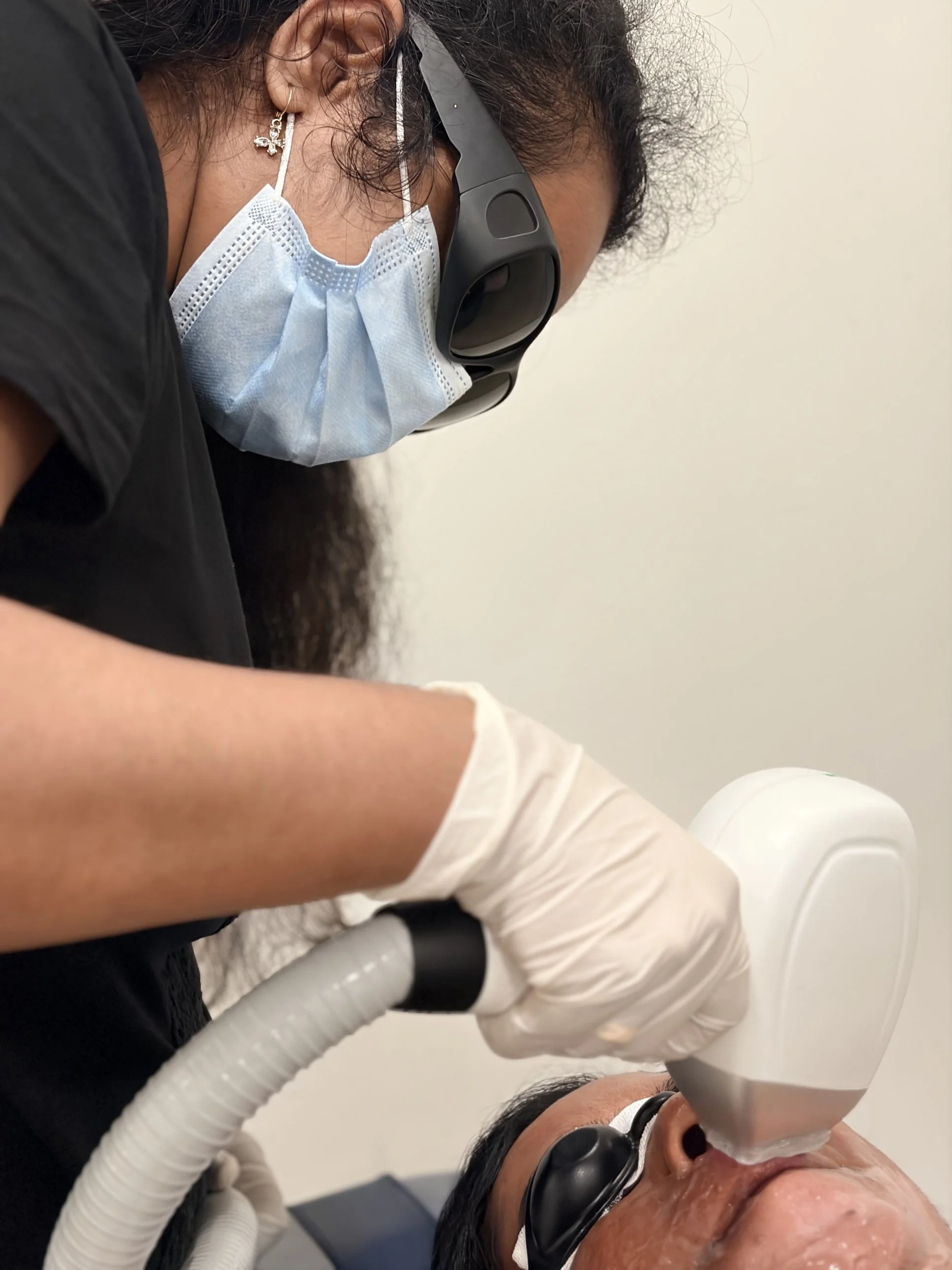
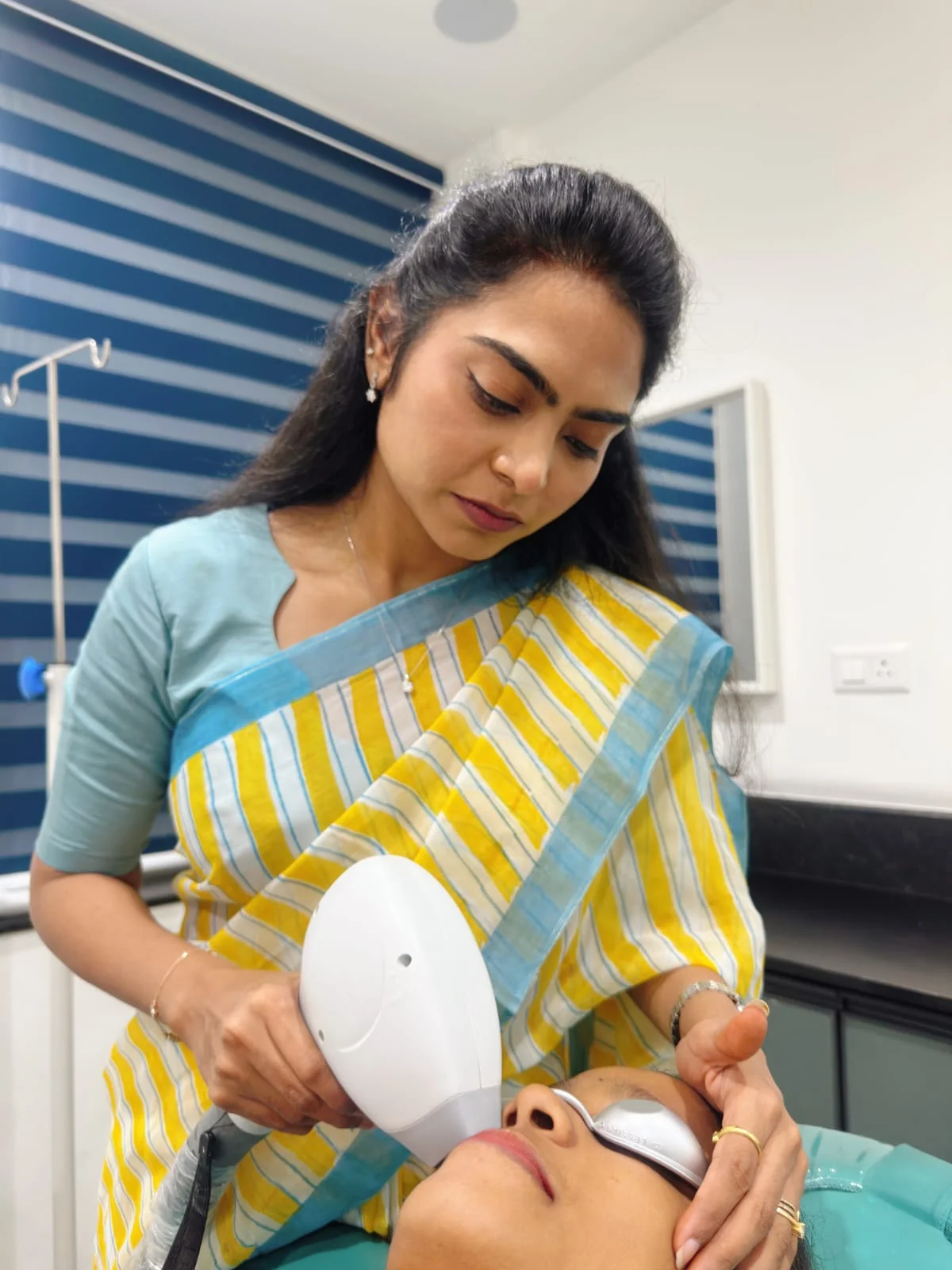
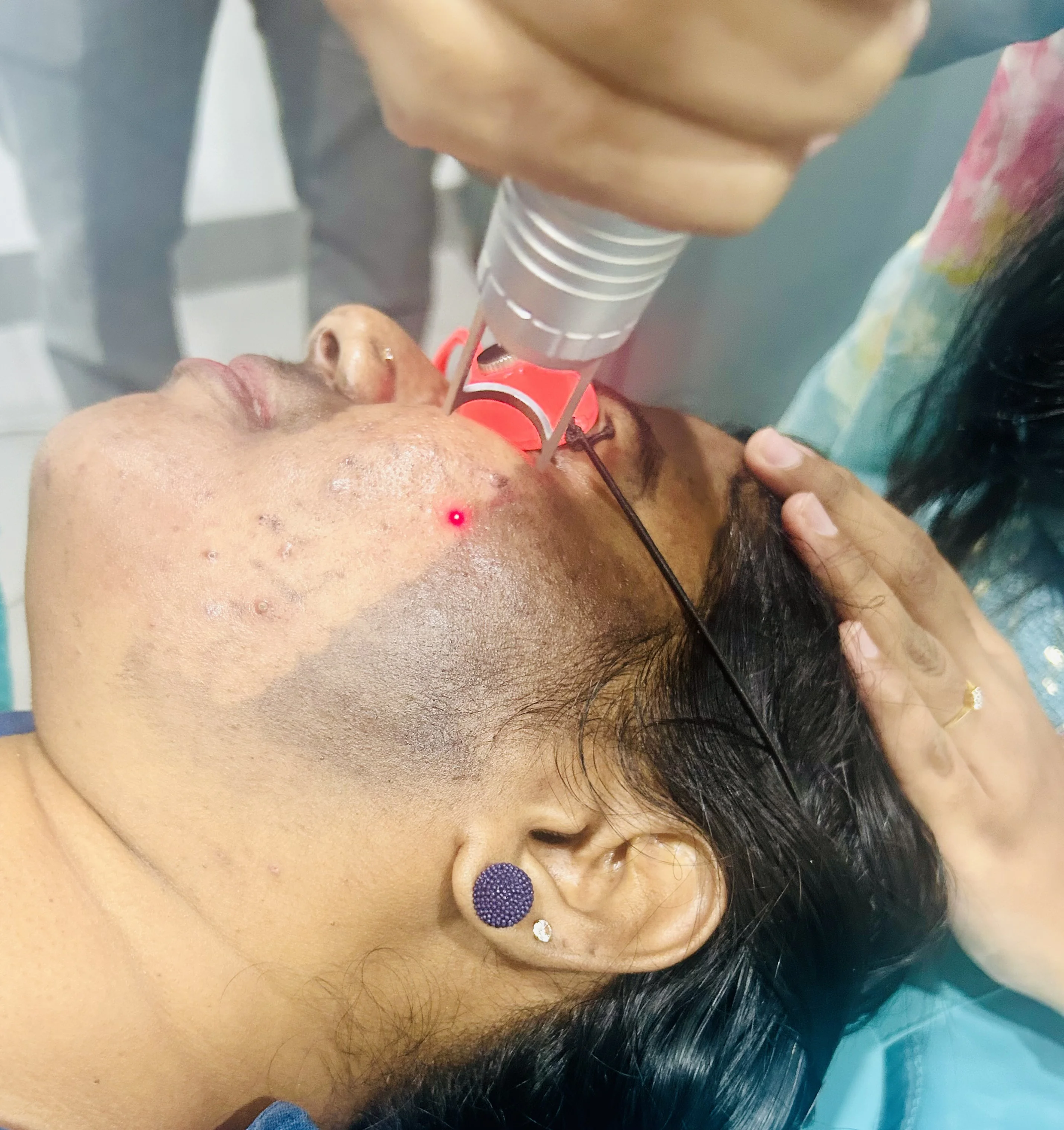
The treatment involves:
- Cleansing and marking the treatment area
- Application of contact cooling gel (for some systems) or activation of integrated cooling (sapphire tip cooling, cryogen spray)
- Protective laser eyewear for both patient and operator
- Systematic laser application using overlapping passes to ensure complete coverage
- Post-treatment cooling and soothing application
Session duration varies by treatment area:
- Upper lip: 10-15 minutes
- Underarms: 15-20 minutes
- Full arms: 30-40 minutes
- Full legs: 45-60 minutes
- Full body: 90-120 minutes
Expected Outcomes: A Realistic Timeline
I present outcomes as ranges because individual variation is significant:
- After session 1-2: Hair shedding over 2-3 weeks. Approximately 10-20% permanent reduction. Regrowth is finer and lighter.
- After session 3-4: 30-50% cumulative reduction. Noticeably less dense regrowth. Shaving frequency significantly reduced.
- After session 5-6: 60-80% reduction. Most patients report substantial cosmetic improvement.
- After session 7-8: 80-90% reduction for most treatment areas. Remaining hairs are typically fine and sparse.
- Maintenance: 1-2 sessions annually to address hormonally-driven new growth or any residual follicles.
These outcomes are based on proper medical-grade laser treatment at appropriate parameters. Salon-based treatments with suboptimal devices may yield significantly lower results.
Safety Profile and Side Effects
Expected (Normal) Effects
- Mild erythema (redness) lasting 2-6 hours
- Perifollicular oedema (swelling around treated follicles) - actually a sign of effective treatment
- Slight warmth in the treated area
Uncommon Side Effects
- Blistering (rare with proper parameters and cooling)
- Post-inflammatory hyperpigmentation (PIH) - the most relevant risk for South Indian skin types. Minimised by proper wavelength selection, conservative energy settings, and strict post-treatment sun protection
- Post-inflammatory hypopigmentation (rare, usually temporary)
- Folliculitis (inflammation of treated follicles, usually self-resolving)
Contraindications
- Pregnancy and breastfeeding
- Active skin infections in the treatment area
- Recent chemical peel or dermabrasion (within 2-4 weeks)
- Isotretinoin use within the past 6 months
- Active tan or sunburn
- History of keloid scarring (relative contraindication)
- Uncontrolled diabetes
- Photosensitising medications
Why Clinic Selection Matters
The safety and efficacy gap between a medical-grade laser treatment supervised by a dermatologist and a salon IPL session operated by a beautician is substantial. Consider these factors:
- Complication management: A dermatologist can manage burns, PIH, or allergic reactions immediately. A beautician cannot.
- Parameter customisation: Dermatologists adjust fluence, pulse width, and spot size based on real-time skin response. Salon operators typically use fixed settings.
- Pre-treatment screening: Hormonal conditions, medication interactions, and skin conditions that contraindicate treatment are identified only through medical assessment.
- Device quality: Medical-grade lasers undergo rigorous FDA or CE testing. Many salon devices are unregulated imports.
At DermaVue, every laser procedure is performed under dermatologist supervision using US-FDA cleared devices with real-time skin monitoring and integrated cooling systems.
Related DermaVue Services
Frequently Asked Questions
1. Is laser hair removal truly permanent?
The FDA-approved term is “permanent hair reduction” rather than “permanent hair removal.” Clinical studies demonstrate 80-90% long-term reduction after a complete treatment course. Some fine hairs may persist or new follicles may become active due to hormonal changes. Annual maintenance sessions address this effectively.
2. Is the procedure painful?
Discomfort is typically described as a mild stinging or “rubber band snap” sensation. Modern laser systems with sapphire cooling or cryogen spray significantly reduce discomfort. Most patients find the procedure tolerable without anaesthesia. For sensitive areas, a topical numbing cream (lidocaine-based) can be applied 30-45 minutes before treatment.
3. How does laser hair removal compare to electrolysis?
Electrolysis destroys individual follicles using electric current and is technically the only method classified as “permanent hair removal” by the FDA. However, it treats one follicle at a time, making it impractical for large areas. Laser hair removal treats hundreds of follicles simultaneously, making it far more efficient for areas like legs, arms, back, or full face. For very fine, light-coloured hairs that laser cannot target effectively, electrolysis remains an option.
4. Can laser hair removal worsen hair growth (paradoxical hypertrichosis)?
Paradoxical hypertrichosis is a rare but documented phenomenon where laser treatment stimulates increased hair growth in the treated area or adjacent untreated areas. It is more commonly reported on the face (particularly the cheeks and jawline) and in patients with fine vellus hair or hormonal conditions. The risk is minimised by using appropriate energy settings and avoiding treatment of very fine, light hair. If it occurs, adjusting the laser parameters or switching wavelengths usually resolves it.
5. When should I start laser hair removal before my wedding?
I recommend beginning at least 8-10 months before the wedding date. This allows time for 6-8 sessions at 4-6 week intervals, plus buffer time for any areas requiring additional sessions. Starting early also means you can schedule sessions around other pre-wedding preparations without time pressure.
Conclusion
Laser hair removal, when performed correctly with appropriate technology and clinical expertise, is one of the most effective and well-studied cosmetic dermatological procedures available. For patients in Coimbatore, the specific considerations around skin type, climate, hormonal factors, and post-treatment UV exposure make it particularly important to choose a qualified dermatological clinic over a salon or spa.
The investment in proper medical-grade treatment pays dividends in safety, efficacy, and long-term results. The alternative - repeated salon visits with suboptimal devices - often costs more over time while delivering inferior outcomes and carrying higher risk.
If you are considering laser hair removal, I encourage you to start with a proper dermatological consultation. At DermaVue Coimbatore, we will assess your skin, discuss your goals, and create a treatment plan that prioritises both safety and results.
Book your consultation today to begin your journey toward effective, lasting hair reduction.
Dr. Minu Liz Mathew is a board-certified dermatologist at DermaVue Clinics, specialising in laser dermatology, pigmentary disorders, and procedural dermatology for South Asian skin types.