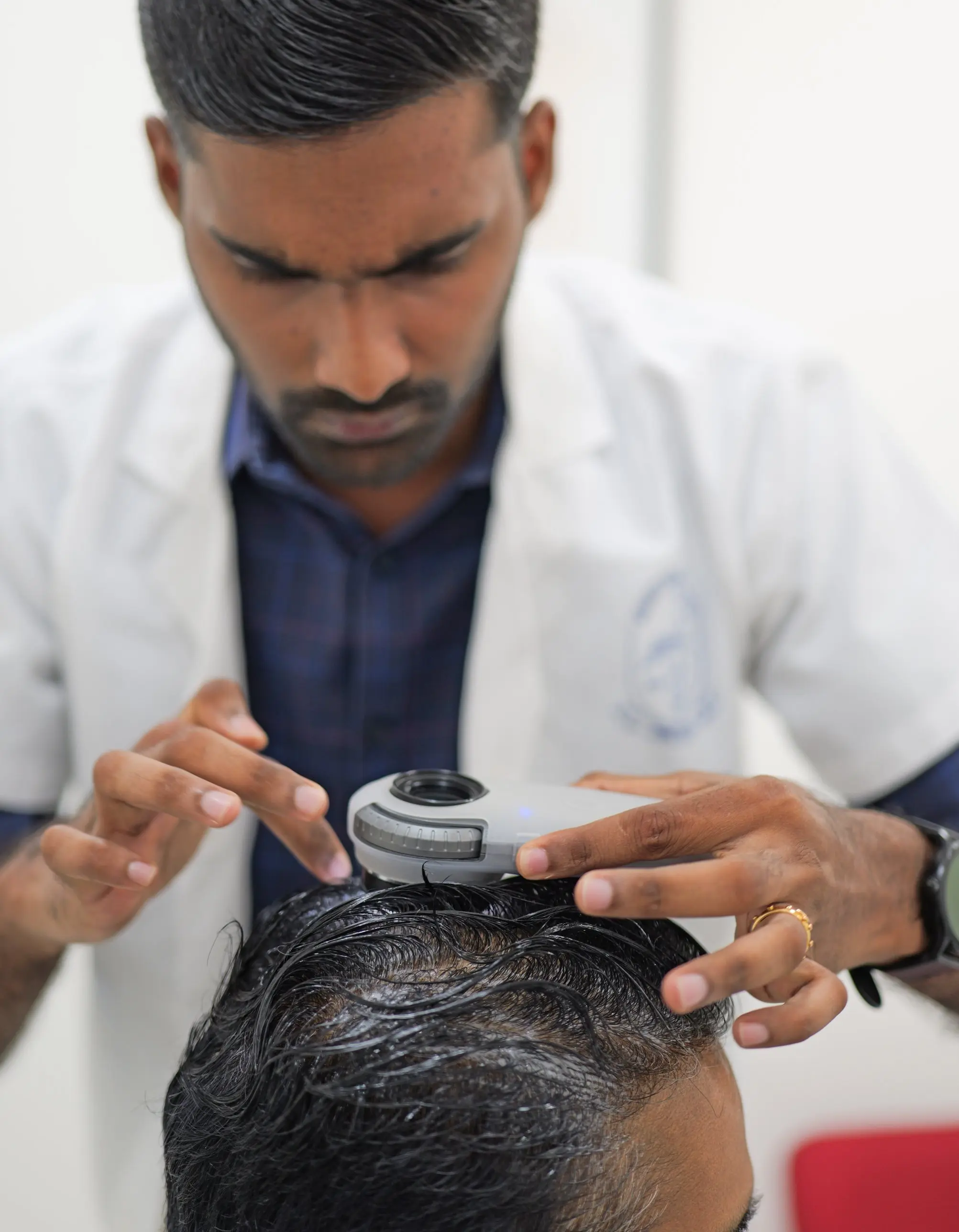
Written by Dr. Rejeesh Menon, MD (Internal Medicine), Director, Metabolic Health Program, DermaVue. Medically reviewed by Dr. Sarath Chandran, MD DVL, IADVL member, Managing Director, DermaVue. General information only, not a substitute for a personal medical consultation.
Quick answer: GLP-1 medicines can help some women lose weight that stays on after pregnancy, but not straight after delivery and not while breastfeeding. Whether you qualify depends on how long ago you delivered, whether you are still breastfeeding, your BMI and any related conditions such as PCOS or past gestational diabetes. You need a physician assessment first. GLP-1 medicines are never used during pregnancy.
Safety note: Do not use GLP-1 medicines during pregnancy. If you find out you are pregnant while on treatment, stop the medicine and tell your doctor the same day.
Weight after pregnancy comes up in almost every week of my metabolic health clinic. A typical patient tells me she lost the weight after her first baby without much trouble. After the second, it simply stayed, even with walking every evening and cutting down on rice.
GLP-1 medicines have done well in weight-loss trials, so more women are now asking whether they can use them after a baby. The answer depends mostly on timing, and that is what this article covers.
Why Does Weight Gain Happen After Pregnancy?
The body stores extra fat during pregnancy to support the baby and breastfeeding. Very little of this is meant to disappear on delivery day.
What contributes to postpartum weight retention?
-
Fat stored during pregnancy does not automatically come off after delivery.
-
Hormones take time to settle. Changes in oestrogen, leptin and insulin sensitivity affect how your body stores fat.
-
Broken sleep makes you hungrier. Short nights raise ghrelin, the hunger hormone, and lower leptin, which tells you that you are full.
-
You move less for weeks while recovering, longer after a caesarean.
-
Our postnatal traditions, with ghee, sweets, rich food and weeks of rest, are well meant but add up.
-
Thyroid problems, PCOS or insulin resistance after gestational diabetes are common and often missed.
How much postpartum weight retention is common?
Most women lose much of their pregnancy weight within the first year, though many keep a few kilos. Women who gained more than recommended during pregnancy, or who already had metabolic risk factors, tend to keep more. In India, long postnatal rest and a heavier postnatal diet can add to this.
When should postpartum weight become a medical concern?
See a doctor rather than trying another diet on your own if, a year after delivery, you have not returned to your pre-pregnancy weight and your BMI is above 27.5 (the threshold Indian guidelines use for obesity-related risk), or you have insulin resistance, PCOS or high cholesterol.
What Are GLP-1 Medications and How Do They Work?
GLP-1 (glucagon-like peptide-1) is a hormone your gut releases after a meal. GLP-1 medicines copy it. They were first approved for type 2 diabetes and are now also approved for long-term weight management in adults with obesity, or with overweight plus a related health condition.
How they produce weight loss
-
Less hunger: They act on the appetite centre in the brain, so you feel full after a smaller meal.
-
Slower stomach emptying: Food stays in the stomach longer, so you stay full for longer.
-
Fewer cravings: Many patients find sweets and fried snacks less tempting.
-
Better insulin response: This matters for women with insulin resistance or past gestational diabetes.
What class of medications is this?
Our programme uses approved GLP-1 receptor agonists. We do not name individual brands here. Your physician will choose the medicine and dose with you at your consultation.
DermaVue’s Metabolic Health Program is physician-supervised. Dr. Rejeesh Menon assesses, doses and monitors every patient. It is not a self-administered or online-only programme.
Who May Be Eligible for GLP-1 Treatment After Pregnancy?
Not every woman with weight after pregnancy needs GLP-1 treatment. These are the points we check:
| Criterion | Typical threshold | Notes |
|---|---|---|
| BMI | 27.5 or above (Indian guidelines) | Lower than Western cut-offs, because metabolic risk starts at a lower weight in Indians |
| Time since delivery | At least 3 to 6 months | Starting earlier needs a strong medical reason |
| Breastfeeding | Not currently breastfeeding | See “Is GLP-1 safe while breastfeeding?” above |
| Related conditions | Insulin resistance, PCOS, past gestational diabetes, high cholesterol | These make treatment more likely to be recommended |
| Lifestyle | Willing to eat enough protein and stay active | The medicine works best with both |
| Safety | No personal or family history of medullary thyroid cancer or MEN2 | If present, GLP-1 cannot be used |
Please do not use this table to decide for yourself. Your physician will take a full history, examine you and check your blood tests first.
Is GLP-1 Safe While Breastfeeding?
This is the question postpartum patients ask me most.
What does the current evidence say?
-
Animal studies found some GLP-1 medicines pass into milk.
-
Human data are very limited. LactMed, the US National Library of Medicine’s breastfeeding database, reports one small study in which the medicine was not detected in the breast milk of eight mothers, and their babies had no reported problems.
-
Eight mothers is far too few to call these medicines safe during breastfeeding, and we have no long-term data on the babies.
-
These medicines also cut appetite, and a breastfeeding mother needs good nutrition for herself and her milk.
What is the practical guidance?
We do not start GLP-1 treatment while you are breastfeeding. Once you have weaned and are at least three to six months past delivery, we assess you individually. If you plan to stop breastfeeding soon, come in for a first consultation now. We can do your blood tests and plan ahead so you can start at the right time.
How Long After Delivery Can You Consider GLP-1 Treatment?
There is no single answer. This is the framework we use at DermaVue:
| Timeframe | Recommendation | Reason |
|---|---|---|
| 0 to 6 weeks | Not appropriate | Your body is still healing from delivery. Recovery comes first. |
| 6 weeks to 3 months | Not recommended | Too early if breastfeeding. Even if not, you are still recovering, and losing weight now can affect your nutrition. |
| 3 to 6 months | Assessment possible if not breastfeeding | Your metabolism has settled enough for a physician to judge readiness. |
| 6 months onwards | Standard assessment | BMI, blood tests and health history. |
| 12 months onwards | Get a medical review | Weight still present a year after delivery is less likely to come off on its own. |
If you had gestational diabetes, keep getting your blood sugar checked after delivery, whatever your weight. GLP-1 treatment may be useful for you, and an assessment from six months after delivery is sensible.
Side Effects and Risks of GLP-1 Therapy
The side effects are well known from large trials. These are the ones to expect.
Common side effects (usually mild and short-lived)
-
Nausea. The most common one, mostly in the first few weeks. It usually eases as the dose is increased slowly.
-
Vomiting. Less common, often after eating too fast or too much.
-
Constipation or loose stools while the gut adjusts.
-
Tiredness in the first few weeks.
-
Lower appetite. This is the intended effect, but you still need to eat enough, especially protein.
Less common but important side effects
-
Hair fall, mainly because of fast weight loss rather than the medicine itself. We explain this in hair fall, loose skin and facial changes on GLP-1.
-
A thinner-looking face after larger weight loss, more noticeable in older patients.
-
Redness, bruising or soreness where the medicine is given.
Do not use GLP-1 if:
-
You are pregnant, or plan to become pregnant in the next two months.
-
You are breastfeeding (see the breastfeeding section above).
-
You or a parent, brother or sister has had medullary thyroid cancer or MEN2.
-
You have had pancreatitis (discuss with your physician).
-
You have a serious stomach or bowel condition.
Safety note: If you get severe stomach pain, vomiting that will not stop, or anything else that worries you during treatment, call your doctor straight away. Do not wait for your next appointment.
What Results Can You Realistically Expect?
Before anyone starts, we talk about what is realistic. The trial results are good, but every patient is different.
What clinical trials show
In the main weight-loss trials, adults lost on average about 15 percent of their body weight over 68 weeks (STEP-1 trial, NEJM 2021) and about 20 percent over 72 weeks with a dual-action medicine (SURMOUNT-1 trial, NEJM 2022), along with diet and exercise support. These trials did not focus on women after pregnancy, so we use a more cautious range of 10 to 15 percent when we talk to postpartum patients.
Illustrative ranges for a postpartum patient
| Starting weight | Possible 12-month loss (10 to 15%) | Notes |
|---|---|---|
| 70 kg | 7 to 10.5 kg | With regular treatment and lifestyle support |
| 80 kg | 8 to 12 kg | With regular treatment and lifestyle support |
| 90 kg | 9 to 13.5 kg | With regular treatment and lifestyle support |
| 100 kg | 10 to 15 kg | With regular treatment and lifestyle support |
These are examples, not promises. Results depend on the dose, how regularly you take it, protein intake, activity and your own metabolism.
Typical timeline
-
Weeks 1 to 4: The dose is increased slowly. Appetite starts to drop. Nausea is most likely now.
-
Months 2 to 3: Weight loss starts to show. Most patients lose 3 to 5 kg in the first three months.
-
Months 4 to 6: Steady loss. Clothes start fitting differently.
-
Months 6 to 12: Most of the total loss happens in this period.
-
After 12 months: The focus moves to keeping it off. Some patients continue the medicine, others manage with lifestyle alone.
What GLP-1 does not do
-
It does not replace protein. Without enough protein you lose muscle along with fat, and hair fall gets worse.
-
It does not tighten skin that has already stretched. Loose skin may need separate treatment.
-
It is not permanent on its own. Weight often comes back if the medicine stops without a maintenance plan. See why you regain weight after dieting.
Lifestyle Changes for Postpartum Weight Management
The medicine works best alongside food, exercise and sleep changes. After a baby, each of these needs a slightly different approach.
Nutrition
-
Protein first: Aim for 1.2 to 1.5 g per kg of ideal body weight a day: eggs, dal, paneer, curd, fish, chicken, sprouts. With a smaller appetite, put protein on the plate first.
-
Iron and vitamin D: Both are often low after delivery and make tiredness and hair fall worse. We check them in your starting blood tests.
-
No crash dieting: The medicine already lowers how much you eat. Cutting further increases muscle loss, deficiencies and hair fall.
For Indian nutrient targets, see the ICMR-NIN dietary guidelines.
Physical activity
-
Get clearance from your gynaecologist or physician first, especially after a caesarean.
-
Start with walking, about 30 minutes a day.
-
Add strength exercises once cleared, usually from 8 to 12 weeks after a normal delivery and later after a caesarean. They help protect muscle while you lose fat.
-
Avoid jumping and other high-impact exercise until your pelvic floor has recovered.
Sleep and stress
Poor sleep and constant stress raise cortisol, which encourages fat storage and works against the treatment. Help from family with night feeds, even a few nights a week, makes a real difference. If you are feeling low or anxious after delivery, please tell your doctor. Your mood is part of your health.
Related Reading on dermavue.com
-
Medical Weight Loss in Coimbatore: Our GLP-1 Programme Explained
-
Hair Fall, Loose Skin and Facial Changes on GLP-1 Injections
External References
-
STEP-1 trial: once-weekly GLP-1 treatment in adults with overweight or obesity. NEJM 2021.
-
SURMOUNT-1 trial: dual-action treatment for obesity. NEJM 2022.
-
LactMed: GLP-1 medicine and breastfeeding. US National Library of Medicine, revised August 2026.
-
ICMR-National Institute of Nutrition: dietary guidelines for Indians.
Frequently Asked Questions
Can I take GLP-1 injections to lose weight after delivery?
Possibly, but not straight away and not while breastfeeding. The earliest we usually consider it is three to six months after delivery, in women who have stopped breastfeeding and meet the medical criteria. You need a physician assessment first.
Is GLP-1 safe while breastfeeding?
We do not know enough yet. One small study found no detectable medicine in the breast milk of eight mothers, but that is too few to be sure, and the medicine also reduces appetite. We wait until you have finished breastfeeding. If you plan to stop soon, a first consultation can help you plan.
How long after delivery can I start a GLP-1 programme?
Usually from three to six months after delivery, and only once you have stopped breastfeeding. If you are breastfeeding, your physician will tell you how long to wait after weaning. If you had gestational diabetes, an assessment from six months after delivery is sensible.
How much weight can I lose after pregnancy with GLP-1 therapy?
For postpartum patients we use a cautious range of 10 to 15 percent of body weight over about a year, with diet and exercise support. For an 80 kg woman, that is roughly 8 to 12 kg. Your own result depends on dose, regularity, protein intake, activity and metabolism.
Will GLP-1 affect my fertility or future pregnancies?
Stop the medicine at least two months before trying to conceive. There is no evidence that it harms fertility in the long term. In women with PCOS, losing weight can improve the chances of pregnancy. The medicine must not be used during pregnancy.
I had gestational diabetes. Does that change my eligibility for GLP-1?
Yes, often in your favour. Gestational diabetes raises your future risk of type 2 diabetes. GLP-1 medicines improve blood sugar control and insulin resistance, so if you are still carrying extra weight after delivery, an assessment is worthwhile.
Will I lose hair on GLP-1 therapy?
Some patients do, mainly because of fast weight loss. This type of hair fall (telogen effluvium) is usually temporary and settles once weight stabilises and any deficiencies are corrected. Eating 1.2 to 1.5 g of protein per kg of ideal body weight a day lowers the risk.
Where can I consult for GLP-1 weight management after delivery in Kerala and Tamil Nadu?
DermaVue’s Metabolic Health Program, led by Dr. Rejeesh Menon, MD (Internal Medicine), is available at all seven DermaVue clinics: Thiruvananthapuram, Kollam, Thiruvalla, Kottayam, Kochi (Aluva), Thrissur and Coimbatore. Call or WhatsApp your nearest branch to book.
About the Author
Dr. Rejeesh Menon, MD (Internal Medicine), is Director of the Metabolic Health Program at DermaVue. He leads the physician-supervised weight management programme across the DermaVue network, with a focus on obesity, insulin resistance, PCOS and metabolic health after pregnancy.
Medically reviewed by Dr. Sarath Chandran, MD DVL, IADVL member, Managing Director, DermaVue.
Book a Postpartum Weight Management Consultation
The Metabolic Health Program is available at all seven DermaVue clinics in Kerala and Tamil Nadu. Call or WhatsApp your nearest branch.
| Branch | Address | Phone / WhatsApp |
|---|---|---|
| Thiruvananthapuram | TC 42, 3003-2, Poojappura Main Rd, Kesari Nagar, Chengalloor, Thiruvananthapuram 695012 | +91 83308 60007 |
| Kollam | UMK Arcade, Vellayittambalam, Kavanad PO, Kollam 691003 | +91 80868 60465 |
| Thiruvalla | Iykara Peniel Tower, opp. Indian Overseas Bank, Thukalassery, Thiruvalla 689101 | +91 80860 00608 |
| Kottayam | Zion Towers, Second Floor 101, SH 1, Thellakom, Kottayam 686631 | +91 81298 83331 |
| Kochi (Aluva) | Metro Pillar No. 57, Tamarind Rajadhani Building, near Pulinchodu, NH-47, Aluva 683101 | +91 90720 07733 |
| Thrissur | Ardra Arcade, opp. Akshaya Hotel, Punkunnam, Thrissur 680002 | +91 73567 42225 |
| Coimbatore | 460, Ponnaiyan St, Cross Cut Rd, Ram Nagar, Gandhipuram, Coimbatore 641009 | +91 80868 60018 |