Quick answer: Lichen planus is a chronic inflammatory condition caused by an abnormal T-cell immune response. It presents as itchy purple papules on the skin, white lacy patches in the mouth, or scalp inflammation that can cause permanent hair loss. It is not contagious. Treatment depends on the site and severity: topical corticosteroids for skin involvement, oral corticosteroids for severe or widespread disease, and specialist topicals or phototherapy for oral and scalp involvement. A clinical diagnosis is needed before treatment begins.
In dermatology consultations across Kerala and Tamil Nadu, lichen planus is most often seen in patients who have been prescribed antihistamines and antifungal creams by a general practitioner without resolution. They come in frustrated, sometimes months after the rash first appeared, with pigmented marks remaining from lesions that have partially resolved on their own.
The frustration is understandable. Lichen planus does not behave like a typical rash. It has a characteristic appearance that is instantly recognisable to a trained dermatologist, but it is easy to miss or misdiagnose without dermoscopy. And it has specific treatment implications that differ from other inflammatory skin conditions.
Written by Dr. Minu Liz Mathew, MD DVL, IADVL-registered dermatologist and Clinical Director, DermaVue Kochi. Peer reviewed by Dr. Sarath Chandran, MD DVL, Managing Director, DermaVue Clinics.
Table of Contents
- What Lichen Planus Is
- What Causes Lichen Planus
- Types of Lichen Planus and How Each Presents
- How Lichen Planus Is Diagnosed
- Lichen Planus on Indian Skin: The Pigmentation Problem
- Treatment Options for Lichen Planus in India
- Lichen Planopilaris: Why Early Treatment Matters
- Oral Lichen Planus: What Patients Need to Know
- What to Expect from Treatment
- Lichen Planus Treatment at DermaVue
- Frequently Asked Questions
What Lichen Planus Is
Lichen planus is a chronic inflammatory condition that affects the skin, mucous membranes (particularly the oral cavity), scalp, nails, and genitalia. It is driven by an abnormal T-cell immune response that targets cells at the dermoepidermal junction, the boundary between the outer layer of skin (epidermis) and the deeper layer (dermis).
It is not contagious. It cannot be passed from one person to another through contact, shared utensils, or any form of exposure. It is not caused by poor hygiene. It is not a sexually transmitted condition. And in the majority of cases in India, no single identifiable cause is found.
Research published in the Indian Journal of Dermatology, Venereology and Leprology indicates that lichen planus affects approximately 1 percent of the global population, with oral lichen planus being more common in women and cutaneous (skin) lichen planus having a roughly equal sex distribution. In South India, cases of oral lichen planus are particularly common in patients over 40.
What Causes Lichen Planus
The underlying mechanism is a T-lymphocyte-mediated immune attack on keratinocytes (skin cells) at the base of the epidermis. What triggers this immune response is not fully understood in most patients. In some, a specific precipitant can be identified:
Hepatitis C infection: The most well-documented systemic association. Patients with lichen planus, particularly oral lichen planus, should be screened for hepatitis C. In parts of India and Tamil Nadu where hepatitis C prevalence is higher, this association is clinically relevant.
Medications (lichenoid drug reactions): A range of medications can trigger lichen planus-like eruptions. Common culprits include ACE inhibitors, beta-blockers, NSAIDs, antimalarials, gold salts, and some antibiotics. Lichenoid drug reactions can be difficult to distinguish from idiopathic lichen planus clinically.
Dental metals: Amalgam fillings and other dental metals can trigger oral lichen planus through contact sensitisation in some patients. Patch testing can identify this, and removal of the offending material sometimes leads to resolution.
Autoimmune associations: Lichen planus is more common in patients with other autoimmune conditions, particularly thyroid disease and inflammatory bowel disease.
Psychological stress: As with other immune-mediated conditions, stress can trigger or worsen lichen planus in predisposed individuals. This is most consistently reported in oral lichen planus.
In the majority of Indian patients with lichen planus, none of these specific causes is identified. The condition is considered idiopathic (without a known cause) in these cases.
Types of Lichen Planus and How Each Presents
| Type | Site | Appearance | Key features |
|---|---|---|---|
| Classic cutaneous LP | Skin: wrists, ankles, lower back, shins | Purple or violaceous, flat-topped, polygonal papules with fine white lines (Wickham’s striae) | Intensely itchy; Koebner phenomenon (lesions appearing at sites of trauma) |
| Hypertrophic LP | Skin: shins, ankles | Thick, warty, scaly plaques | Chronic; resistant to treatment; significant post-inflammatory hyperpigmentation on Indian skin |
| Lichen planopilaris | Scalp | Perifollicular redness, scaling, and hair loss | Can cause permanent scarring alopecia if untreated; requires urgent management |
| Oral LP | Inside of mouth: buccal mucosa, tongue, gums | White lacy (reticular) pattern or painful erosions | Most common mucosal involvement; small malignant transformation risk with erosive type |
| Nail LP | Nails | Ridging, thinning, pterygium formation (scar tissue growing over nail) | Can cause permanent nail loss; seen in 10 percent of LP patients |
| Genital LP | Genitalia | Erosive or annular papules | Often overlooked; causes significant discomfort |
| Pigmented LP | Skin | Dark brown or grey-black macules without active papules | Common in Indian patients; often the residual stage after active lesions resolve |
The classic clinical description uses the 6 Ps: Purple, Planar (flat-topped), Polygonal, Pruritic (itchy), Papules, and Plaques. Not all cases fit this description perfectly, and variants such as hypertrophic lichen planus and pigmented lichen planus are particularly common in Indian patients.
How Lichen Planus Is Diagnosed
Lichen planus is primarily a clinical diagnosis in typical presentations. The characteristic purple polygonal papules with Wickham’s striae are visually diagnostic for an experienced dermatologist.
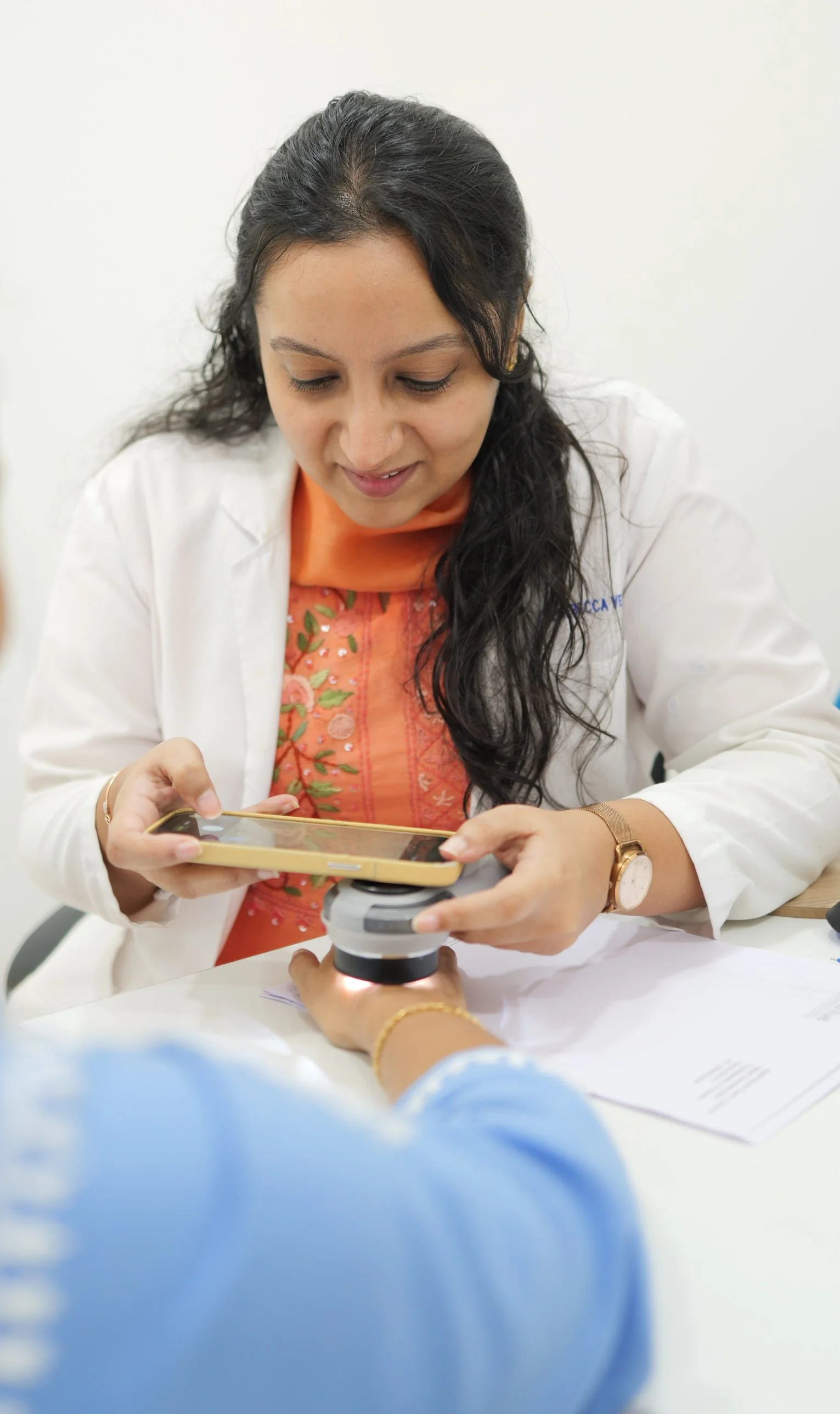
Dermoscopy: Reveals the Wickham’s striae pattern clearly, a network of white crossing lines on the surface of papules. Dermoscopy significantly improves diagnostic accuracy, particularly for atypical presentations.
Skin biopsy: Performed when the clinical diagnosis is uncertain. Shows characteristic histological features: a band-like lymphocytic infiltrate at the dermoepidermal junction, saw-tooth rete ridges, and civatte bodies (dead keratinocytes). Biopsy is particularly important for hypertrophic lichen planus and oral lichen planus.
Hepatitis C screening: Recommended for all new-onset lichen planus, particularly oral lichen planus.
Patch testing: Considered in oral lichen planus patients with dental restorations.
Drug history review: A detailed review of all medications, including over-the-counter drugs, supplements, and recently started prescriptions, is essential to identify potential lichenoid drug reactions.
Lichen Planus on Indian Skin: The Pigmentation Problem
Lichen planus on Indian skin presents a specific clinical challenge that is not as prominent in lighter skin types: post-inflammatory hyperpigmentation (PIH).
When lichen planus lesions resolve, whether spontaneously or with treatment, they leave dark brown or grey-black pigmented marks on the skin. These marks are caused by melanin being deposited in the dermis during the inflammatory process. On Fitzpatrick IV to VI skin, this dermal pigmentation is intense, persistent, and can take 12 to 24 months to fade even after the active disease is fully controlled.
Pigmented lichen planus is a distinct variant common in Indian patients where pigmented macules are the dominant or only visible feature, without active papules. It is most common on sun-exposed areas of the face and neck in Indian women. It can be mistaken for melasma or other facial pigmentation conditions. A biopsy distinguishes it when the clinical picture is ambiguous.
Managing the PIH alongside or after the active lichen planus requires a separate treatment track using agents such as azelaic acid, niacinamide, and tranexamic acid, with strict photoprotection. See our post on what causes melasma in Indian women for more on how dermal pigmentation is managed on Indian skin.
Treatment Options for Lichen Planus in India
Topical corticosteroids
First-line treatment for localised cutaneous lichen planus. High-potency topical steroids (clobetasol propionate, betamethasone) are applied to active lesions once or twice daily under dermatologist supervision. Effective for reducing itch and resolving active papules. Duration of treatment is limited to prevent skin atrophy and rebound.
Intralesional corticosteroids
Used for hypertrophic lichen planus and localised resistant lesions. Triamcinolone acetonide is injected directly into thick plaques. More effective than topical steroids for established hypertrophic lesions.
Oral corticosteroids
Used for widespread or rapidly progressive cutaneous lichen planus, erosive oral lichen planus, and lichen planopilaris that is not responding to topical treatment. Short courses (4 to 6 weeks) are used to control active disease. Long-term systemic steroids are avoided due to side effects.
Topical calcineurin inhibitors (tacrolimus, pimecrolimus)
Particularly useful for oral lichen planus and genital lichen planus where long-term topical steroid use would cause mucosal atrophy. Tacrolimus 0.1 percent ointment is the most evidence-based option for erosive oral lichen planus. Also useful for facial and intertriginous cutaneous lichen planus where steroids cannot be used long-term.
Phototherapy (NB-UVB and PUVA)
Used for widespread cutaneous lichen planus that is not responding to topical treatment alone. Narrowband UVB and PUVA (psoralen plus UVA) both have evidence for lichen planus. Phototherapy is available at select dermatology centres in Kerala and Tamil Nadu.
Systemic immunosuppressants
For severe, treatment-resistant lichen planus, systemic immunosuppressants are used. Options include methotrexate (for widespread cutaneous LP), cyclosporine (for erosive oral LP), and hydroxychloroquine (for oral and cutaneous LP). Acitretin, an oral retinoid, is used for hypertrophic and widespread cutaneous LP. These are all prescription medications requiring monitoring. US-FDA labelling supports their off-label use for lichen planus in appropriate clinical scenarios.
Photoprotection and PIH management
SPF 50 or above daily is mandatory for all lichen planus patients to prevent UV-driven darkening of post-inflammatory marks. Topical depigmenting agents (azelaic acid, niacinamide, tranexamic acid) are introduced once the active disease is controlled to address the residual hyperpigmentation that is particularly significant on Indian skin.
Lichen Planopilaris: Why Early Treatment Matters
Lichen planopilaris is the scalp form of lichen planus. It causes perifollicular inflammation that, if left untreated, permanently destroys hair follicles and produces a scarring alopecia. Unlike alopecia areata, where follicles are dormant and can recover, follicle loss in lichen planopilaris is irreversible.
Early clinical features include perifollicular redness, scale around the hair shafts, and a burning or itching sensation on the scalp. Hair loss begins at the periphery of the inflamed area. Dermoscopy shows perifollicular scaling and loss of follicular openings in affected areas.
Treatment must begin as soon as the diagnosis is confirmed. First-line options include topical clobetasol applied to the scalp, intralesional triamcinolone, and hydroxychloroquine for systemic control. Doxycycline, pioglitazone, and mycophenolate mofetil are used for resistant cases.
The goal is to halt progression and preserve the follicles that have not yet been destroyed. Regrowth of hair that has already been lost due to scarring is not possible. This is why patients presenting with lichen planopilaris are treated urgently and followed closely.
Oral Lichen Planus: What Patients Need to Know
Oral lichen planus affects the inside of the mouth, most commonly the inner cheeks (buccal mucosa), tongue, and gums. It presents as white lacy (reticular) lines in the classic form, or as red, sore erosions in the erosive form.
The reticular form is often asymptomatic and discovered incidentally during a dental examination. The erosive form causes significant pain, particularly when eating acidic or spicy food, and can significantly affect quality of life.
Three important points for patients with oral lichen planus:
Hepatitis C screening: All patients with oral lichen planus should be tested for hepatitis C, regardless of known risk factors.
Dental review: Existing amalgam fillings or other dental restorations should be reviewed by a dentist in cases of oral lichen planus, as contact sensitisation is a documented trigger.
Malignant transformation risk: Oral lichen planus, particularly the erosive type, carries a small but recognised risk of malignant transformation to oral squamous cell carcinoma. The risk is estimated at under 1 percent over 10 years but requires regular monitoring. Any new ulcer, thickening, or change in an existing oral lichen planus lesion should be reviewed by a dermatologist or oral medicine specialist promptly.
Treatment for erosive oral lichen planus includes topical tacrolimus, topical steroid gels, and in severe cases, oral corticosteroids or cyclosporine. Full resolution of oral lichen planus is less common than in cutaneous lichen planus; most patients require long-term management.
What to Expect from Treatment
| Timeframe | What to expect |
|---|---|
| Weeks 2 to 4 | Reduction in itch with topical steroids. Active papules begin to flatten. |
| Weeks 4 to 8 | Significant reduction in active lesions with consistent treatment. Residual pigmentation becomes more visible as active papules resolve. |
| Months 2 to 4 | Most active cutaneous lesions resolved in good responders. PIH management begins. |
| Months 4 to 12 | PIH fades gradually with depigmenting agents and photoprotection. Oral and hypertrophic LP take longer to respond. |
| Long-term | Lichen planus can recur. Patients are followed for relapse, particularly oral LP patients who require monitoring for malignant transformation. |
Lichen planus remits spontaneously in many patients over 1 to 2 years. However, oral lichen planus and lichen planopilaris are more chronic and less likely to resolve without active management. Hypertrophic lichen planus is the most treatment-resistant variant.
Lichen Planus Treatment at DermaVue
DermaVue offers lichen planus assessment and treatment across all seven clinics in Kerala and Tamil Nadu. All consultations are conducted by IADVL-registered MD DVL dermatologists. Dermoscopy and, where indicated, skin biopsy are available at all branches. Treatment plans are individualised based on the type, site, and extent of involvement.
Patients with lichen planopilaris are assessed urgently given the risk of permanent hair loss. Patients with oral lichen planus are counselled on the monitoring requirements and referred for dental review where appropriate.
| Branch | Address | Phone / WhatsApp |
|---|---|---|
| Thiruvananthapuram | TC 42, 3003-2, Poojappura Main Rd, Kesari Nagar, Chengalloor, TVM 695012 | +91 83308 60007 |
| Kollam | UMK Arcade, Vellayittambalam, Kavanad PO, Kollam 691003 | +91 80868 60465 |
| Thiruvalla | Iykara Peniel Tower, Opp. Indian Overseas Bank, Thukalassery, Thiruvalla 689101 | +91 80860 00608 |
| Kottayam | Zion Towers, Second Floor 101, SH 1, Thellakom, Kottayam 686631 | +91 81298 83331 |
| Kochi (Aluva) | Metro Pillar No. 57, Tamarind Rajadhani Building, Near Pulinchodu, NH-47, Aluva 683101 | +91 90720 07733 |
| Thrissur | Ardra Arcade, Opp. Akshaya Hotel, Punkunnam, Thrissur 680002 | +91 73567 42225 |
| Coimbatore | 460, Ponnaiyan St, Cross Cut Rd, Ram Nagar, Gandhipuram, Coimbatore 641009 | +91 80868 60018 |
Book a consultation at your nearest branch. Visit dermavue.com/locations, call the branch directly, or WhatsApp our Kochi team for the clinic nearest to you.
Related Reading
- Lichen Planus at DermaVue
- Skin Conditions at DermaVue
- What Causes Melasma in Indian Women
- Acne in Adults Over 30
Frequently Asked Questions
What is lichen planus? Lichen planus is a chronic inflammatory condition driven by an abnormal T-cell immune response that attacks skin cells at the dermoepidermal junction. It presents as itchy purple flat-topped papules on the skin, white lacy patterns inside the mouth, inflammation on the scalp (lichen planopilaris), or involvement of the nails and genitalia. It is not contagious, not caused by poor hygiene, and in most Indian patients has no identifiable single cause.
Is lichen planus curable? Cutaneous (skin) lichen planus often remits spontaneously within 1 to 2 years in many patients. Treatment accelerates resolution and controls symptoms. Oral lichen planus and lichen planopilaris are more chronic and less likely to resolve without active management. Lichen planus can recur, particularly during periods of stress or immune challenge. The goal of treatment is disease control and prevention of complications rather than permanent cure.
What causes lichen planus in India? In most Indian patients, lichen planus is idiopathic, meaning no specific cause is identified. Known precipitants include hepatitis C infection (all lichen planus patients should be screened), certain medications (ACE inhibitors, beta-blockers, NSAIDs, antimalarials), dental amalgam fillings in oral lichen planus, autoimmune conditions such as thyroid disease, and psychological stress. Identifying and addressing a precipitant, where possible, is part of the management plan.
What does lichen planus look like on Indian skin? Classic lichen planus presents as purple, flat-topped, polygonal, intensely itchy papules most commonly on the wrists, ankles, lower back, and shins. Fine white lines on the surface of papules (Wickham’s striae) are characteristic. On Indian skin, significant dark brown or grey-black pigmentation often develops after lesions resolve, which can be more distressing than the active rash itself. Pigmented lichen planus, where dark marks appear without active papules, is particularly common in Indian patients.
Is lichen planus contagious? No. Lichen planus is not contagious. It cannot be transmitted through skin contact, sharing food or utensils, or any form of exposure to another person. It is an immune-mediated inflammatory condition, not an infection.
What is the treatment for lichen planus in India? Treatment depends on the site and severity. For skin involvement, high-potency topical corticosteroids are the first-line treatment. Widespread or severe disease requires oral corticosteroids. Oral lichen planus is treated with topical tacrolimus or steroid gels; erosive cases may need systemic treatment. Lichen planopilaris on the scalp requires urgent treatment with topical and intralesional steroids, hydroxychloroquine, and close monitoring to prevent permanent hair loss. Post-inflammatory hyperpigmentation is managed with depigmenting agents and strict sun protection.
Does lichen planus cause permanent hair loss? Lichen planopilaris, the scalp form of lichen planus, can cause permanent scarring hair loss if left untreated. The inflammation destroys hair follicles, and once destroyed, those follicles cannot regenerate. This is why early diagnosis and urgent treatment of lichen planopilaris is critical. Cutaneous lichen planus on the body does not cause permanent hair loss in hair-bearing areas outside the scalp.
Can lichen planus become cancerous? Oral lichen planus, particularly the erosive type, carries a small but recognised risk of malignant transformation to oral squamous cell carcinoma. The risk is estimated at less than 1 percent over 10 years but requires regular monitoring. Any new ulcer, thickening, or change in an existing oral lichen planus lesion should be reviewed promptly. Cutaneous (skin) lichen planus does not carry a significant malignant transformation risk.
Authored by Dr. Minu Liz Mathew, MD DVL, IADVL-registered dermatologist and Clinical Director, DermaVue Kochi. Peer reviewed by Dr. Sarath Chandran, MD DVL, Managing Director, DermaVue Clinics. Published August 2026. This article is for general information and does not substitute a clinical consultation. Individual treatment plans vary based on lichen planus type, site, extent, and patient history.