Quick answer: Psoriasis is a chronic autoimmune skin condition that causes thick, scaly, inflamed plaques on the skin. It is not contagious and not caused by poor hygiene. It cannot be permanently cured, but it can be managed effectively with topical treatments, phototherapy, or systemic medication depending on severity. The goal is long-term remission with minimal flares. A clinical assessment by a dermatologist determines the type and severity and the appropriate treatment plan.
Psoriasis is one of those conditions where patients often arrive at a dermatology clinic after years of partial management. They have used steroid creams that worked initially and then stopped working. They have tried ayurvedic preparations. They have avoided certain foods. They have had periods of clear skin followed by flares that seem unpredictable.
The frustration is understandable. Psoriasis is a chronic autoimmune condition, and its management requires a different framework from acute skin problems. It is not about finding the one cream that fixes it. It is about understanding the disease, identifying the triggers, and building a long-term treatment plan that keeps flares controlled and skin quality high.
This post explains psoriasis from the ground up - what it is, what causes it, how it presents on Indian skin, and what treatment options are available across DermaVue’s clinics in Kerala and Tamil Nadu.
Written by Dr. Minu Liz Mathew, MD DVL, IADVL-registered dermatologist and Clinical Director, DermaVue Kochi. Peer reviewed by Dr. Sarath Chandran, MD DVL, Managing Director, DermaVue Clinics.
Table of Contents
- What Psoriasis Is and What Causes It
- Types of Psoriasis and How Each Presents
- How Psoriasis Looks on Indian Skin in Kerala
- Common Triggers for Psoriasis Flares in Kerala and Tamil Nadu
- How Psoriasis Is Diagnosed
- Treatment Options for Psoriasis in India
- Psoriasis and Associated Health Conditions
- What to Expect from Long-Term Psoriasis Management
- Psoriasis Treatment at DermaVue
- Frequently Asked Questions
What Psoriasis Is and What Causes It
Psoriasis is a chronic autoimmune condition in which the immune system, specifically T-lymphocytes, attacks healthy skin cells. This immune attack signals the skin to produce new cells at a dramatically accelerated rate - completing in 3 to 5 days a process that normally takes 28 to 30 days. The excess skin cells accumulate on the surface as thick, scaly plaques.
The root cause is genetic and immune-mediated. Psoriasis is not caused by poor hygiene, an allergy, stress alone, or any specific food. Approximately one-third of patients have a family history of the condition. The genetic predisposition means the immune system is primed to respond abnormally to certain triggers.
What psoriasis is not: It is not contagious. It cannot be passed to another person through skin contact, shared towels, swimming pools, or any other form of exposure. Patients often report significant distress from social stigma based on this misconception - a point that matters clinically because stress is itself one of the strongest flare triggers.
Types of Psoriasis and How Each Presents
| Type | Site | Appearance | Prevalence in India |
|---|---|---|---|
| Plaque psoriasis (psoriasis vulgaris) | Elbows, knees, scalp, lower back | Well-defined raised plaques with silvery-white scale on a red or pink base | Most common - 80 to 90 percent of cases |
| Guttate psoriasis | Trunk, limbs | Small drop-shaped lesions (0.5 to 2cm). Often triggered by streptococcal throat infection | Common in children and young adults |
| Inverse (flexural) psoriasis | Skin folds: groin, underarms, under breasts | Smooth, red, shiny plaques without the typical scale - moisture prevents scaling | Particularly common in Kerala and Tamil Nadu due to humidity |
| Scalp psoriasis | Scalp, behind ears, hairline | Thick adherent scale on scalp, can extend to forehead. Severe dandruff is a common presentation | Very common - often the first or only site affected |
| Pustular psoriasis | Palms and soles or generalised | Sterile pustules on red skin. Palmoplantar type causes significant disability | Less common; generalised is a medical emergency |
| Erythrodermic psoriasis | Entire body surface | Widespread erythema covering most of the body | Rare but medically serious - requires urgent treatment |
| Nail psoriasis | Nails | Pitting, onycholysis (nail separation), oil-drop discolouration, subungual hyperkeratosis | Seen in up to 50 percent of psoriasis patients |
Psoriatic arthritis - joint inflammation - occurs in up to 30 percent of psoriasis patients and can develop before, after, or simultaneously with skin involvement. It is assessed as part of every psoriasis consultation at DermaVue.
How Psoriasis Looks on Indian Skin in Kerala
Psoriasis on Indian skin (Fitzpatrick IV to VI) has clinical features that differ from its presentation on lighter skin, and these differences are clinically important for both diagnosis and treatment.
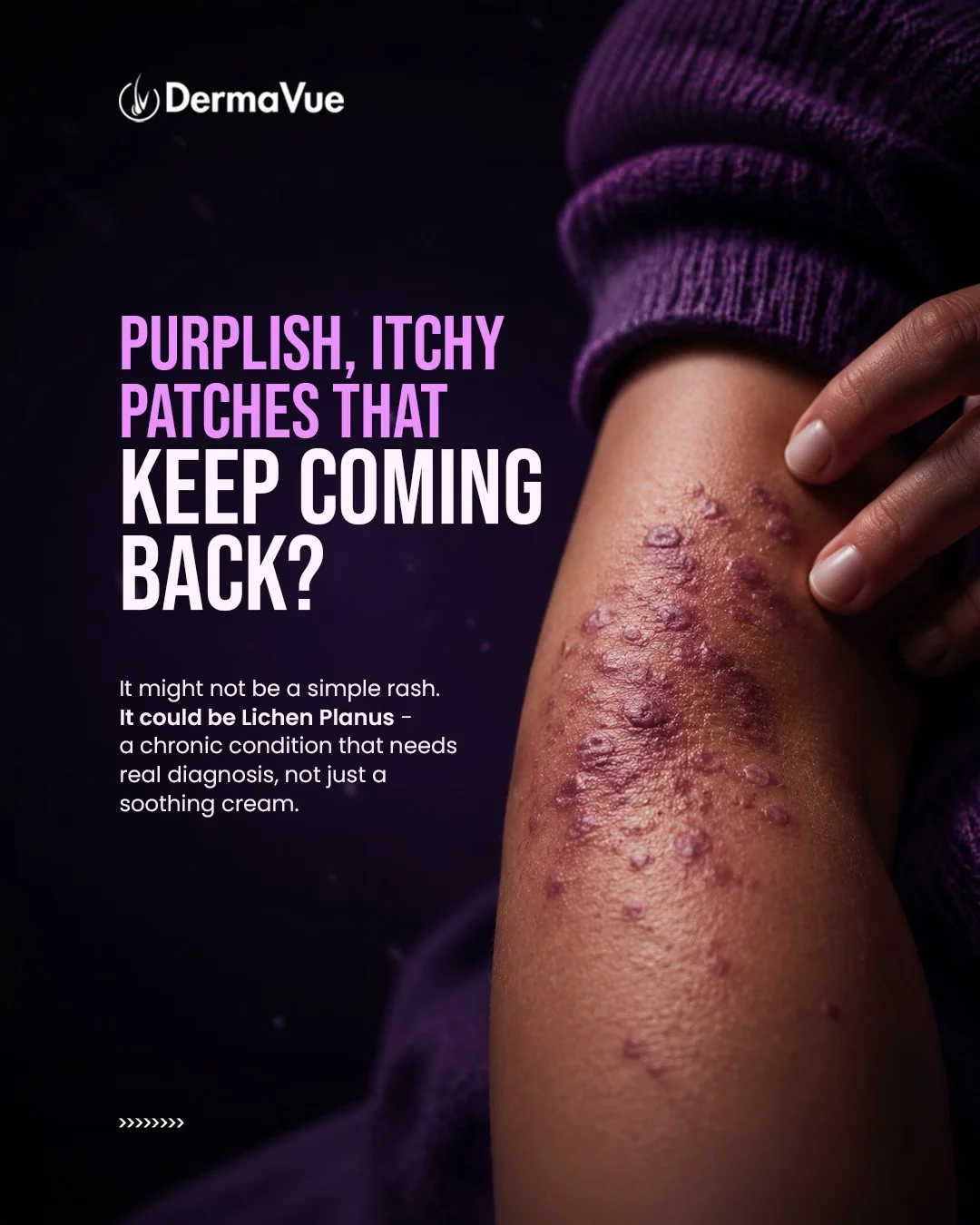
The characteristic silver-white scaling is often less pronounced on darker skin. The underlying plaque may appear dark brown, violaceous, or greyish rather than the classic pink-red seen in textbook images. This can lead to misdiagnosis - particularly as lichen planus, fungal infections, or eczema.
Post-inflammatory hyperpigmentation after psoriasis plaques resolve is more pronounced on Indian skin. Even after successful treatment clears the active plaques, dark marks may persist for weeks to months, leading patients to believe the treatment has not worked when in fact the active disease has responded and only the PIH remains.
Inverse psoriasis (in skin folds) is particularly common among patients in Kerala and Tamil Nadu due to the high humidity, which creates a favourable environment for this variant and makes it harder to manage with standard topical treatments.
Common Triggers for Psoriasis Flares in Kerala and Tamil Nadu
Psoriasis is not random. Most patients can identify triggers that consistently worsen their condition. Trigger management is a core part of the long-term treatment plan.
Stress: The most consistently reported trigger. Stress activates the same inflammatory pathways that drive psoriasis flares. This is particularly relevant in urban centres such as Kochi, Coimbatore, and Thiruvananthapuram.
Infections: Streptococcal throat infections (strep throat) are a well-documented trigger for guttate psoriasis flares, particularly in children and young adults. Any significant infection can trigger a flare in predisposed patients.
Monsoon season: Many Kerala patients report worsening psoriasis during and after the monsoon. High humidity, reduced sun exposure, and increased infections during the monsoon months are all contributing factors.
Medications: Several common medications worsen psoriasis: beta-blockers, lithium, antimalarials, and NSAIDs. A medication review is part of every psoriasis assessment.
Steroid rebound: Overuse of topical steroids - a very common pattern in India where strong steroid creams are available over the counter - followed by abrupt withdrawal can cause a severe psoriasis flare or even pustular transformation.
Alcohol: Alcohol consumption worsens psoriasis through multiple mechanisms including immune activation and reduced treatment efficacy. This is a clinically important discussion point particularly for male patients.
Skin trauma (Koebner phenomenon): New psoriasis plaques can appear at sites of skin injury - cuts, abrasions, surgical scars, or even sunburn. This is called the Koebner phenomenon and is relevant for patients planning any skin procedures.
How Psoriasis Is Diagnosed
Psoriasis is primarily a clinical diagnosis. The characteristic appearance of well-defined plaques with silvery scale at typical sites (elbows, knees, scalp, lower back) is usually sufficient for an experienced dermatologist to diagnose without further investigation.
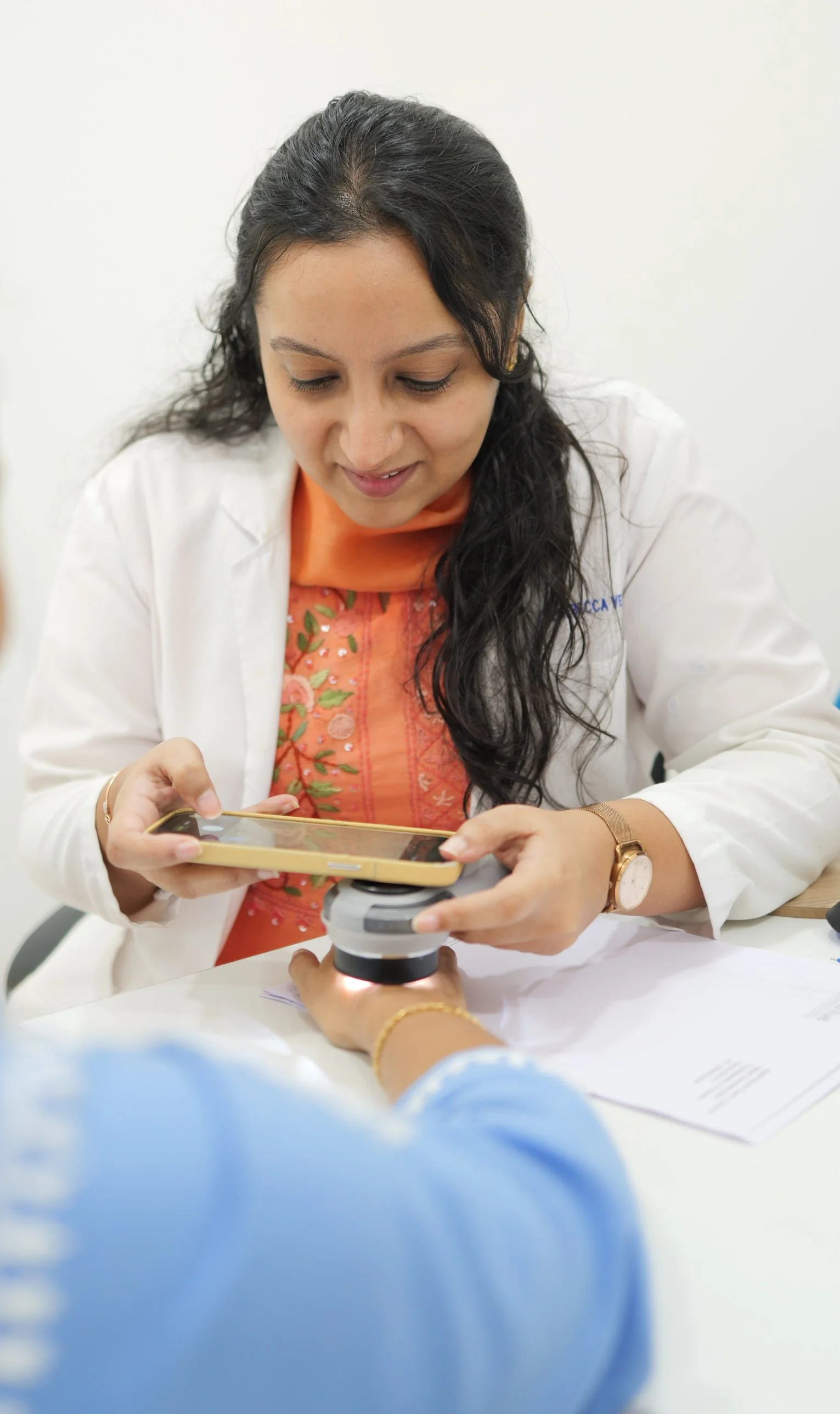
Dermoscopy: Reveals characteristic vascular patterns (regularly distributed dotted vessels) and scale colour that help distinguish psoriasis from lichen planus, eczema, and fungal infections, particularly on Indian skin where the clinical appearance is atypical.
Skin biopsy: Performed when the diagnosis is uncertain. Shows characteristic histological features: epidermal hyperplasia, parakeratosis, and neutrophilic infiltration. Biopsy is particularly useful in atypical presentations and to distinguish psoriasis from other papulosquamous conditions.
Investigations for comorbidities: Blood glucose, lipid profile, blood pressure, and a musculoskeletal review for psoriatic arthritis are assessed at diagnosis and periodically during follow-up. Patients on systemic treatment require regular blood tests to monitor for medication-related effects.
Treatment Options for Psoriasis in India
Treatment is selected based on the type of psoriasis, the body surface area affected, the impact on quality of life, and the patient’s medical history. The goal is not cure - it is sustained remission with the best possible quality of life.
Topical treatments (mild to moderate psoriasis)
Topical corticosteroids: First-line treatment for localised plaques. Potency matched to site - high potency (clobetasol) for body plaques, lower potency for face and flexures. Used under dermatologist supervision to avoid steroid atrophy and rebound.
Vitamin D analogues (calcipotriol): Reduce skin cell proliferation and inflammation. Used alone or in combination with topical steroids. Particularly useful for long-term maintenance where ongoing steroid use is not appropriate.
Coal tar preparations: Older treatment but still effective for scalp psoriasis and chronic plaque psoriasis. Available in shampoo, cream, and ointment forms.
Topical retinoids (tazarotene): Useful for plaque psoriasis, often used in combination with topical steroids to improve efficacy and reduce steroid-related side effects.
Phototherapy (moderate psoriasis)
Narrowband UVB (NB-UVB) phototherapy is one of the most effective and safest treatments for moderate psoriasis, particularly for widespread involvement where topical treatment is impractical. It works by suppressing the abnormal immune response in the skin. Typically given 3 times per week for 8 to 12 weeks. Available at DermaVue Kochi and select other branches.
Systemic treatments (moderate to severe psoriasis)
Methotrexate: The most widely used systemic agent for psoriasis in India. Effective and affordable. Requires regular blood test monitoring (liver function and blood count). Given weekly by tablet or injection.
Cyclosporine: Fast-acting systemic treatment used for severe flares and erythrodermic psoriasis. Short courses only due to kidney and blood pressure effects.
Acitretin: An oral retinoid particularly useful for pustular psoriasis and palmoplantar psoriasis. Cannot be used in women of childbearing age without strict contraception due to teratogenicity.
Biologics (severe treatment-resistant psoriasis)
Biologic treatments targeting specific immune pathways (TNF-alpha, IL-17, IL-23 inhibitors) are US-FDA approved for moderate to severe plaque psoriasis. They produce dramatically superior clearance compared to conventional systemics but are significantly more expensive. In India, biologics are used when conventional systemic treatment has failed or is contraindicated. They require specialist initiation and monitoring.
Targeted treatments for specific sites
Scalp psoriasis: Medicated shampoos (coal tar, ketoconazole, salicylic acid), topical steroid solutions or foams, calcipotriol scalp solution.
Nail psoriasis: Intralesional steroid injections into the nail matrix, topical calcipotriol under occlusion, systemic treatment for severe nail involvement. Nail psoriasis is slow to respond - months of consistent treatment are needed.
Palmoplantar psoriasis: Potent topical steroids under occlusion, acitretin, and PUVA (psoralen plus UVA) to the hands and feet are most effective for this resistant variant.
Psoriasis and Associated Health Conditions
Psoriasis is not just a skin condition. It is a systemic inflammatory disease with well-documented associations that require proactive monitoring:
| Comorbidity | Prevalence in psoriasis patients | Clinical relevance |
|---|---|---|
| Psoriatic arthritis | Up to 30 percent | Joint pain, swelling, stiffness - particularly in fingers, toes, and lower back. Can cause permanent joint damage if untreated. |
| Metabolic syndrome | Higher than general population | Obesity, hypertension, dyslipidaemia, insulin resistance - all more common in psoriasis patients. Shared inflammatory pathways. |
| Cardiovascular disease | Increased risk | Psoriasis is an independent risk factor for cardiovascular events. Severe psoriasis carries similar cardiovascular risk to type 2 diabetes. |
| Depression and anxiety | Up to 30 percent | Chronic visible skin disease, stigma, and sleep disruption contribute significantly. Psychiatric comorbidity must be addressed alongside skin treatment. |
| Inflammatory bowel disease | Increased association | Crohn’s disease and ulcerative colitis share immune pathways with psoriasis. |
At DermaVue, every new psoriasis patient is screened for psoriatic arthritis symptoms, cardiovascular risk factors, and psychological impact as part of the initial assessment.
What to Expect from Long-Term Psoriasis Management
| Phase | Timeframe | What to expect |
|---|---|---|
| Initial treatment | Weeks 2 to 6 | Significant reduction in plaque thickness and scale. Itch improves earliest, often within 2 weeks of starting treatment. |
| Clearance | Months 2 to 4 | Near-complete or complete clearance in good responders. PIH (dark marks) begins to fade. |
| Maintenance | Ongoing | Maintenance treatment prevents relapse. Treatment intensity is reduced once clearance is achieved but rarely stopped entirely in moderate to severe cases. |
| Flares | Episodic | Flares are part of the condition, particularly with trigger exposure. A management plan for flares is established at the initial consultation. |
| Long-term monitoring | Every 3 to 6 months | Blood tests (for those on systemic treatment), blood pressure, joint review, psychological assessment. |
Psoriasis rarely disappears permanently. The realistic goal of treatment is sustained remission - long periods with minimal or no active disease - with a clear plan for managing flares when they occur. Most patients with well-managed psoriasis achieve this.
Psoriasis Treatment at DermaVue
DermaVue offers psoriasis assessment and treatment across all seven clinics in Kerala and Tamil Nadu. All consultations are conducted by IADVL-registered MD DVL dermatologists. Dermoscopy is available at all branches for accurate diagnosis. Phototherapy (NB-UVB) is available at the Kochi branch. Systemic treatment initiation and monitoring, including biologic assessment for severe cases, is available at the Kochi and Coimbatore branches.
Every psoriasis consultation at DermaVue includes screening for psoriatic arthritis, cardiovascular risk factors, and psychological impact alongside the skin assessment. Treatment plans are individualised based on psoriasis type, severity, and patient history.
| Branch | Address | Phone / WhatsApp |
|---|---|---|
| Thiruvananthapuram | TC 42, 3003-2, Poojappura Main Rd, Kesari Nagar, Chengalloor, TVM 695012 | +91 83308 60007 |
| Kollam | UMK Arcade, Vellayittambalam, Kavanad PO, Kollam 691003 | +91 80868 60465 |
| Thiruvalla | Iykara Peniel Tower, Opp. Indian Overseas Bank, Thukalassery, Thiruvalla 689101 | +91 80860 00608 |
| Kottayam | Zion Towers, Second Floor 101, SH 1, Thellakom, Kottayam 686631 | +91 81298 83331 |
| Kochi (Aluva) | Metro Pillar No. 57, Tamarind Rajadhani Building, Near Pulinchodu, NH-47, Aluva 683101 | +91 90720 07733 |
| Thrissur | Ardra Arcade, Opp. Akshaya Hotel, Punkunnam, Thrissur 680002 | +91 73567 42225 |
| Coimbatore | 460, Ponnaiyan St, Cross Cut Rd, Ram Nagar, Gandhipuram, Coimbatore 641009 | +91 80868 60018 |
Book a psoriasis consultation at your nearest branch. Visit dermavue.com/locations, call the branch directly, or WhatsApp our Kochi team for the clinic nearest to you.
Related Reading
- Psoriasis Treatment in Kochi
- Psoriasis Treatment in Coimbatore
- Psoriasis Treatment in Thrissur
- Psoriasis Treatment in Thiruvananthapuram
- Lichen Planus: What Causes It and What Treatment Works in India
Frequently Asked Questions
What is psoriasis? Psoriasis is a chronic autoimmune condition in which the immune system attacks skin cells, causing them to multiply too rapidly and accumulate as thick, scaly plaques. It is not contagious, not caused by poor hygiene, and not curable - but it can be effectively managed with the right treatment plan. Flares and remissions are a normal part of the condition.
Is psoriasis curable in Kerala? Psoriasis cannot be permanently cured anywhere. It is a chronic condition that is managed, not cured. However, most patients can achieve sustained remission - long periods with minimal or no active disease - with an appropriate treatment plan. The goal of treatment at DermaVue is long-term remission with the best possible quality of life.
What causes psoriasis? Psoriasis is caused by an abnormal immune response in which T-lymphocytes attack healthy skin cells. The predisposition is genetic. The immune attack is then triggered or worsened by stress, infections (particularly streptococcal throat infections), certain medications (beta-blockers, lithium, antimalarials), skin trauma, alcohol, and abrupt withdrawal of topical steroids.
What does psoriasis look like on Indian skin? On Indian skin (Fitzpatrick IV to VI), psoriasis plaques may appear dark brown, violaceous, or greyish rather than the classic pink-red. The characteristic silver-white scaling is often less prominent. After plaques resolve, significant dark marks (post-inflammatory hyperpigmentation) typically remain for weeks to months. Inverse psoriasis in skin folds is particularly common in Kerala and Tamil Nadu due to high humidity.
Is psoriasis contagious? No. Psoriasis is not contagious under any circumstances. It cannot be passed to another person through skin contact, shared towels, swimming pools, sexual contact, or any other form of exposure. It is an autoimmune condition, not an infection.
What is the best treatment for psoriasis in Kerala? The best treatment depends on the type, severity, and body surface area affected. For mild to moderate plaque psoriasis, topical corticosteroids and vitamin D analogues are first-line. For widespread or moderate-severe psoriasis, narrowband UVB phototherapy or systemic treatment (methotrexate, cyclosporine, acitretin) is used. Biologics are available for severe treatment-resistant cases.
Can psoriasis affect the joints? Yes. Psoriatic arthritis develops in up to 30 percent of patients with psoriasis. It causes joint pain, swelling, and stiffness - particularly in the fingers, toes, and lower back - and can cause permanent joint damage if untreated. Every new psoriasis patient at DermaVue is screened for psoriatic arthritis symptoms as part of the initial assessment.
Does monsoon make psoriasis worse in Kerala? Many Kerala patients report worsening psoriasis during and after the monsoon season. Contributing factors include high humidity, reduced sun exposure, increased respiratory infections that can trigger guttate flares, and psychological stress. A proactive management plan during the monsoon months is part of the long-term care approach at DermaVue.
Authored by Dr. Minu Liz Mathew, MD DVL, IADVL-registered dermatologist and Clinical Director, DermaVue Kochi. Peer reviewed by Dr. Sarath Chandran, MD DVL, Managing Director, DermaVue Clinics. Published September 2026. This article is for general information and does not substitute a clinical consultation. Individual treatment plans vary based on psoriasis type, severity, and patient history.