Quick answer: The most common paediatric skin problems in Kollam are eczema, ringworm and fungal infections, warts, and teenage acne. Kollam’s coastal hard water (TDS up to 2,250 mg/L) and year-round humidity above 63 percent make these conditions more frequent than in inland Kerala cities. A board-certified dermatologist at DermaVue Kollam can diagnose and treat all childhood skin conditions. Book a consultation at the Kavanad clinic.
When a child’s skin flares up, most parents in Kollam do one of three things. They try a home remedy. They ask a pharmacist. Or they apply whatever cream worked last time.
Sometimes that is enough. Often it is not. And occasionally, the wrong cream makes things significantly worse.
This guide is for parents in Kollam who want to understand their child’s skin better, know when to act, and know when to see a specialist.
Written by Dr. Sarath Chandran, MD DVL, IADVL-registered dermatologist and Managing Director of DermaVue Clinics. Reviewed by Dr. Minu Liz Mathew, MBBS, MD DVL, Clinical Director, DermaVue Clinics.
Table of Contents
- Why Children’s Skin Is Different in Kollam
- Eczema in Children: The Most Common Chronic Condition
- Fungal Infections and Ringworm in Children
- Other Common Childhood Skin Problems in Kollam
- The Steroid Cream Problem in Kerala
- When to See a Dermatologist in Kollam
- Paediatric Skin Care at DermaVue Kollam
- Frequently Asked Questions
Why Children’s Skin Is Different in Kollam
Children’s skin is not simply smaller adult skin. It is thinner, more permeable, and less able to regulate temperature and moisture. The skin barrier, which protects against environmental triggers, is not fully mature until around age 3 in most children. In children with eczema, this barrier function is compromised genetically, making them permanently more vulnerable.
In Kollam specifically, three environmental factors make children’s skin conditions more frequent and harder to manage than in drier, inland Kerala cities.
Hard water. Kollam’s coastal groundwater carries TDS levels up to 2,250 mg/L, more than four times the WHO guideline of 500 mg/L. Published research confirms that hard water bathing significantly increases eczema risk in children. When a child with sensitive skin is bathed daily in mineral-heavy water, the calcium deposits on the skin disrupt the acid mantle and worsen the very barrier problem that underlies eczema.
Year-round humidity. Humidity above 63 percent year-round around Ashtamudi Lake and the Arabian Sea coastline keeps children’s skin in a constant state of mild hydration stress. Sweat from playing outdoors deposits salt and irritants on the skin. Children then come indoors into air-conditioned classrooms and homes, causing a sudden humidity drop that strips moisture from the skin surface. This cycle is a well-recognised trigger for eczema flares.
Monsoon fungal season. Kollam receives approximately 2,700 mm of rainfall annually, with the main monsoon running June to October. In this period, fungal infections in children spike. Ringworm, scalp fungal infection (tinea capitis), and pityriasis versicolor are all significantly more common during and after the monsoon. Schools in Chinnakada, Kavanad, Kundara, and Karunagappally see clusters of these infections each year.
Eczema in Children: The Most Common Chronic Condition
What is eczema and why is it so common in Kollam children?
Eczema, or atopic dermatitis, is the most common chronic skin condition in children in Kerala, affecting over 9 percent of the paediatric population in coastal districts. It is not contagious. It is not caused by poor hygiene. It is caused by a genetic defect in the skin’s barrier proteins, particularly filaggrin, combined with an overactive immune response to environmental triggers.
In Kollam children, the most common triggers are hard water bathing, sweat during Kerala’s hot and humid months, dust mites in the home, certain foods in infants, and synthetic fabrics.
Eczema in babies typically starts on the face and scalp. In toddlers and older children, it moves to the inner elbows, behind the knees, wrists, and ankles. The constant itching disturbs sleep, affects concentration at school, and significantly impacts quality of life for both the child and the family.
How is eczema treated in children?
The cornerstone of eczema treatment is barrier repair. A ceramide-based moisturiser applied within 3 minutes of bathing, every single day, is not optional. It is the most important thing a parent can do at home.
Beyond moisturising, a board-certified dermatologist will assess the severity using SCORAD scoring and prescribe the appropriate treatment tier.
Mild eczema responds to low-potency topical steroids for flares. The face requires particularly careful steroid selection because facial skin is thin and absorbs medication quickly. Calcineurin inhibitors like tacrolimus are steroid-sparing alternatives for facial and eyelid eczema in children over 2 years.
Moderate to severe eczema may need narrowband UVB phototherapy, oral medications, or biologic therapy. Dupilumab, an IL-4 and IL-13 inhibitor, is now FDA-approved for children as young as 6 months and has transformed the management of severe childhood eczema. It reduces itch significantly within 2 to 4 weeks and achieves skin clearing over 16 weeks without the side effects of long-term steroids.
For Kollam children, water modification is also part of the protocol. Our dermatologists at Kavanad routinely recommend shower filters to reduce mineral content and specific chelating wash products that counteract hard water effects.
Fungal Infections and Ringworm in Children
Is ringworm common in children in Kollam?
Very. Ringworm (tinea corporis) is one of the most common fungal infections in children in Kerala, and it peaks every year during and after Kollam’s monsoon months.
Despite the name, ringworm has nothing to do with worms. It is caused by a group of fungi called dermatophytes that thrive in warm, moist environments. Kollam’s monsoon humidity is exactly the right environment for these fungi to spread rapidly, particularly in schools and playgrounds where children are in close contact.
The typical presentation is a circular, ring-shaped rash with a raised, scaly border and relatively clear centre. It is mildly itchy. It spreads outward over days. In children, it most commonly appears on the arms, legs, trunk, and face.
Scalp ringworm (tinea capitis) is a different and more serious fungal infection that affects the scalp and hair shaft in children. It causes patchy hair loss with scaling, and sometimes a painful, boggy swelling called a kerion. It is more common in primary school children because it spreads through shared combs, towels, and hats. It requires oral antifungal treatment, not just a cream, because topical agents cannot penetrate the hair shaft.
What is the right treatment?
The right antifungal cream or oral medication depends on which fungal species is causing the infection. A KOH microscopy test at DermaVue Kollam confirms the diagnosis in a single visit. This matters because India is seeing a rise in Trichophyton indotineae, a terbinafine-resistant strain that does not respond to the most commonly prescribed antifungal creams.
Do not apply a steroid-antifungal combination cream on your child without a dermatologist’s prescription. These combination creams are widely available at pharmacies in Kollam without a prescription. They suppress the visible rash while allowing the fungal infection to spread deeper, widen, and become resistant to treatment.
Other Common Childhood Skin Problems in Kollam
Pityriasis alba
Pale, slightly scaly oval patches on the face and arms, more noticeable on darker skin. Very common in Kollam children, particularly after summer. It is a mild form of eczema, not a fungal infection, and does not need antifungal treatment. Moisturising and sun protection usually manage it without medication.
Warts
Warts are caused by the human papillomavirus and are extremely common in school-age children. They appear as rough, raised bumps, most often on fingers, hands, and feet. They are not dangerous but can spread to other parts of the body and to other children through direct contact. A dermatologist can remove warts with cryotherapy (liquid nitrogen) or CO2 laser at the Kollam clinic.
Molluscum contagiosum
Small, pearly, dome-shaped bumps with a central dimple. Caused by a poxvirus and spread by skin contact. Very common in young children in Kerala. In most healthy children, molluscum resolves on its own over 6 to 18 months without treatment. A dermatologist can advise on whether intervention is needed based on the extent and your child’s situation.
Urticaria (hives)
Raised, itchy, red welts that appear suddenly and shift location. Often triggered by viral infections, food, insect stings, or medications. A single episode in a child is usually not alarming. Recurring or chronic urticaria lasting more than 6 weeks needs dermatologist assessment to identify the trigger and start appropriate management.
Teenage acne
Kollam’s humidity makes teenage acne worse. Persistent moisture increases sebum production and blocks pores. Teenagers who develop acne in Kerala face a higher risk of post-inflammatory hyperpigmentation because Fitzpatrick IV and V skin is more prone to dark marks after any inflammatory lesion. Early treatment prevents permanent scarring. A dermatologist consultation is worthwhile for any teenager whose acne is not controlled by face wash alone.
White patches
Pityriasis alba (harmless, eczema-related), tinea versicolor (fungal, common in humid Kerala), and vitiligo (autoimmune) can all cause white patches in children. A Wood’s lamp examination and clinical assessment by a dermatologist distinguishes between them quickly, which matters because each requires different management.
The Steroid Cream Problem in Kerala
This is important enough to address directly.
Steroid creams are among the most useful medicines in dermatology when used correctly. They control inflammation, reduce itch, and give genuine relief. But they have significant side effects when applied incorrectly, particularly in children.
Across Kerala, including Kollam, parents frequently use potent steroid creams on children’s skin without a prescription. Sometimes a pharmacist recommends them. Sometimes a relative passes on their own prescription. Sometimes a parent buys a cream that contains a steroid, an antifungal, and an antibiotic combined, and uses it for every skin problem the child develops.
The consequences in children include skin thinning, stretch marks (striae), visible small blood vessels (telangiectasia), and a phenomenon called steroid dependence where the skin flares severely when the cream is stopped. On the face, which has thin skin and high absorption, these effects appear faster.
At DermaVue Kollam, we see children referred to us specifically because steroid cream misuse has complicated a condition that would have been straightforward to treat originally.
The principle is simple: never apply a steroid cream to a child’s skin without a dermatologist’s diagnosis and specific prescription. The right potency, the right vehicle, the right body area, and the right duration matter. These are not choices a pharmacist or a parent should make without guidance.
When to See a Dermatologist in Kollam for Your Child’s Skin
Most mild rashes in children resolve on their own or with basic moisturising and hygiene. You do not need to see a dermatologist for every minor skin irritation.
See a dermatologist if:
Your child’s rash has not cleared within 2 weeks despite home care. The rash is spreading or getting worse. Your child is losing sleep because of itching. There are signs of secondary infection, such as pus, yellow crusting, warmth, or fever alongside the rash. The rash keeps coming back after apparent improvement. You have been using a cream for more than 2 weeks without a clear diagnosis. Your child has patchy hair loss with scalp scaling. Your child has white patches that are spreading. Your teenage child’s acne is leaving dark marks or not responding to face wash.
The key principle: early intervention gives better outcomes than waiting for a condition to worsen.
Paediatric Skin Care at DermaVue Kollam
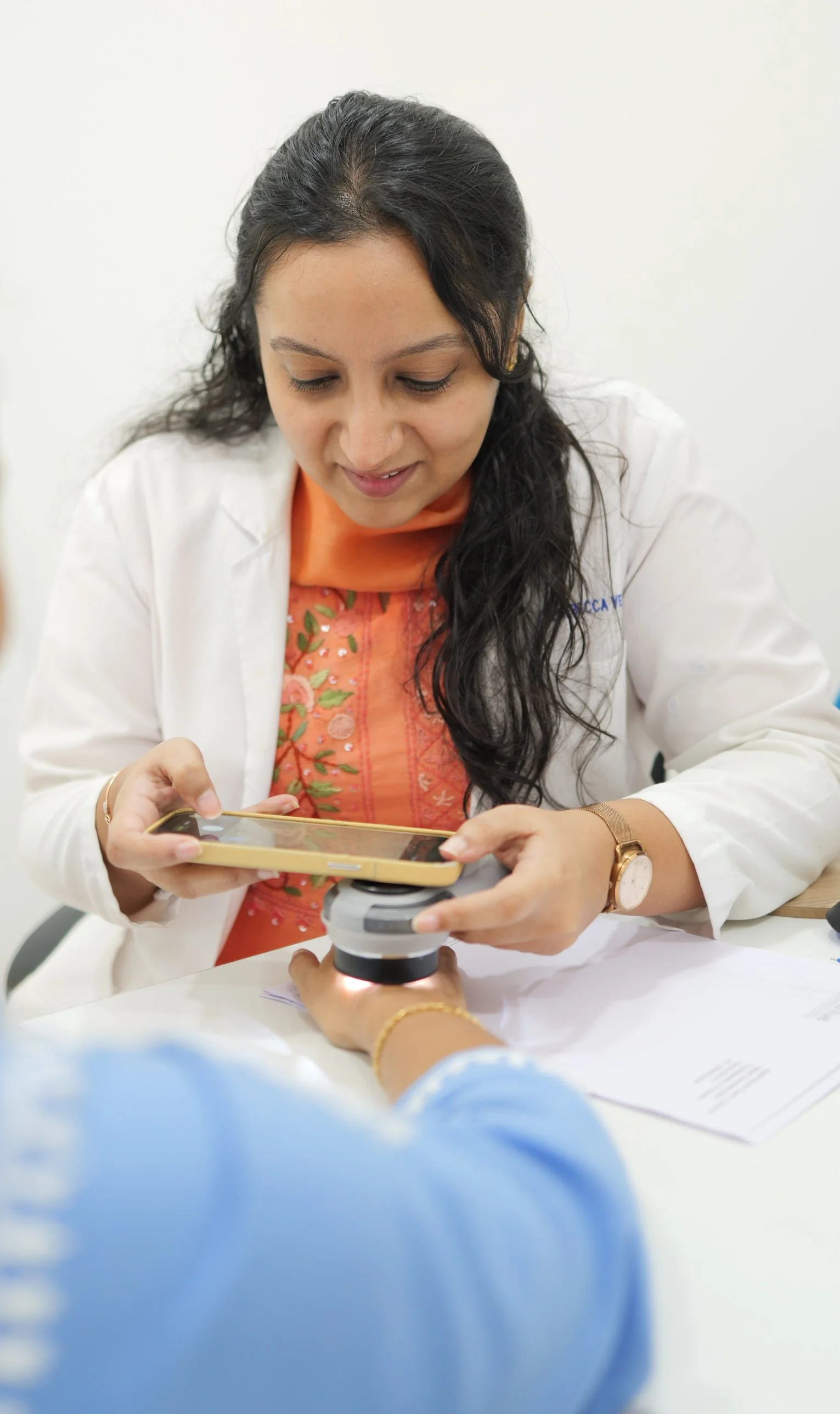
DermaVue Kollam at Kavanad sees children of all ages, from newborns with cradle cap to teenagers with acne. All consultations are conducted by board-certified MD DVL dermatologists. We use the same diagnostic tools available at major teaching hospitals, including dermoscopy, KOH microscopy, and Wood’s lamp examination, at a clinic 10 minutes from Chinnakada and 7 minutes from Kollam Railway Station.
We understand that children are not easy patients. Our approach is to involve the parents fully, explain exactly what we are seeing, why we are prescribing what we are prescribing, and what to watch for. We do not prescribe steroid creams without a specific diagnosis and clear instructions on duration and application.
We serve families from across Kollam district including Kavanad, Chinnakada, Asramam, Karunagappally, Kundara, Paravur, Neendakara, Varkala, and Kottarakkara.
Why DermaVue Kollam for Children’s Skin Care
| What parents ask | DermaVue Kollam | Hospital OPD | General practitioner |
|---|---|---|---|
| Who examines my child | Board-certified MD DVL dermatologist | Dermatologist or resident (100+ patients/day) | MBBS general doctor |
| Diagnosis tools | Dermoscopy, KOH microscopy, Wood’s lamp | Available but queue-dependent | Usually not available |
| Eczema severity scoring | SCORAD at every visit | Rarely in high-volume OPDs | Not done |
| Biologic therapy for severe eczema | Dupilumab available | Limited availability | Not available |
| Consultation time | 15 to 20 minutes per child | 3 to 5 minutes per patient | Varies |
| Steroid prescription protocol | Age-appropriate potency, defined duration, written instructions | Standard protocol | Often undifferentiated |
| Hard water and monsoon guidance | Kollam-specific advice included | Generic advice | Not addressed |
| Reviews | 4.9 stars, 370+ Google reviews | Department-level, not child-specific | Few or unrated |
DermaVue Kollam UMK Arcade, Vellayittambalam, Kavanad PO, Kollam, Kerala 691003 Phone / WhatsApp: +91 80868 60465 Email: kollam@dermavue.com
Book a paediatric skin consultation at DermaVue Kollam
Related Reading
- Eczema Treatment in Kollam
- Fungal Infection Treatment in Kollam
- Acne Treatment in Kollam
- Wart Removal in Kollam
- Dermatologist in Kollam
- Kids Skin Care by Age: Dermatologist Guide for Indian Parents
Recommended Viewing
Our team has put together a video guide on common childhood skin problems and when to see a dermatologist. Worth watching before your child’s first consultation:
Paediatric Skin Problems: DermaVue Clinics
Frequently Asked Questions
When should I take my child to a dermatologist in Kollam? Take your child to a dermatologist if a skin rash has not cleared within 2 weeks of home care, if the rash is spreading, if your child is losing sleep due to itching, if there are signs of infection such as pus, crusting, or fever alongside the rash, if the rash keeps coming back after treatment, or if you have been using a cream without a clear diagnosis. At DermaVue Kollam, a paediatric consultation includes a clinical skin examination by a board-certified dermatologist.
What is the most common skin problem in children in Kollam? Eczema (atopic dermatitis) is the most common chronic skin condition in children in Kerala, affecting over 9 percent of the paediatric population in coastal districts. It is more prevalent in Kollam than inland districts due to hard water, coastal humidity, and monsoon triggers. After eczema, fungal infections including ringworm and tinea capitis are the most common conditions we see in children, particularly during and after the monsoon months from June to October.
Is it safe to apply steroid cream on a child’s skin? Only under dermatologist supervision. Steroid creams used incorrectly on children cause skin thinning, stretch marks, and steroid dependence. The face is particularly sensitive. Many parents in Kollam use combination creams containing a steroid and an antifungal bought from a pharmacy without a prescription. These creams suppress symptoms while the underlying problem worsens. Always get a diagnosis before applying any steroid to your child’s skin.
My child has a ring-shaped rash. Is it ringworm? A ring-shaped rash is often ringworm (tinea corporis), a fungal infection despite its name. It is very common in children in Kollam during the monsoon months. However, a ring-shaped rash can also be caused by eczema or other skin conditions. A dermatologist can confirm the diagnosis with a KOH microscopy test in a single visit. Treatment depends on the correct diagnosis, so do not start antifungal or steroid cream without confirmation.
What causes baby eczema and how is it treated? Baby eczema (infantile atopic dermatitis) is caused by a combination of genetic barrier defects and immune system immaturity. In Kollam, hard water bathing and high humidity are significant environmental triggers. Treatment involves regular moisturising with ceramide-based emollients applied immediately after bathing, low-potency topical steroids for flares prescribed by a dermatologist, and identifying and avoiding specific triggers. Dupilumab biologic therapy is now FDA-approved for children as young as 6 months for severe cases.
Can children get acne? Yes. Teenage acne is extremely common, typically starting between 12 and 16 years. Kollam’s humidity worsens acne in teenagers because persistent moisture increases sebum production and blocks pores. Acne in younger children under 8 years is less common and warrants investigation for an underlying hormonal cause. A dermatologist assessment is important for any child with acne to get the right treatment and prevent permanent scarring.
My child has white patches on the skin. What could it be? White patches in children have several causes. Pityriasis alba is the most common, causing pale oval patches on the face and arms, more visible on darker skin. It is harmless and related to mild eczema. Tinea versicolor is a fungal infection causing white patches, common in Kerala’s humidity. Vitiligo is an autoimmune condition causing complete loss of pigment. Each requires different management. A dermatologist can distinguish between them with a clinical examination and Wood’s lamp test.
How is DermaVue Kollam set up for treating children? DermaVue Kollam at Kavanad sees children of all ages from infants to teenagers. Board-certified MD DVL dermatologists perform all consultations. The clinic uses diagnostic tools including dermoscopy, KOH microscopy, and Wood’s lamp examination. The clinic is 10 minutes from Chinnakada and 7 minutes from Kollam Railway Station, serving families from across Kollam district including Kavanad, Kundara, Paravur, Karunagappally, and Kottarakkara.
Authored by Dr. Sarath Chandran, MD DVL, IADVL-registered dermatologist and Managing Director, DermaVue Clinics. Reviewed by Dr. Minu Liz Mathew, MBBS, MD DVL, Clinical Director, DermaVue Clinics. Published June 2026. Information is for general guidance and does not substitute a clinical consultation.