Dark or unevenly pigmented lips are a concern that patients raise more often than you might expect. While lip colour varies naturally across individuals and ethnicities, many people notice their lips becoming progressively darker due to sun exposure, hormonal changes, smoking, or certain medications. The result, lips that look dull, uneven, or significantly darker than the surrounding facial skin, can affect confidence, especially since the lips are a central feature of the face.
Over-the-counter lip lightening products are widely available but typically deliver minimal results for moderate to severe pigmentation. This is where laser treatment for lip pigmentation offers a meaningful clinical advantage. In this guide, I will explain why lips darken, how laser treatment works at a cellular level, who it is suited for, and what the treatment process involves at DermaVue.
Why Do Lips Become Pigmented?
Lip pigmentation, medically termed lip melanosis or lip hyperpigmentation, occurs when excess melanin is deposited in the lip tissue. The lips are structurally different from the rest of the facial skin: they have a thinner stratum corneum (outer protective layer), lack sebaceous glands, and have a rich vascular supply that gives them their natural pinkish-red colour. When melanin production increases or melanin migrates into deeper tissue layers, this natural colour is masked by brown or dark tones.
Common Causes of Lip Darkening
Sun exposure (UV-induced melanosis). The lips, particularly the lower lip, receive significant UV exposure. Because the lip skin is thinner and has less natural melanin protection than surrounding facial skin, it is especially vulnerable to UV-stimulated melanogenesis. Chronic sun exposure without lip-specific SPF protection is the most common cause of lip darkening.
Smoking. Nicotine and the heat from cigarette smoke directly contact the lip tissue, causing localised melanin stimulation and vascular changes. Smoker’s melanosis typically presents as a diffuse brown discolouration of the lower lip and gingiva.
Hormonal influences. Conditions such as pregnancy, oral contraceptive use, or hormonal fluctuations can trigger increased melanin production in hormone-sensitive areas, including the lips. This is analogous to how melasma affects the cheeks and forehead.
Post-inflammatory hyperpigmentation (PIH). Recurrent lip dryness, cheilitis (lip inflammation), allergic reactions to lip products, or habitual lip licking can cause chronic low-grade inflammation that leaves behind pigmentation.
Medications. Certain drugs, including some antimalarials, chemotherapy agents, and minocycline, can cause drug-induced lip pigmentation.
Genetic predisposition. Some individuals naturally have higher melanin concentration in their lip tissue, particularly those with darker Fitzpatrick skin types.
Systemic conditions. In rare cases, lip hyperpigmentation can be associated with conditions like Peutz-Jeghers syndrome (perioral freckling), Addison’s disease, or vitamin B12 deficiency. These should be ruled out during a dermatological consultation.
How Does Laser Treatment for Lip Pigmentation Work?
Laser treatment for lip pigmentation is based on the principle of selective photothermolysis: the laser emits light at a wavelength that is preferentially absorbed by melanin while sparing surrounding tissue.
The Mechanism
The most commonly used laser for lip pigmentation is the Q-switched Nd:YAG laser (1064 nm wavelength, and sometimes the 532 nm KTP wavelength for superficial pigment). Here is how it works:
-
Targeted absorption. The laser energy is delivered in ultra-short nanosecond or picosecond pulses. Melanin granules in the lip tissue absorb this energy intensely.
-
Photoacoustic fragmentation. The rapid energy absorption creates a photoacoustic effect that shatters melanin granules into smaller fragments without significant thermal damage to surrounding tissue.
-
Immune-mediated clearance. The fragmented melanin particles are recognised and engulfed by macrophages (immune cells), which transport them to lymph nodes for disposal. This is the same mechanism that drives laser tattoo removal.
-
Gradual lightening. Over the days and weeks following treatment, the cleared melanin results in visibly lighter lip tissue. Because melanin exists at multiple depths, repeated sessions are typically needed to address all layers of pigmentation.
Why Q-Switched Lasers Are Preferred
Q-switched lasers deliver energy in extremely short pulses (nanoseconds) that are shorter than the thermal relaxation time of melanin. This means the melanin absorbs and fragments before heat can spread to surrounding tissue, minimising the risk of burns, scarring, or paradoxical hyperpigmentation. Newer picosecond lasers offer even shorter pulse durations and may achieve clearance in fewer sessions, though both technologies produce good clinical outcomes.
Who Is a Good Candidate?
Lip laser pigmentation treatment is suitable for:
- Individuals with UV-induced lip darkening who have not responded to topical treatments
- Former smokers whose lip pigmentation persists after quitting
- Patients with hormonal lip pigmentation seeking faster improvement than topical agents alone can provide
- Those with cosmetically bothersome genetic lip melanosis
Pre-treatment considerations:
- Active herpes simplex (cold sore) infection on or around the lips must be treated first; antiviral prophylaxis is prescribed before the procedure
- Active lip dermatitis or cheilitis should be resolved before treatment
- Patients with Peutz-Jeghers syndrome or other systemic causes need appropriate medical workup before cosmetic treatment
- Realistic expectations are essential; the goal is lightening and evening of tone, not changing the lip colour to a shade outside your natural range
The Treatment Process at DermaVue
Consultation
Every lip pigmentation case at DermaVue begins with a thorough assessment. We evaluate the cause, depth, and distribution of pigmentation. If there is any suspicion of an underlying systemic condition, appropriate investigations are ordered first. We also photograph the lips under standardised lighting for progress tracking.
Pre-Treatment
- Antiviral prophylaxis (valacyclovir) is prescribed 2 days before and continued for 5 days after treatment to prevent herpes simplex reactivation
- Patients are advised to keep lips well-moisturised in the days leading up to treatment
- No lip products containing retinoids, acids, or irritants for 1 week before
During the Procedure
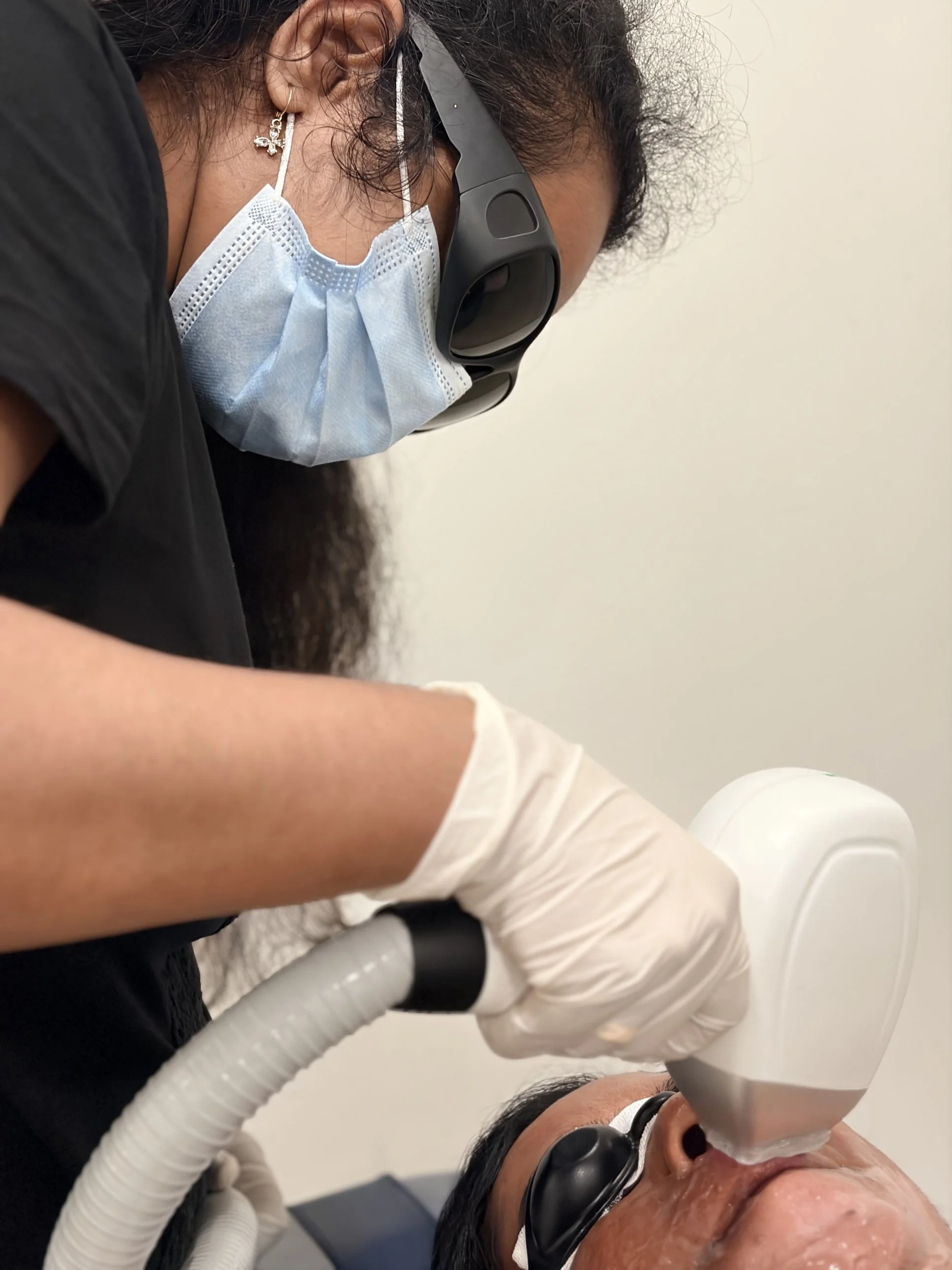
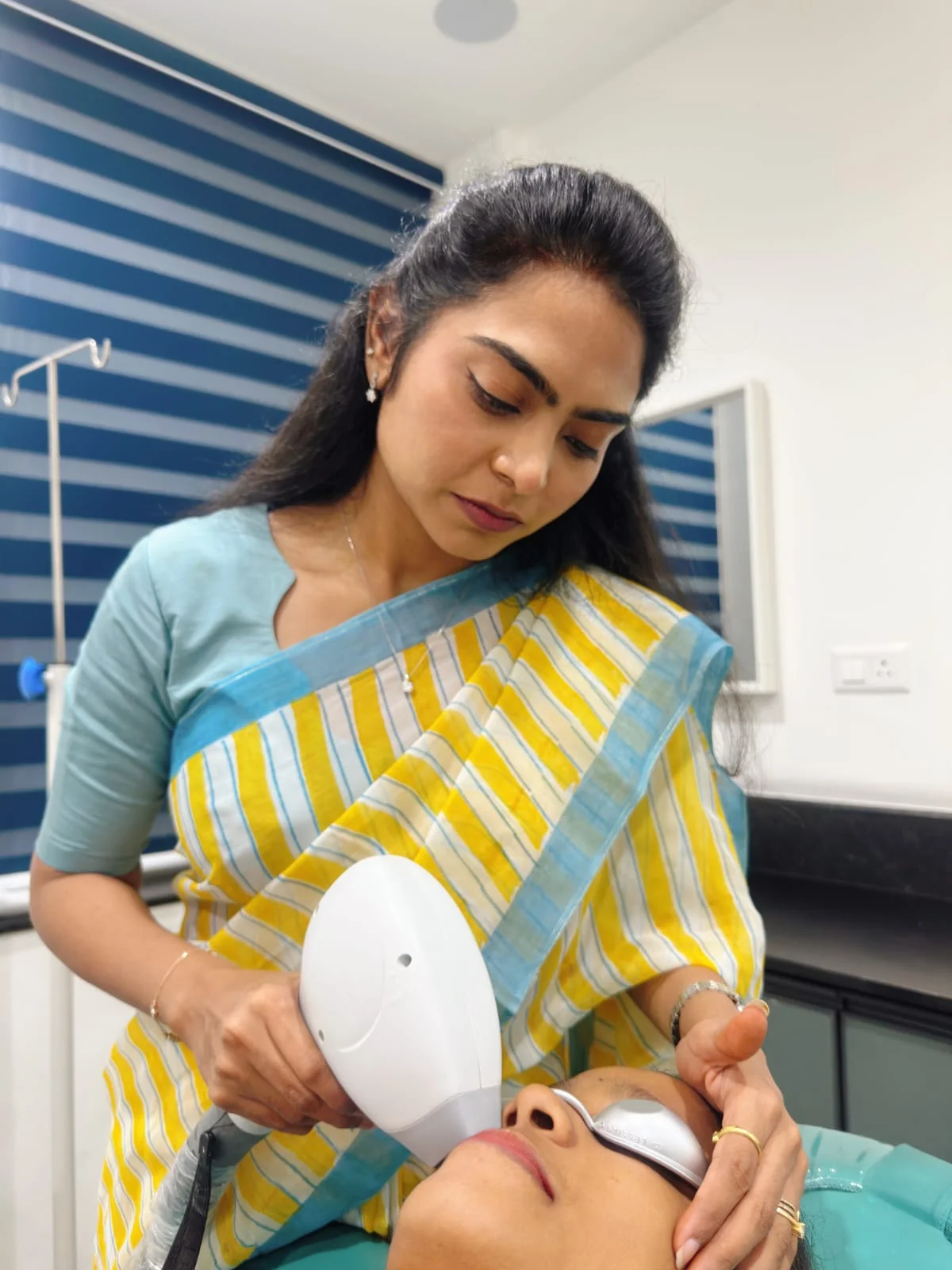
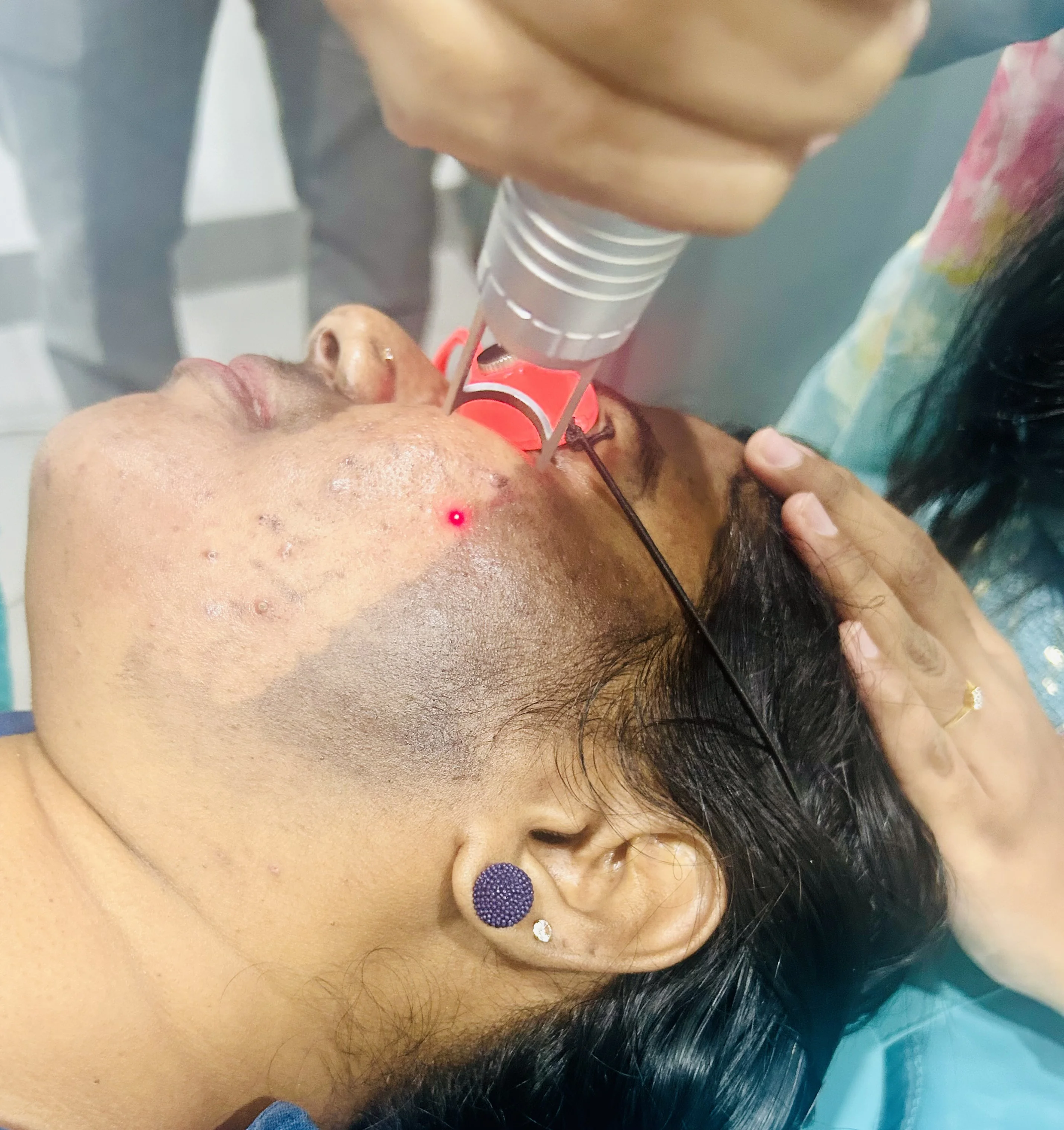
A topical anaesthetic cream is applied to the lips 30 to 45 minutes before treatment for comfort. The Q-switched laser is then passed over the pigmented areas in a systematic pattern. Each pulse feels like a mild snap or pricking sensation. The entire procedure takes 10 to 20 minutes.
Immediately after treatment, the lips may appear slightly whitened (frosting) and then develop mild swelling and redness. This is a normal tissue response.
Post-Treatment Care
- Apply prescribed healing ointment (petroleum jelly or a barrier cream) to keep lips moist
- Avoid spicy, hot, or acidic foods for 2 to 3 days
- Do not pick at any crusting or peeling that develops
- Apply lip SPF (physical sunscreen stick) daily once healing is complete
- Avoid lip products with fragrances or active ingredients for 1 week
Treatment Schedule
| Parameter | Details |
|---|---|
| Sessions required | 3 to 6, depending on pigmentation depth |
| Interval between sessions | 3 to 4 weeks |
| Session duration | 10 to 20 minutes |
| Downtime | 2 to 5 days of mild swelling and dryness |
| Results visible | Gradual lightening after each session |
| Maintenance | Sun protection; occasional touch-up sessions if needed |
Results and Expectations
Clinical experience and published literature indicate that most patients see noticeable lightening after 2 to 3 sessions, with optimal results after completing the full course of 3 to 6 sessions. The degree of improvement depends on:
- Depth of pigmentation: Superficial melanin (epidermal) responds faster than deep (dermal) melanin
- Cause: UV-induced and smoking-related pigmentation tend to respond well; genetic melanosis may require more sessions
- Sun protection compliance: Without consistent lip SPF use, pigmentation will recur
It is important to understand that the goal is significant lightening and evening of lip tone, restoring a more natural colour. Results vary among individuals, and maintenance of results depends on ongoing sun protection and avoidance of causative factors.
Safety Profile
When performed by a trained dermatologist with appropriate laser parameters, lip laser pigmentation treatment has a favourable safety profile:
- Common: Mild swelling (1 to 3 days), transient redness, slight crusting
- Uncommon: Temporary hyperpigmentation (darkening before lightening), particularly in darker skin types
- Rare: Herpes simplex reactivation (mitigated by antiviral prophylaxis), prolonged sensitivity
- Very rare: Scarring or permanent colour change (essentially absent with Q-switched technology at appropriate settings)
Complementary Approaches
Laser treatment can be combined with or followed by supportive measures:
- Topical depigmenting agents: Kojic acid, arbutin, or vitamin C lip serums used between sessions to support lightening
- Lip SPF: Physical sunscreen lip balms (zinc oxide-based) used daily to prevent recurrence
- Lifestyle modifications: Smoking cessation, adequate hydration, and avoiding lip-licking habits
Related DermaVue Services
Frequently Asked Questions
Is lip laser treatment painful? With topical anaesthesia, most patients describe the sensation as mild pricking or snapping. The lips are sensitive tissue, so some discomfort is expected, but it is well within tolerable limits and the session is brief.
How many sessions will I need? Most patients require 3 to 6 sessions spaced 3 to 4 weeks apart. Superficial pigmentation may respond in fewer sessions, while deeper or long-standing pigmentation requires more.
Will my lips go back to their original dark colour? If the underlying cause (sun exposure, smoking) is not addressed, pigmentation can gradually return. Consistent use of lip SPF and avoidance of causative factors are essential for maintaining results.
Can this treatment be done on all skin tones? Yes. The Q-switched Nd:YAG laser is safe for all Fitzpatrick skin types, including darker Indian skin tones. Parameters are adjusted based on individual skin and pigmentation characteristics.
Is there any scarring risk? With Q-switched laser technology at appropriate settings and performed by an experienced dermatologist, the risk of scarring is extremely low. The nanosecond pulse durations prevent significant thermal damage to surrounding tissue.
Taking the Next Step
Lip pigmentation is a treatable condition, and laser treatment offers the most effective approach for moderate to severe cases that have not responded to topical care. If dark or uneven lip colour is a concern for you, a consultation at DermaVue can help determine the cause, assess the depth of pigmentation, and create a personalised treatment plan.