If you are reading this, you have likely picked up a bottle of minoxidil - or you are considering it. As a dermatologist who treats hair loss daily at DermaVue, I can tell you this with certainty: minoxidil remains one of the most effective, well-researched treatments available for pattern hair loss. It has helped millions of men and women regrow hair over the past three decades. But here is what most patients do not realize - the difference between modest results and meaningful hair regrowth often comes down to how you use it, not just whether you use it.
This guide covers everything I discuss with my patients during consultations: the science behind minoxidil, who benefits most, practical application techniques, combination strategies, and the common mistakes that quietly undermine your results.
What Is Minoxidil and How Does It Grow Hair?
Minoxidil was developed in the 1950s as an oral medication for severe hypertension. During clinical trials, researchers noticed an unexpected side effect - patients began growing hair in areas that had been thinning for years. This observation eventually led to the development of topical minoxidil, which became the first treatment approved by the US FDA for androgenetic alopecia in both men and women.
The mechanism through which minoxidil promotes hair growth is multifactorial and involves several biological pathways.
Potassium channel opening and vasodilation. Minoxidil opens ATP-sensitive potassium channels in the smooth muscle cells surrounding hair follicle blood vessels. This causes vasodilation - widening of the blood vessels - which delivers more oxygen, nutrients, and growth factors to the follicular unit. In my clinical experience, patients with early thinning where blood supply to follicles is compromised tend to show the strongest response to this mechanism.
Anagen phase prolongation. Every hair on your scalp cycles through three phases: anagen (active growth lasting 2-7 years), catagen (transition lasting 2-3 weeks), and telogen (resting phase lasting 2-4 months). In androgenetic alopecia, each successive hair cycle produces thinner, shorter hairs as the anagen phase shortens progressively. Minoxidil reverses this by pushing follicles into a prolonged anagen phase, giving hair more time to grow thicker and longer.
Growth factor stimulation. Minoxidil upregulates vascular endothelial growth factor (VEGF) and prostaglandin E2 in dermal papilla cells - the command centre of the hair follicle. This promotes cell proliferation within the follicle itself, essentially reviving follicles that were on their way to becoming permanently dormant.
The sulfotransferase factor - why some people do not respond. This is something I explain to every patient starting minoxidil. The drug is actually a prodrug - it must be converted to its active form, minoxidil sulfate, by an enzyme called sulfotransferase (SULT1A1) present in the scalp. Approximately 40% of people have lower sulfotransferase activity, which means less of the minoxidil they apply actually gets converted to the active form. This is the primary reason some people see limited results despite consistent use. At DermaVue, we factor this into our treatment planning - patients who show poor topical response may benefit from oral low-dose minoxidil, which bypasses the need for local enzyme conversion.
Who Should Use Minoxidil?
Minoxidil works best for specific types of hair loss. Understanding whether you are the right candidate is critical before investing months of consistent application.
Ideal candidates include:
- Men with early-to-moderate male pattern baldness (Norwood stages 2-5), particularly those with thinning at the crown or vertex
- Women with female pattern hair loss (Ludwig classification I-II) presenting as diffuse thinning along the part line and crown
- Patients recovering from telogen effluvium - temporary excessive shedding triggered by stress, illness, surgery, nutritional deficiencies, or post-COVID recovery
- Patients who have undergone a hair transplant, where minoxidil strengthens native hair and optimises overall density
Minoxidil is less effective for:
- Completely bald areas where follicles have been dormant for many years
- Traction alopecia caused by tight hairstyles where follicle damage is mechanical
- Alopecia areata, which is an autoimmune condition requiring different treatment approaches
- Advanced frontal hairline recession in men, where response rates are modest
A trichoscopy evaluation - a magnified digital analysis of your scalp - can reveal whether your follicles are miniaturised (likely to respond) or permanently scarred (unlikely to respond). This is something we perform routinely at DermaVue before recommending any treatment protocol.
Choosing the Right Minoxidil Formulation
5% vs 2% Concentration
Clinical evidence strongly favours the 5% concentration. Multiple randomised controlled trials have demonstrated that 5% minoxidil produces approximately 45% more hair regrowth than the 2% formulation, works faster (visible improvement by 8-12 weeks vs 16-24 weeks), and has a higher overall response rate.
For men, 5% has been the standard recommendation for years. For women, dermatologists increasingly prescribe 5% minoxidil - typically the foam formulation to minimise the risk of facial hypertrichosis (unwanted hair growth from dripping).
Foam vs Liquid
The 5% foam formulation does not contain propylene glycol, which is the most common cause of scalp irritation with the liquid formulation. Foam also dries faster, applies more precisely, and is less likely to drip onto the forehead or face. In my practice, approximately 70% of patients prefer the foam for daily use.
Oral Low-Dose Minoxidil - The Emerging Option
One of the most significant developments in hair loss treatment since 2022 has been the rise of oral low-dose minoxidil (OLOM). At doses of 0.625-2.5 mg daily for women and 2.5-5 mg daily for men, oral minoxidil has shown strong efficacy with an acceptable safety profile under medical supervision.
Oral minoxidil bypasses the sulfotransferase conversion issue entirely - the drug is activated systemically rather than relying on local scalp enzymes. This makes it particularly valuable for patients who have not responded adequately to topical application. However, it requires careful monitoring for side effects including dose-dependent hypertrichosis, fluid retention, and cardiovascular effects. This is strictly a prescription medication that must be supervised by a dermatologist.
10 Evidence-Based Strategies to Maximise Your Results
1. Apply on a Completely Dry Scalp
This is the single most common mistake I see. Applying minoxidil on a damp or wet scalp after a shower dilutes the concentration and causes the solution to run off rather than being absorbed into the follicle. After washing your hair, wait at least 20-30 minutes until your scalp is completely dry - not towel-dry, but fully dry. In Kerala and Tamil Nadu, where humidity is high and scalps remain moist longer after bathing, this waiting period is especially important.
2. Combine with Microneedling for Superior Results
If there is one strategy that separates average results from exceptional results, this is it. Microneedling creates thousands of controlled micro-injuries in the scalp that trigger the wound healing cascade - releasing platelet-derived growth factor (PDGF), epidermal growth factor (EGF), and fibroblast growth factor (FGF). These growth factors activate stem cells in the hair follicle bulge region.
The landmark Dhurat et al. (2013) randomised controlled trial demonstrated that microneedling combined with 5% minoxidil produced significantly superior hair counts compared to minoxidil alone at 12 weeks. Subsequent meta-analyses across eight RCTs have confirmed this finding consistently.
The protocol I recommend: Microneedle once every 2-4 weeks at 1.0-1.5 mm depth (performed by a dermatologist for safety and precision). Wait 24 hours after the session before resuming topical minoxidil. On all other days, apply minoxidil as normal. At DermaVue, we offer professional microneedling sessions as part of our hair loss treatment protocols.
3. Prioritise Nighttime Application
Your body’s repair and regeneration cycle peaks during sleep. Growth hormone secretion, cellular turnover, and scalp blood flow all increase during the night. Applying minoxidil at bedtime allows the drug to work in sync with your body’s natural repair mechanisms.
Apply minoxidil at least 30-60 minutes before lying down to allow absorption and drying. If you use minoxidil twice daily, the morning application remains valuable. But if lifestyle constraints limit you to once daily, make it the nighttime application.
4. Understand and Push Through the Shedding Phase
Between weeks 2 and 8 of starting minoxidil, many patients experience increased hair shedding. This is alarming - but it is actually a positive prognostic sign. What is happening: minoxidil is pushing dormant telogen hairs out of the follicle to make room for new, thicker anagen hairs. The weak hairs were going to fall out within weeks anyway; minoxidil accelerates the process.
This shedding phase typically lasts 2-4 weeks. Patients who persist through it consistently report the strongest long-term results. Those who panic and stop lose both the weak hairs and the new growth that was about to emerge. If shedding is severe or lasts beyond 8 weeks, consult your dermatologist to rule out other contributing factors.
5. Pair Minoxidil with a DHT Blocker
Minoxidil stimulates growth but does not address the root cause of androgenetic alopecia - dihydrotestosterone (DHT). DHT binds to androgen receptors in genetically susceptible follicles, triggering progressive miniaturisation.
For men, this typically means finasteride (1 mg oral daily) or topical finasteride (0.025-0.1%), which inhibits the 5-alpha-reductase enzyme converting testosterone to DHT. Topical finasteride is gaining popularity as it delivers the drug directly to the scalp with significantly lower systemic absorption.
For women, options include spironolactone (oral anti-androgen) or topical formulations with mild anti-androgenic properties.
The logic: minoxidil grows new hair while DHT blockers protect existing hair. Using one without the other addresses only half of the equation. These are prescription medications requiring dermatologist supervision.
6. Optimise Your Scalp Environment
Minoxidil needs a healthy scalp to work effectively. Inflammation, dandruff, seborrheic dermatitis, or product buildup all compromise absorption and follicular health.
- Use a gentle, sulfate-free shampoo for regular cleansing
- If dandruff is present, use ketoconazole 2% shampoo 2-3 times weekly - it doubles as a mild anti-androgen
- Avoid applying heavy hair oils before minoxidil - coconut oil, while excellent for hair shaft conditioning, creates a barrier that reduces minoxidil penetration. If you oil your hair (a common practice across Kerala and South India), wash thoroughly and let the scalp dry completely before minoxidil application
- Address hard water issues: if your water has high mineral content (common in many parts of Kerala and Tamil Nadu), consider using a chelating shampoo weekly to remove calcium and magnesium deposits from the scalp
7. Address Nutritional Deficiencies
In my practice, I frequently find that patients using minoxidil have underlying nutritional deficiencies that quietly undermine their results. Iron deficiency is particularly common in India - over 50% of Indian women have suboptimal ferritin levels, and ferritin below 40 ng/mL is associated with hair loss even without frank anaemia. Vitamin D deficiency affects 70-80% of urban Indians despite our tropical latitude.
Before assuming minoxidil alone will solve the problem, get a comprehensive blood panel: complete blood count, ferritin, vitamin D, vitamin B12, zinc, thyroid function (TSH, T3, T4), and hormonal profile where indicated. Correcting these deficiencies amplifies minoxidil’s effectiveness significantly.
8. Stack with PRP Therapy for a Synergistic Boost
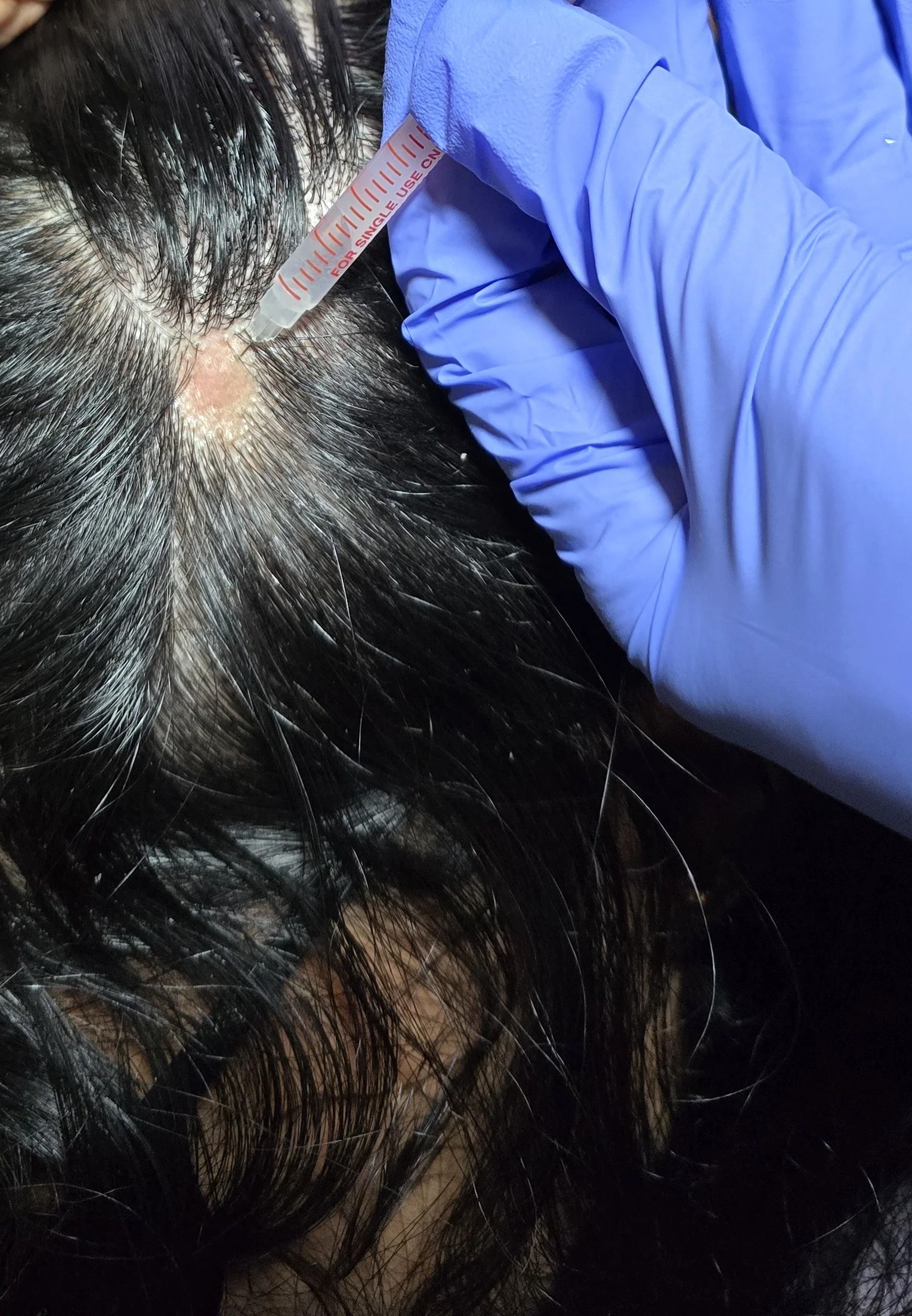
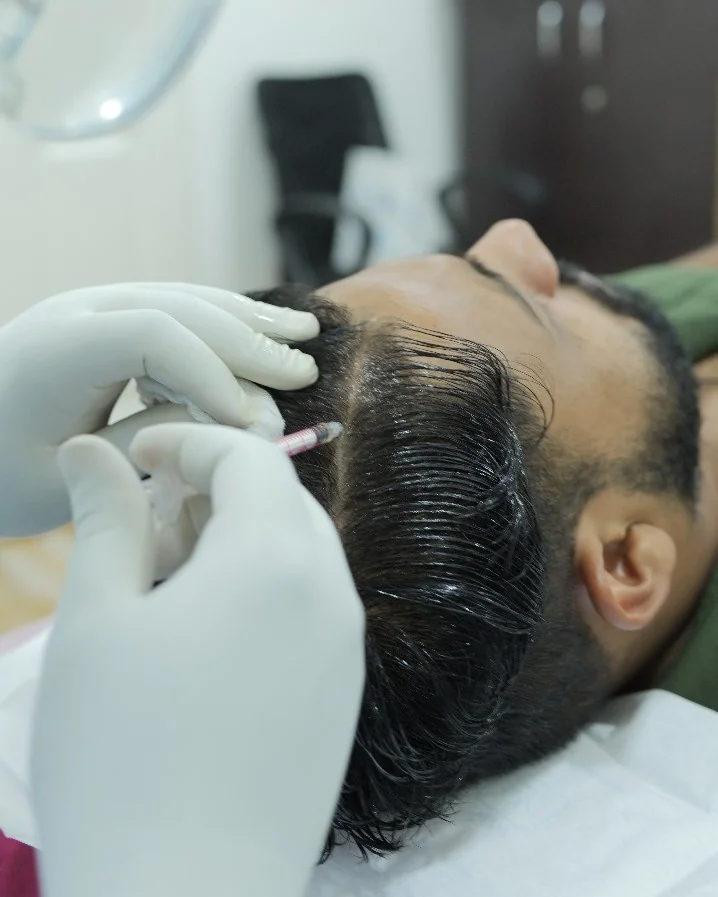
Platelet-rich plasma (PRP) therapy uses concentrated growth factors from your own blood - injected directly into the scalp - to stimulate dormant follicles, enhance blood supply, and create an optimal microenvironment for hair regrowth.
PRP and minoxidil work through entirely different biological mechanisms, making them highly synergistic. Multiple clinical studies confirm that patients using both achieve significantly better hair density, thickness, and satisfaction scores compared to either treatment alone.
At DermaVue, our protocol typically involves 3-4 PRP sessions spaced 4 weeks apart as an initial course alongside daily minoxidil, followed by maintenance sessions every 3-6 months.
9. Maintain Absolute Consistency
Minoxidil is not a short-term treatment. Hair regrown with minoxidil is dependent on continued use - stopping leads to gradual loss of regrown hair over 3-6 months. The single greatest predictor of success is not the concentration, brand, or combination therapy. It is consistency.
Set a daily alarm. Keep the bottle next to your toothbrush. Build it into your routine so it becomes automatic. Missing one day occasionally will not derail progress, but chronic inconsistency will.
10. Track Progress Objectively
Hair regrowth is slow - typically 3-6 months for visible improvement, with peak results at 12 months. Because you see your hair daily, gradual improvement is nearly impossible to perceive, creating a dangerous perception that nothing is working.
Take standardised scalp photographs every 4 weeks: same lighting, same angle, same distance. Photograph the crown (top-down), hairline (front), temples, and part line. Compare month 1 to month 3, month 3 to month 6. At DermaVue, we perform serial trichoscopy evaluations to objectively measure hair density, follicle count, and shaft thickness - removing guesswork entirely.
Common Mistakes That Undermine Results
Expecting overnight results. Minoxidil takes a minimum of 3-4 months to show visible improvement. Peak results typically appear at 12 months. Evaluating effectiveness at 6 weeks is measuring too early.
Applying only on bald spots. Minoxidil works best on thinning areas where follicles are miniaturised but still alive. Apply to thinning zones and surrounding areas - not just the bald patch itself.
Using more than the recommended dose. One millilitre of solution or half a capful of foam, twice daily, is the evidence-based dose. Using more does not produce faster results but does increase risk of scalp irritation and systemic side effects.
Ignoring underlying causes. Minoxidil treats the symptom of thinning but does not address underlying contributors such as thyroid dysfunction, iron deficiency, hormonal imbalances, or chronic stress. A comprehensive evaluation is essential.
Minoxidil Side Effects - What to Know
Minoxidil is generally well-tolerated, but awareness of potential side effects is important.
Common: Scalp irritation (itching, dryness, flaking - more frequent with the liquid formulation due to propylene glycol), initial shedding lasting 2-6 weeks, and unwanted facial hair growth from product transfer.
Uncommon: Dizziness or lightheadedness, rapid heartbeat or palpitations, swelling of hands or feet.
When to consult your dermatologist immediately: Chest pain, rapid or irregular heartbeat, sudden unexplained weight gain, severe scalp irritation, or any concerning symptom.
If you experience side effects, do not simply stop and abandon treatment. Your dermatologist can adjust concentration, switch formulation, reduce frequency, or explore alternatives.
What to Expect at DermaVue
At DermaVue, our approach to hair restoration begins with understanding your specific situation - not handing you a bottle and sending you home.
Every consultation starts with a detailed clinical history, family hair loss pattern assessment, lifestyle evaluation, medication review, and relevant blood investigations. Digital trichoscopy maps your current hair density, miniaturisation ratio, and follicle health objectively. Based on this data, your dermatologist designs a customised protocol that may include topical or oral minoxidil at the right concentration for your profile, DHT blockers where appropriate, PRP therapy, low-level laser therapy, nutritional optimisation, scalp health management, and when indicated, hair transplant surgery as a definitive solution.
This multi-modal approach consistently delivers results that single-agent treatment cannot match - because hair loss is rarely caused by a single factor.
Related DermaVue Services
Frequently Asked Questions
How long does minoxidil take to show results?
Most patients begin noticing reduced shedding within 4-6 weeks. Visible new hair growth typically becomes apparent at 3-4 months, with progressive improvement continuing up to 12-18 months. Patience and consistency during the first 6 months are critical.
What happens if I stop using minoxidil?
Hair regrown with minoxidil gradually thins and sheds over 3-6 months after discontinuation, returning approximately to your pre-treatment baseline. This is because minoxidil supports hair growth actively - it does not permanently alter follicle genetics.
Can women use 5% minoxidil?
Yes. Dermatologists now increasingly recommend 5% minoxidil for women, particularly the foam formulation which minimises the risk of facial hair growth. Clinical studies show 5% is more effective than 2% in women, though it should be initiated under dermatologist guidance.
Can I use minoxidil along with hair oil?
Minoxidil should be applied on a clean, oil-free scalp for optimal absorption. If you use coconut oil or other hair oils - which is a common and beneficial practice across South India - apply them after minoxidil has been absorbed (at least 4 hours later) or on alternate days. Never apply oil and minoxidil simultaneously.
Is oral minoxidil better than topical?
Oral low-dose minoxidil bypasses the sulfotransferase enzyme barrier that limits topical efficacy in some patients. It can be more effective for non-responders to topical therapy. However, it requires medical supervision due to systemic effects. Your dermatologist can determine which form is appropriate for your specific situation.
This article is for educational purposes and does not replace a personalised consultation with a dermatologist. Individual results vary based on the type and duration of hair loss, underlying health conditions, and adherence to treatment.