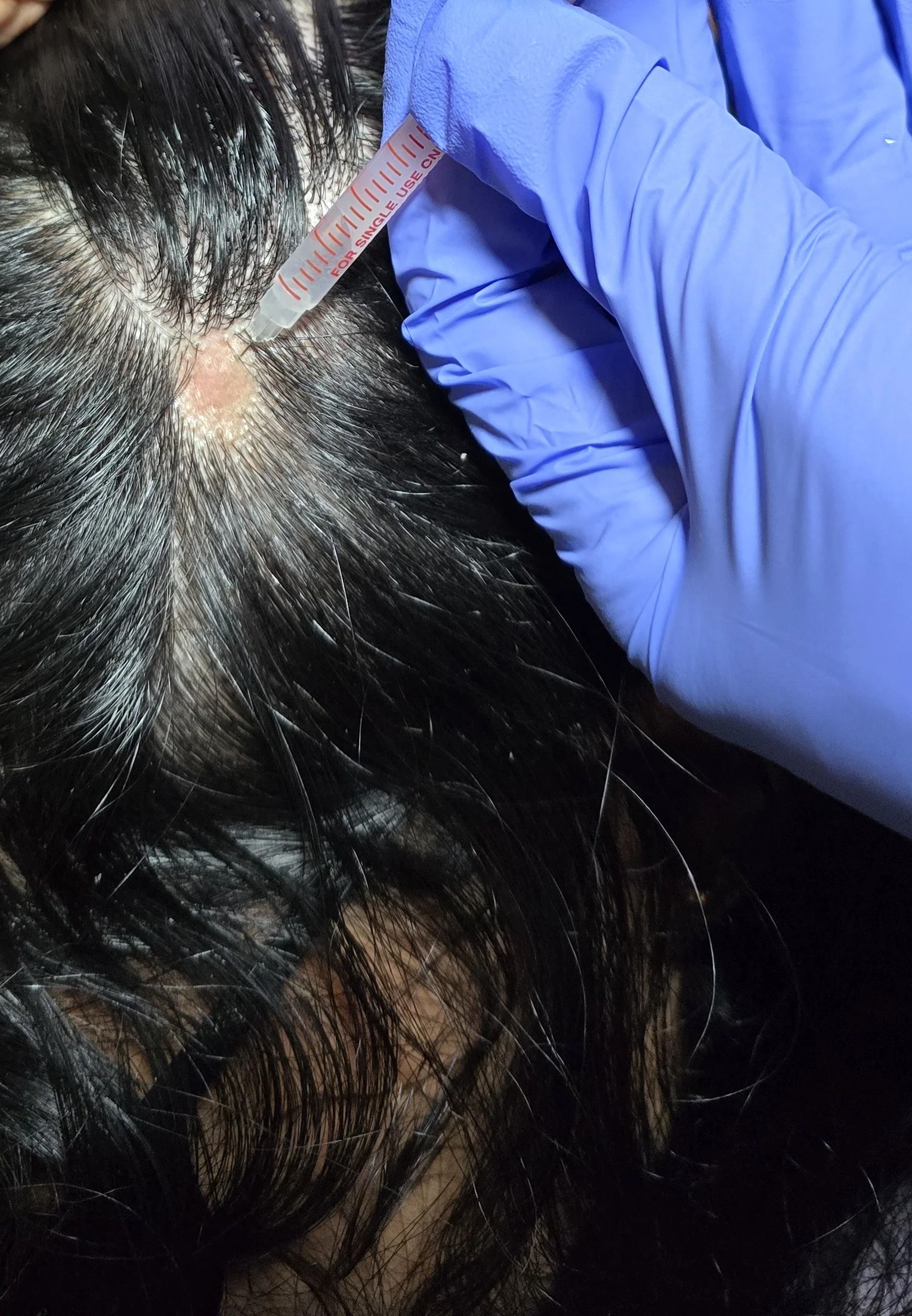
Hair fall is one of the most frequent concerns that brings patients to my clinic. It affects men and women across all age groups, and the anxiety it causes - watching hair collect on pillows, in shower drains, on combs - is something I encounter daily. But here is what I tell every patient at the start of their consultation: hair fall is a symptom, not a diagnosis. And effective treatment begins only when we identify exactly why it is happening.
The causes of hair fall in men and women overlap in some areas but differ significantly in others. Understanding these differences is essential because the wrong treatment - or treating without knowing the cause - wastes months of effort and can allow a treatable condition to progress. At DermaVue, every hair loss consultation begins with this principle: diagnose first, then treat.
How Hair Grows - Understanding the Hair Cycle
Before examining the causes of hair fall, it helps to understand the biology of normal hair growth. Every hair on your scalp follows a continuous cycle consisting of four distinct phases.
Anagen (active growth phase). This is when the hair is actively growing from the follicle. In a healthy individual, anagen lasts 2-7 years, and approximately 85-90% of your scalp hairs are in this phase at any given time. The duration of anagen determines how long your hair can grow - longer anagen means longer potential hair length.
Catagen (transition phase). A brief 2-3 week period during which the hair stops growing, the lower portion of the follicle shrinks, and the hair detaches from its blood supply. Only 1-2% of hairs are in catagen at any time.
Telogen (resting phase). The hair remains in the follicle but is no longer growing. This phase lasts 2-4 months. Approximately 10-15% of scalp hairs are in telogen at any time, and it is normal to shed 50-100 telogen hairs daily.
Exogen (active shedding phase). Now recognised as a distinct phase separate from telogen, exogen is when the resting hair is actively released from the follicle and a new anagen hair begins forming in the same follicle.
Hair fall becomes noticeable - and clinically significant - when this cycle is disrupted. Too many hairs shifting into telogen simultaneously, a progressively shortened anagen phase producing thinner and shorter hairs, or follicle damage preventing new growth altogether - each pattern points to different underlying causes.
Common Causes of Hair Fall in Men
Male hair loss tends to be progressive and patterned, strongly influenced by genetics and hormones.
1. Androgenetic Alopecia (Male Pattern Hair Loss)
This is the most common cause of hair loss in men worldwide, and Indian men are disproportionately affected - studies suggest approximately 58% of Indian men develop androgenetic alopecia by age 50, with onset frequently beginning in the late twenties, earlier than in many other populations.
The mechanism is well understood. The enzyme 5-alpha-reductase (type II) converts circulating testosterone into dihydrotestosterone (DHT) within the scalp. DHT binds to androgen receptors in genetically susceptible hair follicles - primarily at the temples, frontal hairline, and crown. This triggers a process called follicular miniaturisation: with each successive hair cycle, the affected follicle produces a thinner, shorter, less pigmented hair until it eventually produces only a fine vellus hair or stops producing visible hair altogether.
The pattern is characteristic: receding hairline at the temples (forming the “M” shape), thinning at the crown (vertex), and gradual merging of these areas in advanced stages. The Norwood-Hamilton classification grades severity from stage I (minimal recession) to stage VII (extensive loss).
The genetic component is polygenic - inherited from both parents, not just the maternal side as commonly believed. A 2024 genome-wide association study identified over 600 genetic loci associated with androgenetic alopecia, confirming its complex inheritance pattern.
2. Lifestyle and Environmental Accelerators
While genetics determine susceptibility, lifestyle factors determine the speed of progression. In my experience treating patients across Kerala and Tamil Nadu, several factors consistently accelerate hair loss in genetically predisposed men:
Chronic stress - professional pressure, financial concerns, family responsibilities - elevates cortisol, which can push more follicles into the telogen phase and may upregulate 5-alpha-reductase activity.
Smoking reduces blood flow to hair follicles and introduces oxidative stress that damages follicular cells. Epidemiological studies show smokers have significantly higher rates and severity of androgenetic alopecia.
Sleep deprivation - common in urban Indian professionals working late hours - disrupts growth hormone secretion and raises cortisol, both of which negatively impact the hair cycle.
Hard water - prevalent across many areas in Kerala (well water) and Tamil Nadu (bore well water) - deposits calcium and magnesium on the scalp and hair shaft. These mineral deposits weaken the hair shaft, increase breakage, and may reduce the effectiveness of topical treatments.
3. Medical and Scalp Conditions
Other causes of hair fall in men include alopecia areata (an autoimmune condition causing patchy hair loss), post-fever or post-COVID telogen effluvium (a significant cause of consultations since 2021), chronic scalp conditions (seborrheic dermatitis, dandruff, fungal infections - all of which worsen during Kerala’s monsoon season), and medication side effects.
Common Causes of Hair Fall in Women
Hair fall in women is often diffuse rather than patterned, and is more frequently linked to internal health changes than in men.
1. Hormonal Imbalances
Hormonal fluctuations are the most common trigger for female hair loss in my practice.
Thyroid disorders - both hypothyroidism and hyperthyroidism - directly affect the hair cycle. Hypothyroidism is particularly prevalent among Indian women and causes diffuse thinning, dry hair texture, and prolonged telogen. Every woman presenting with hair loss should have thyroid function tested.
Polycystic ovary syndrome (PCOS) affects an estimated 20-25% of Indian women of reproductive age. The hyperandrogenism associated with PCOS causes female pattern hair loss (thinning over the crown and part line) often accompanied by hirsutism (excess facial and body hair) - a distressing combination.
Post-pregnancy hair loss is physiologically normal. During pregnancy, elevated oestrogen keeps more hairs in the anagen phase, creating thicker-looking hair. After delivery, these hairs synchronously shift to telogen and shed 2-4 months postpartum. While this is self-limiting and hair typically recovers within 6-12 months, the volume of shedding can be alarming without explanation.
Perimenopause and menopause bring declining oestrogen and relative androgen excess, which can trigger or worsen female pattern hair loss in genetically susceptible women.
2. Nutritional Deficiencies
This is the most underdiagnosed and most correctable cause of hair fall in Indian women.
Iron deficiency is strikingly common. According to the National Family Health Survey (NFHS-5), over 53% of Indian women are anaemic. But even without frank anaemia, ferritin levels below 40 ng/mL - far above the “normal” laboratory threshold of 12-15 ng/mL - are associated with increased hair shedding. Many women I see have ferritin levels in the 15-30 range: technically “normal” by laboratory standards but functionally inadequate for optimal hair growth.
Vitamin D deficiency affects 70-80% of urban Indians despite our tropical latitude. Modern indoor lifestyles, sunscreen use, and darker skin (which requires more UV exposure for vitamin D synthesis) all contribute. Low vitamin D is independently associated with telogen effluvium and female pattern hair loss.
Protein insufficiency is common in vegetarian and semi-vegetarian diets - traditional in many Indian families - particularly when meals are carbohydrate-heavy with insufficient dal, legumes, or protein-rich foods. Hair is primarily composed of keratin protein; inadequate dietary protein directly limits the raw material available for hair synthesis.
Zinc and vitamin B12 deficiency - both more common in vegetarian populations due to lower bioavailability from plant sources - are additional contributing factors that are frequently identified in blood work.
3. Telogen Effluvium - The Great Hair Shedder
Telogen effluvium is the medical term for excessive, diffuse hair shedding triggered by a physiological or emotional stressor. The characteristic feature: shedding begins 2-3 months after the triggering event, as stressed follicles that prematurely entered telogen simultaneously reach the shedding phase.
Common triggers include:
- High fever, dengue, or COVID-19 infection (post-COVID telogen effluvium has been a major cause of hair loss consultations since 2021)
- Surgery or hospitalisation
- Crash dieting or rapid weight loss
- Severe emotional stress or bereavement
- Starting or stopping oral contraceptives
Acute telogen effluvium is typically self-limiting - hair regrows over 6-12 months as the trigger resolves. However, chronic telogen effluvium (lasting beyond 6 months) can develop and may overlap with early female pattern hair loss, requiring careful differentiation by a dermatologist.
4. Hair Care Practices and External Damage
Traction alopecia from tight ponytails, braids, or buns - worn daily over months to years - causes gradual, often permanent hair loss along the hairline and temples. This is particularly common in women who oil and tightly braid their hair nightly.
Chemical damage from straightening treatments, colouring, bleaching, and perming weakens the hair shaft, causing breakage that mimics hair fall. The increasing popularity of chemical hair treatments among younger Indian women has made this a more frequent finding in my practice.
Heat styling (flat irons, curling irons, blow dryers at high heat) denatures hair proteins and causes fracture points along the shaft.
When Hair Fall Becomes a Medical Concern
Not all hair fall requires treatment. Shedding 50-100 hairs daily is normal physiology. However, certain signs indicate the need for professional evaluation:
- Sustained shedding noticeably greater than your baseline, lasting more than 4-6 weeks
- Visible thinning - wider hair part, scalp becoming more visible through the hair
- Patchy hair loss with smooth or bald spots (which may indicate alopecia areata or fungal infection)
- Scalp symptoms: persistent itching, burning, redness, scaling, or pain
- Hair thinning accompanied by other symptoms: fatigue, weight changes, irregular periods, or skin changes
Early diagnosis consistently leads to better outcomes because many types of hair loss respond more readily to treatment in the initial stages, before extensive follicular miniaturisation or scarring occurs.
How Dermatologists Diagnose Hair Fall
A proper diagnosis is the foundation of effective hair fall treatment. At DermaVue, the evaluation typically includes:
Detailed clinical history. We review family hair loss patterns (both maternal and paternal), dietary habits, stress levels, recent illnesses or surgeries, medications, menstrual and hormonal history in women, and hair care practices. This history alone often narrows the differential diagnosis significantly.
Scalp and hair examination. Close inspection of the scalp assesses hair density, pattern of loss, scalp condition, presence of inflammation, scaling, or infection, and hair shaft quality.
Trichoscopy. This non-invasive technique uses a specialised dermatoscope to magnify hair follicles at 20-70x magnification. It can differentiate between androgenetic alopecia (showing miniaturised hairs, vellus hairs, and peripilar signs), telogen effluvium (showing upright regrowing hairs without miniaturisation), alopecia areata (showing exclamation mark hairs, black dots, and yellow dots), and scarring alopecias (showing loss of follicular openings).
Blood investigations. A targeted panel including complete blood count, serum ferritin, vitamin D, vitamin B12, zinc, thyroid function (TSH, free T3, free T4), and hormonal profile (testosterone, DHEA-S, prolactin) in women with suspected hormonal hair loss. These investigations identify treatable internal causes that must be addressed alongside any topical or procedural treatment.
Hair pull test. A simple clinical test where the dermatologist gently pulls 60 hairs from different scalp regions. More than 10% coming away suggests active shedding (positive pull test), helping confirm telogen effluvium.
Evidence-Based Treatment Options
Treatment at DermaVue is never one-size-fits-all. Based on diagnosis, a customised plan may include:
Medical Treatments
Topical therapies - minoxidil (2% or 5%) remains the first-line topical treatment with strong evidence for both sexes. Applied to the scalp daily, it stimulates hair growth by prolonging the anagen phase and improving follicular blood supply.
Oral medications - finasteride (for men) inhibits DHT production, addressing the hormonal root cause of androgenetic alopecia. Spironolactone (for women) blocks androgen effects on hair follicles. Low-dose oral minoxidil has emerged as an effective alternative for patients who prefer systemic to topical treatment. All prescription medications require monitoring and are chosen based on age, gender, medical history, and specific hair loss type.
Nutritional correction - targeted supplementation based on blood test results. Correcting iron, vitamin D, zinc, and B12 deficiencies is often the single most impactful intervention for women with telogen effluvium.
Advanced In-Clinic Treatments
PRP (Platelet-Rich Plasma) therapy - concentrated growth factors from your own blood are injected into the scalp, stimulating follicle activity and supporting the hair growth microenvironment. Meta-analyses published through 2024 confirm significant improvement in hair density with PRP.
Low-level laser therapy (LLLT) - FDA-cleared devices that stimulate mitochondrial activity in follicular cells, promoting growth. Used as a complement to medical therapy.
Microneedling - creates controlled micro-injuries that activate growth factor release and enhance topical treatment absorption. Increasingly used as part of combination protocols.
Addressing Root Causes
- Thyroid management in collaboration with endocrinology
- PCOS management including hormonal and metabolic optimisation
- Treatment of scalp conditions - dandruff, seborrheic dermatitis, fungal infections, psoriasis
- Dietary counselling addressing protein intake, iron-rich foods, and micronutrient gaps
- Stress management and sleep hygiene guidance
Related DermaVue Services
Frequently Asked Questions
How much hair fall is normal?
Shedding 50-100 hairs daily is physiologically normal and represents hairs naturally completing their telogen phase. If you notice significantly more hair on your pillow, in the shower drain, or on your comb than your usual baseline - particularly if this persists for more than 4-6 weeks - it warrants evaluation. Context matters: temporary increases during monsoon season or after a fever are expected and typically self-resolve.
Can hair fall from nutritional deficiency be reversed?
In most cases, yes. Hair loss caused by iron deficiency, vitamin D deficiency, zinc deficiency, or protein insufficiency is often fully reversible once the deficiency is identified and corrected through supplementation and dietary modification. However, recovery takes time - typically 3-6 months after levels normalise, as follicles need to re-enter the anagen phase and produce new hair.
Is hair fall hereditary?
Androgenetic alopecia - the most common type of progressive hair loss - has a strong genetic component inherited from both parents. However, having a genetic predisposition does not mean the same severity or timeline. Lifestyle factors, nutrition, scalp health, and early medical intervention can all modify the trajectory significantly. Not all hair fall types are genetic - telogen effluvium, nutritional deficiency-related loss, and hormonal hair loss from thyroid disease or PCOS are treatable regardless of family history.
Does hard water cause hair fall?
Hard water - high in calcium and magnesium - does not directly cause follicular hair loss but contributes to hair damage. Mineral deposits accumulate on the hair shaft, making it dry, brittle, and prone to breakage. On the scalp, hard water can disrupt the barrier, worsen dandruff, and reduce the effectiveness of topical treatments. Using a chelating or clarifying shampoo weekly and considering a shower water filter can mitigate these effects.
When should I see a dermatologist for hair fall?
Consult a dermatologist if hair fall persists beyond 4-6 weeks, if you notice visible thinning or widening of your hair part, if you develop patchy bald spots, if scalp symptoms like itching or scaling accompany the hair loss, or if hair fall is affecting your emotional wellbeing. Early evaluation - including trichoscopy and blood work - leads to earlier diagnosis and better treatment outcomes.
This article is for educational purposes only and does not replace a personalised consultation with a dermatologist. Hair fall has multiple potential causes that require individualised assessment and treatment.