Quick answer: The right acne scar treatment depends on the type of scar. Ice pick scars respond best to TCA CROSS. Rolling scars need subcision and microneedling RF. Boxcar scars respond well to fractional CO2 laser or microneedling RF. Raised (hypertrophic or keloid) scars need intralesional steroid injections. Most Coimbatore patients have a combination of scar types and need a combined treatment plan. A clinical assessment before treatment is essential.
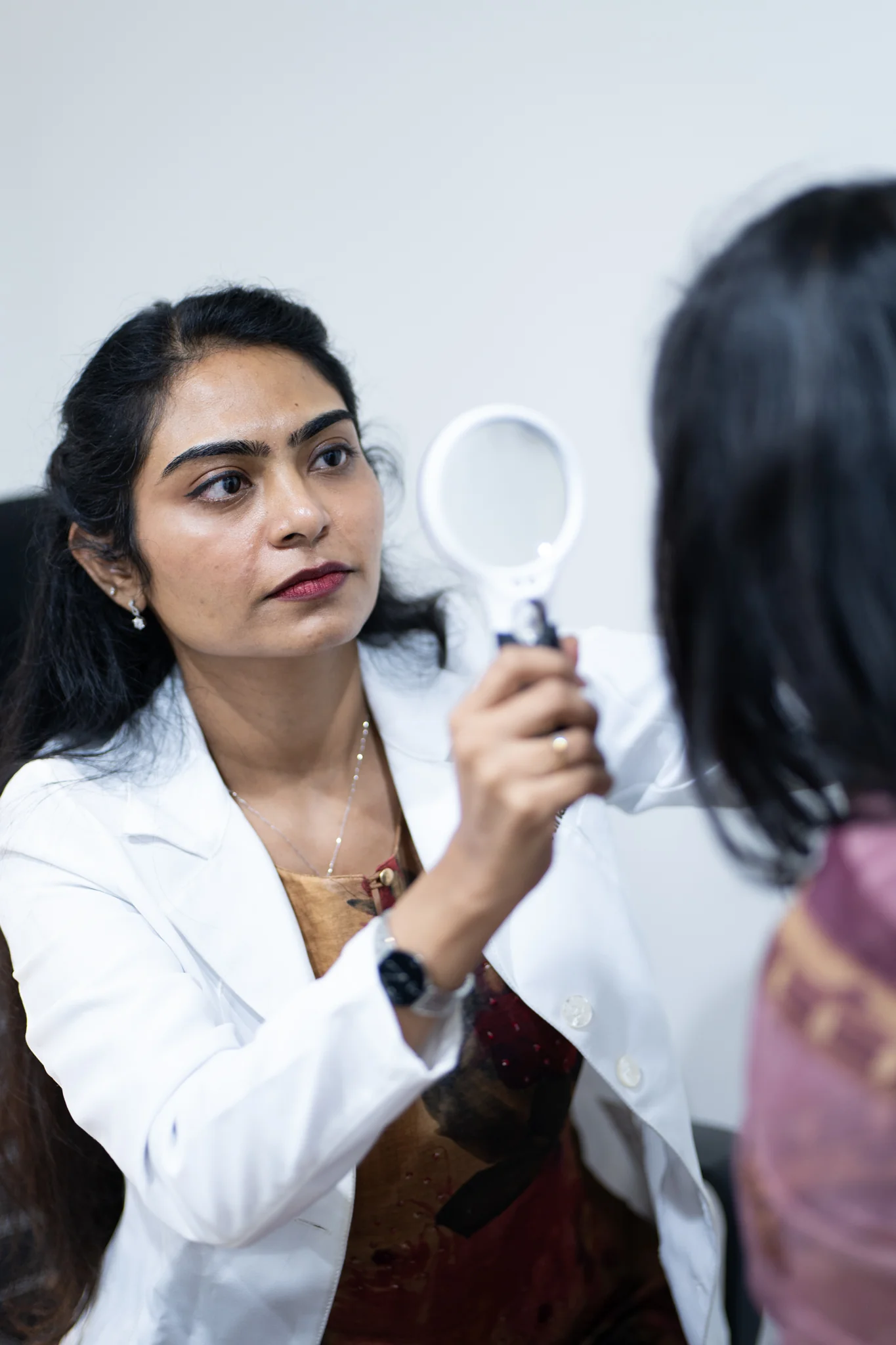
Acne scar consultations at our acne treatment clinic in Coimbatore follow a pattern: the patient has had acne for years, has managed it or outgrown it, and is now left with textural changes and dark marks on the face that no cream or home remedy has touched. They want to know what will work and how long it will take.
The first thing to establish in any acne scar consultation is the scar type. This determines everything that follows. Using the wrong treatment for the wrong scar type not only fails to improve the scar - it can worsen pigmentation and waste months of treatment time. See also our post on acne in adults over 30 for how active acne is managed before scar treatment begins.
Written by Dr. Minu Liz Mathew, MD DVL, IADVL-registered dermatologist and Clinical Director, DermaVue Kochi. Peer reviewed by Dr. Sarath Chandran, MD DVL, Managing Director, DermaVue Clinics.
Table of Contents
- PIH vs Acne Scars: Understanding the Difference
- The Four Main Types of Acne Scars
- Why Indian Skin in Coimbatore Needs Specific Approaches
- Which Treatment Works for Which Scar Type
- How Many Sessions Are Needed and What to Expect
- What to Do About Dark Marks Alongside Scar Treatment
- Acne Scar Treatment at DermaVue Coimbatore
- Frequently Asked Questions
PIH vs Acne Scars: Understanding the Difference
This distinction matters clinically because the treatment for each is completely different.
| Post-inflammatory hyperpigmentation (PIH) | True acne scars | |
|---|---|---|
| What it is | Dark flat marks left after an acne spot resolves | Permanent textural changes in the dermis from inflammatory damage |
| Appearance | Brown, red, or greyish flat discolouration on the skin surface | Pitted depressions, raised lumps, or uneven skin surface |
| Cause | Melanin overproduction triggered by inflammation | Collagen destruction or overproduction during severe acne |
| Fade on their own | Yes, over 6 to 18 months with sun protection | No - structural changes are permanent without treatment |
| Treatment | Topical depigmenting agents + SPF 50 | Procedural treatments (laser, microneedling, subcision, TCA CROSS) |
| Common error | Treating PIH as a scar and doing unnecessary procedures | Treating scars with creams and getting no improvement |
Most patients presenting at our Coimbatore clinic have both PIH and true scars simultaneously. A clinical assessment separates the two and creates a treatment plan that addresses each correctly.
The Four Main Types of Acne Scars
| Scar type | Appearance | Cause | Responds to |
|---|---|---|---|
| Ice pick scars | Deep, narrow, V-shaped pits. Most visible on the cheeks. | Destruction of deep follicular epithelium during severe nodular acne | TCA CROSS (chemical reconstruction). Laser alone does not reach deep enough. |
| Boxcar scars | Broad, U-shaped depressions with defined vertical walls and a flat base. | Localised collagen destruction leaving a defined depression | Fractional CO2 laser, microneedling RF, punch excision for deep boxcar scars |
| Rolling scars | Wavy, undulating skin surface with poorly defined edges. | Fibrous bands tethering the dermis to subcutaneous tissue | Subcision (cutting the fibrous bands) followed by microneedling RF or filler |
| Hypertrophic or keloid scars | Raised, firm, often red or dark. Keloids extend beyond the original wound boundary. | Excessive collagen production during healing. More common in darker skin tones. | Intralesional corticosteroid injections, silicone gel, laser for redness |
Most patients present with a combination of scar types on the same face, which is why treatment plans typically combine more than one procedure. The proportions of each scar type, assessed under dermoscopy and good clinical lighting, determine the treatment sequence.
Why Indian Skin in Coimbatore Needs Specific Scar Treatment Approaches
Indian skin (Fitzpatrick IV to VI) presents specific challenges for acne scar treatment that are particularly relevant in Coimbatore’s high UV environment.
The primary challenge is post-inflammatory hyperpigmentation risk from treatment. Any laser or needling procedure that creates controlled skin injury to stimulate collagen remodelling can also trigger a melanin response in darker skin. Research published in the Indian Journal of Dermatology, Venereology and Leprology consistently identifies PIH as the most common complication of acne scar treatment in South Asian patients.
Practical implications for Coimbatore patients:
Lower energy settings on all laser and energy-based devices reduce the risk of triggering PIH while still producing collagen remodelling.
Strict SPF 50 use throughout the treatment course is mandatory. Coimbatore’s high UV index means any unprotected sun exposure during an active scar treatment course significantly worsens pigmentation outcomes.
Pre-treatment preparation with topical depigmenting agents (azelaic acid or tranexamic acid) for 4 to 6 weeks before laser or microneedling reduces the baseline melanin reactivity of the skin and lowers PIH risk during treatment.
Spacing between sessions (typically 4 to 6 weeks) gives the skin time to recover and reduces cumulative pigmentation risk.
Which Treatment Works for Which Scar Type
Fractional CO2 laser
The most effective treatment for boxcar and rolling scars. US-FDA approved fractional CO2 laser creates microscopic columns of controlled thermal injury in the dermis, stimulating collagen remodelling without ablating the entire skin surface. The fractional approach leaves untreated skin between the columns, significantly reducing recovery time and PIH risk compared to fully ablative CO2 laser.
On Indian skin in Coimbatore, fractional CO2 is performed at lower fluence settings than on lighter skin to control the PIH risk. Most patients need 3 to 5 sessions spaced 6 to 8 weeks apart. Downtime is 3 to 5 days of redness and mild swelling.
Microneedling RF (radiofrequency microneedling)
Microneedling RF combines the collagen stimulation of microneedling with the deeper thermal effect of radiofrequency energy delivered through insulated needles. It is particularly effective for rolling scars and mild to moderate boxcar scars. The key advantage for Indian skin is that the RF energy is delivered deep in the dermis without significantly heating the epidermis, reducing the PIH risk compared to laser-based treatments.
Results are more gradual than fractional CO2 but the safety profile for darker skin tones is better. Most patients need 4 to 6 sessions spaced 4 to 6 weeks apart.
TCA CROSS (chemical reconstruction of skin scars)
TCA CROSS is the most effective treatment for ice pick scars. A high concentration of trichloroacetic acid is applied precisely into the base of each ice pick scar using a fine applicator. The controlled chemical injury stimulates collagen production from the base of the scar upward, gradually filling the deep pit.
It is a painstaking, scar-by-scar procedure that requires multiple sessions (typically 4 to 6 at 4-week intervals) but produces significant improvement in ice pick scars that do not respond meaningfully to laser or microneedling. Done correctly on Indian skin, the PIH risk from TCA CROSS is manageable with pre-treatment preparation.
Subcision
Subcision is a minor surgical procedure used for rolling scars. A specialised needle is inserted under the scar and moved back and forth to cut the fibrous bands tethering the base of the scar to the deeper tissue. Once these bands are released, the scar floor lifts and the depression becomes less visible.
Subcision is typically combined with microneedling RF or PRP and GFC injected into the released space to support collagen filling. It addresses the root cause of rolling scars that laser and microneedling alone cannot reach.
PRP and GFC as adjuncts
Platelet-rich plasma (PRP) and growth factor concentrate (GFC) are used as adjuncts to laser and microneedling sessions. Injected into the dermis immediately after fractional CO2 or microneedling RF, they accelerate healing and enhance collagen production. See our post on GFC vs PRP for how the two compare.
Chemical peels
Superficial and medium-depth chemical peels improve mild surface scarring and significantly address the PIH component alongside early boxcar scars. They are useful as preparatory treatments before deeper procedures and as maintenance between laser sessions.
Carbon laser facial as a supportive treatment
The carbon laser facial is used as a maintenance and supportive treatment between deeper scar procedures. It addresses oiliness, mild surface texture, and PIH without the downtime of fractional CO2. It is not a primary scar treatment but is particularly useful for patients with oily, congested skin who also have mild scarring.
How Many Sessions Are Needed and What to Expect
| Treatment | Sessions needed | Interval | Downtime | Best for |
|---|---|---|---|---|
| Fractional CO2 laser | 3 to 5 sessions | 6 to 8 weeks | 3 to 5 days | Boxcar and rolling scars |
| Microneedling RF | 4 to 6 sessions | 4 to 6 weeks | 1 to 2 days | Rolling scars, mild boxcar, safer for darker skin |
| TCA CROSS | 4 to 6 sessions | 4 weeks | 2 to 3 days (frosting) | Ice pick scars specifically |
| Subcision | 1 to 3 sessions | 4 to 6 weeks | 2 to 3 days (bruising) | Rolling scars with fibrous tethering |
| Chemical peel | 3 to 6 sessions | 3 to 4 weeks | 1 to 3 days | Mild scarring, PIH, surface texture |
| PRP or GFC | Used with laser or microneedling | Same as the procedure | No additional downtime | Adjunct to all energy-based procedures |
Realistic outcome expectations: most patients see 50 to 70 percent improvement in scar depth and visibility after a full treatment course. Complete elimination of acne scars is not achievable with current technology. The goal is significant improvement that makes scars substantially less visible, particularly under normal lighting and in photographs.
What to Do About Dark Marks Alongside Scar Treatment
Most Coimbatore patients present with both true acne scars and PIH simultaneously. The treatment approach runs on two parallel tracks:
PIH track: Topical depigmenting agents (azelaic acid, niacinamide, tranexamic acid), strict SPF 50 daily, and where needed, superficial chemical peels specifically targeting PIH. See our post on what causes melasma and pigmentation on Indian skin for the full pigmentation management approach.
Scar track: The procedural treatments described above, with lower energy settings and pre-treatment preparation to manage the PIH risk from the procedures themselves.
The sequencing matters. PIH management is typically started first for 4 to 6 weeks before the first laser or microneedling session. This reduces the baseline melanin reactivity of the skin and lowers the risk that the scar procedure triggers new hyperpigmentation.
Acne Scar Treatment at DermaVue Coimbatore
DermaVue’s Gandhipuram clinic in Coimbatore offers acne scar assessment and treatment under the supervision of IADVL-registered MD DVL dermatologists. Every acne scar consultation begins with a clinical assessment under dermoscopy to identify the scar types present and their proportions. A combined treatment plan is produced based on what will produce the best results for that patient’s specific scar pattern, skin type, and timeline.
Treatments available at DermaVue Coimbatore include fractional CO2 laser, microneedling RF, TCA CROSS, subcision, chemical peels, PRP and GFC, and carbon laser facial as a supportive procedure.
| Branch | Address | Phone / WhatsApp |
|---|---|---|
| Coimbatore (Gandhipuram) | 460, Ponnaiyan St, Cross Cut Rd, Ram Nagar, Gandhipuram, Coimbatore, Tamil Nadu 641009 | +91 80868 60018 |
Book an acne scar consultation at DermaVue Coimbatore. Call +91 80868 60018, WhatsApp our Coimbatore team, or visit DermaVue Coimbatore to book online.
Related Reading
- Acne Treatment in Coimbatore
- Acne in Adults Over 30: Why It Is Different
- Carbon Laser Facial in Coimbatore
- Chemical Peel at DermaVue
- GFC vs PRP for Hair and Skin Treatment
Frequently Asked Questions
What is the best treatment for acne scars in Coimbatore? The best treatment depends on the type of acne scar. Ice pick scars respond best to TCA CROSS. Rolling scars need subcision and microneedling RF. Boxcar scars respond well to fractional CO2 laser or microneedling RF. Raised (hypertrophic or keloid) scars need intralesional steroid injections. Most Coimbatore patients have a combination of scar types and need a combined treatment plan determined after a clinical assessment.
How many sessions does acne scar treatment take in Coimbatore? Most procedures require 3 to 6 sessions spaced 4 to 8 weeks apart depending on the treatment. Fractional CO2 laser typically needs 3 to 5 sessions. Microneedling RF needs 4 to 6 sessions. TCA CROSS for ice pick scars needs 4 to 6 sessions. A combined plan for multiple scar types runs over 4 to 9 months in total.
Is acne scar treatment safe for Indian skin in Coimbatore? Yes, when done with appropriate settings calibrated for Indian skin (Fitzpatrick IV to VI). The main risk on Indian skin is post-inflammatory hyperpigmentation from the treatment itself. This is managed through pre-treatment skin preparation with topical depigmenting agents, lower energy settings on laser and RF devices, strict SPF 50 use throughout the treatment course, and adequate spacing between sessions.
What is the difference between acne scars and dark marks? Dark marks (post-inflammatory hyperpigmentation or PIH) are flat discolouration on the skin surface caused by melanin overproduction after acne inflammation. They fade on their own over 6 to 18 months with sun protection and topical treatment. True acne scars are permanent textural changes (pits, depressions, raised lumps) in the dermis that do not fade without procedural treatment.
Can acne scars be completely removed? Complete removal of acne scars is not achievable with current treatment technology. The realistic outcome from a full treatment course is 50 to 70 percent improvement in scar depth and visibility. Scars become substantially less visible under normal lighting and in photographs. The type, depth, and age of the scars, and the patient’s skin type, all affect the degree of improvement achievable.
How long does acne scar treatment take to show results in Coimbatore? Collagen remodelling after laser or microneedling continues for 3 to 6 months after each session. Initial improvement is visible from 4 to 8 weeks after the first session, with progressive improvement after each subsequent session. Maximum results are typically seen 3 to 6 months after the final session. The full treatment course plus recovery typically spans 6 to 12 months.
What should I do before acne scar treatment in Coimbatore? Active acne must be fully controlled before scar treatment begins. A 4 to 6 week course of topical depigmenting agents (azelaic acid or tranexamic acid) before the first laser or microneedling session reduces the baseline melanin reactivity of the skin and lowers the risk of treatment-triggered hyperpigmentation. Consistent SPF 50 use must begin before treatment starts and continue throughout the course.
How do I book an acne scar consultation in Coimbatore? Call or WhatsApp DermaVue Coimbatore on +91 80868 60018. Our clinic is at 460, Ponnaiyan St, Cross Cut Rd, Ram Nagar, Gandhipuram, Coimbatore 641009. A clinical assessment before the first treatment session identifies the scar types present, determines the treatment plan, and sets realistic expectations for outcomes.
Authored by Dr. Minu Liz Mathew, MD DVL, IADVL-registered dermatologist and Clinical Director, DermaVue Kochi. Peer reviewed by Dr. Sarath Chandran, MD DVL, Managing Director, DermaVue Clinics. Published September 2026. This article is for general information and does not substitute a clinical consultation. Individual treatment plans and outcomes vary based on scar type, depth, skin tone, and treatment history.