Quick answer: The seven most common causes of hair fall in Coimbatore are nutritional deficiencies, telogen effluvium (stress-related shedding), androgenetic alopecia, thyroid disorders, scalp conditions, hard water damage, and alopecia areata. Most are treatable once identified. A dermatologist assessment with targeted blood tests is the right starting point.
Hair fall brings more patients to DermaVue Coimbatore than almost any other concern. Some of them have been losing hair for months before they come in. Others notice a sudden change and come in quickly. Both are right to act.
The challenge is that hair fall is not one condition. It is a symptom. It can be caused by a deficiency, a hormone, stress, a scalp problem, or genetics, and the right treatment depends entirely on which one it is. This article explains the seven causes we see most often in Coimbatore patients.
Written by Dr. Sarath Chandran, MD DVL, IADVL member, Managing Director, DermaVue. This article reflects current clinical evidence and practice as of 2026. It is general information, not a substitute for a personal medical consultation.
Table of Contents
- Reason 1: Nutritional Deficiencies
- Reason 2: Telogen Effluvium (Stress-Related Shedding)
- Reason 3: Androgenetic Alopecia (Pattern Hair Loss)
- Reason 4: Thyroid Disorders and Hormonal Causes
- Reason 5: Scalp Conditions
- Reason 6: Hard Water and Heat
- Reason 7: Alopecia Areata
- What to Expect at a Hair Fall Consultation at DermaVue Coimbatore
- Treatment Options Available
- Frequently Asked Questions
Reason 1: Nutritional Deficiencies
This is the most common cause we identify in Coimbatore patients, particularly in women between 20 and 40.
Hair follicles are among the most metabolically active structures in the body. They need a steady supply of iron, vitamin D, vitamin B12, zinc, and protein to function. When any of these fall below the threshold the follicle needs, hair enters the shedding phase early.
What we see in Coimbatore patients:
Iron deficiency is most common, particularly in women with heavy periods or those following a plant-based diet without supplementation. Vitamin D deficiency is near-universal in urban South Indian patients, counterintuitively, because indoor work means sun exposure is low despite the climate. Vitamin B12 deficiency is common in vegetarian and vegan patients.
How it presents: Diffuse thinning across the scalp rather than a specific pattern. Hair feels thinner overall. Shedding increases. Nails may also be brittle.
What to do: A serum ferritin test (not just haemoglobin), vitamin D, and B12 level will identify the deficiency. Correction through supplementation, guided by a doctor, usually reduces shedding within eight to twelve weeks.
Reason 2: Telogen Effluvium (Stress-Related Shedding)
Telogen effluvium is the medical term for hair shedding triggered by a physical or emotional stress event. The hair does not fall immediately. The shedding typically starts six to twelve weeks after the triggering event, which is why patients often cannot connect the two.
Common triggers in Coimbatore patients:
- Prolonged work stress or sudden job change
- A major illness, surgery, or hospitalisation
- Significant weight loss or crash dieting
- Childbirth (postpartum hair fall is a specific form of telogen effluvium, very common at three to four months postpartum)
- COVID-19 infection (post-COVID telogen effluvium was seen widely from 2021 onwards and continues to present)
How it presents: Sudden increase in shedding, often dramatic. Hair comes out in clumps in the shower or on the comb. The scalp is not usually inflamed. The hair fall is diffuse across the whole scalp.
What to do: Telogen effluvium usually resolves on its own once the trigger is removed. A dermatologist can confirm the diagnosis and rule out other causes. Nutritional support and, in some cases, topical treatment can help speed recovery.
Reason 3: Androgenetic Alopecia (Pattern Hair Loss)
Androgenetic alopecia is the most common cause of progressive, permanent hair loss. It affects both men and women, though the pattern differs.
In men, it typically starts with a receding hairline at the temples and thinning at the crown. In women, it presents as diffuse thinning at the crown and a widening central parting, without a receding hairline.
The underlying cause is a sensitivity of the hair follicle to dihydrotestosterone (DHT), a hormone derived from testosterone. Genetically susceptible follicles miniaturise progressively over years.
Important point for Coimbatore patients: Pattern hair loss tends to run in families but does not skip generations predictably. If a parent had it, you are at higher risk. Early treatment significantly slows the progression.
How it presents: Gradual thinning rather than sudden shedding. In men, the temples and crown thin first. In women, the parting widens and the crown looks less dense. It progresses slowly over years.
What to do: Androgenetic alopecia responds well to early treatment. Medical options include topical minoxidil, oral medications, and clinic-based procedures like PRP (platelet-rich plasma) and GFC (growth factor concentrate) therapy. For advanced cases, hair transplant surgery is an option. The earlier treatment starts, the more follicles can be preserved.
Reason 4: Thyroid Disorders and Hormonal Causes
The thyroid gland regulates the body’s metabolic rate. When it is underactive (hypothyroidism) or overactive (hyperthyroidism), hair follicle cycling is disrupted.
Hypothyroidism is particularly common in South Indian women. The hair fall from thyroid dysfunction is diffuse and is often accompanied by fatigue, weight changes, and skin dryness (in hypothyroidism) or weight loss and palpitations (in hyperthyroidism).
In women, polycystic ovary syndrome (PCOS) is another hormonal cause. PCOS causes elevated androgens, which can drive androgenetic alopecia in women who are genetically susceptible. PCOS-related hair fall on the scalp often coexists with increased facial or body hair.
What to do: A simple blood test (TSH for thyroid, LH and FSH for PCOS-related work-up) identifies these causes. Treating the underlying condition usually stabilises the hair fall.
Reason 5: Scalp Conditions
Two scalp conditions cause significant hair fall and are commonly missed because patients treat the visible symptom (the hair fall) without addressing the scalp.
Seborrhoeic dermatitis is a chronic inflammatory condition of the scalp caused by an overgrowth of a naturally occurring yeast. It produces flaking, itching, and redness. The chronic inflammation disrupts the follicle environment. In Coimbatore’s humidity, it tends to worsen in the monsoon and summer months.
Scalp psoriasis produces thick silvery scales and can cause hair fall through chronic inflammation and the physical disruption of aggressive scratching.
Both are treatable with medicated shampoos and topical treatments prescribed by a dermatologist.
Reason 6: Hard Water and Heat
This is a Coimbatore-specific factor that is underappreciated.
Water in parts of Coimbatore, particularly in Gandhipuram, RS Puram, and surrounding areas, has elevated calcium and magnesium content. Hard water deposits mineral residue on the hair shaft, making it rough, porous, and prone to breakage. It also interferes with the scalp’s natural oil balance.
Add to this Coimbatore’s high ambient temperatures from March to June and the use of heating tools, and the physical stress on the hair shaft is significant.
What this means clinically: Hard water and heat do not cause the follicle to stop producing hair. But they accelerate breakage, make hair look thinner than it is, and worsen any underlying condition. Patients often notice hair fall improves when they travel to places with softer water.
What to do: Using a chelating shampoo periodically, reducing heat tool use, and filtering shower water are practical measures. These will not reverse a nutritional deficiency or androgenetic alopecia, but they remove an aggravating factor.
Reason 7: Alopecia Areata
Alopecia areata is an autoimmune condition where the immune system attacks hair follicles. It causes sudden, patchy hair loss, usually in well-defined round or oval patches. The patches appear smooth, without scaling or redness in most cases.
It can affect any area of the scalp, beard, eyebrows, or body. In most patients it is limited to one or a few patches. In a minority of cases it progresses to total scalp loss (alopecia totalis) or total body hair loss (alopecia universalis).
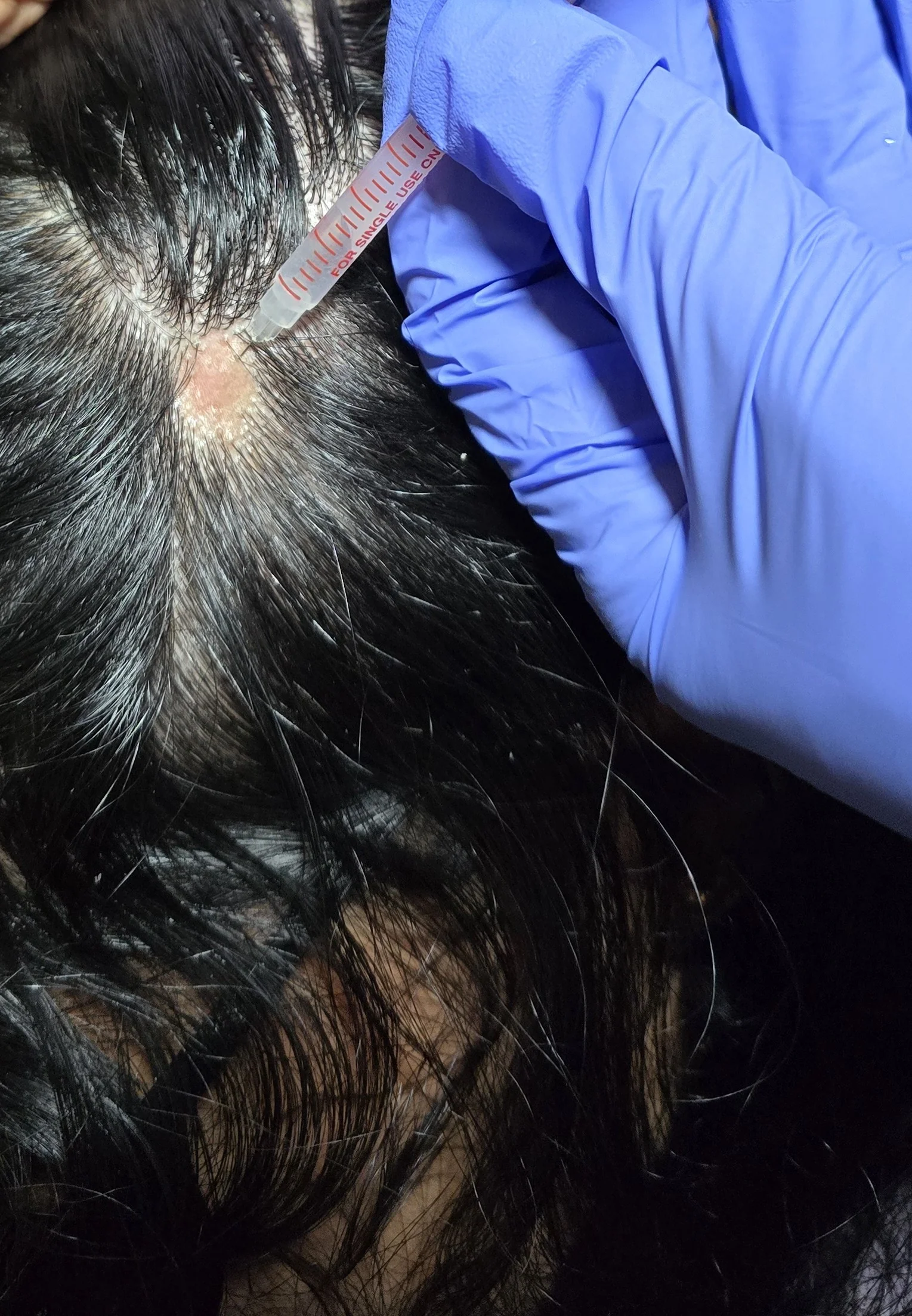
What to do: Alopecia areata requires a dermatologist’s assessment. Treatment options include intralesional corticosteroid injections, topical immunotherapy, and, in more extensive cases, systemic treatments. Prognosis varies: many limited patches regrow on their own within a year; more extensive disease needs active management.
What to Expect at a Hair Fall Consultation at DermaVue Coimbatore
At the first consultation, Dr. Sarath Chandran or one of our consultant dermatologists will:
- Take a detailed history: when the hair fall started, whether it is sudden or gradual, associated symptoms, dietary habits, stress history, and family history.
- Examine the scalp and the hair: pattern of loss, scalp condition, hair shaft quality.
- Use trichoscopy (dermoscopy of the scalp) where needed to assess follicle status.
- Recommend a targeted blood panel based on the clinical picture.
The consultation itself takes 20 to 30 minutes. Blood test results usually take 24 to 48 hours. A treatment plan is discussed at the follow-up once results are in hand.
Treatment Options Available at DermaVue Coimbatore
| Treatment | What it targets | Sessions |
|---|---|---|
| Topical minoxidil | Androgenetic alopecia, diffuse thinning | Daily application, long-term |
| Oral medications | Androgenetic alopecia, hormonal hair loss | Daily, as prescribed |
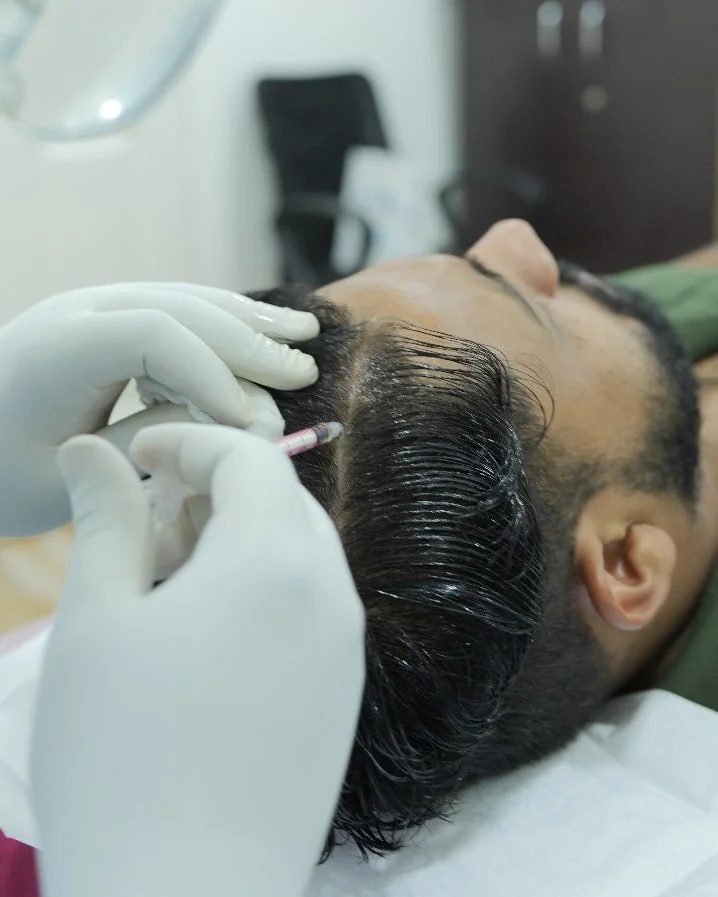
| PRP (platelet-rich plasma) | All types of hair fall, follicle stimulation | 4 to 6 sessions, monthly |
| GFC (growth factor concentrate) | Hair fall, follicle health | 4 to 6 sessions, monthly |
| Mesotherapy for hair | Diffuse thinning, nutritional support | 4 to 6 sessions |
| Nutritional supplementation | Deficiency-related hair fall | Guided by blood results |
| Hair transplant (FUE/DHI) | Advanced androgenetic alopecia | Single procedure |
For patients with advanced hair loss considering hair transplant, our experienced hair transplant surgeons can assess candidacy at a separate surgical consultation.
Book a Hair Fall Consultation in Coimbatore
DermaVue Coimbatore 460, Ponnaiyan Street, Cross Cut Road, Ram Nagar, Gandhipuram, Coimbatore, Tamil Nadu 641009
Call or WhatsApp: +91 80868 60018
WhatsApp DermaVue Coimbatore to book a consultation.
Related Reading
- GFC vs PRP for Hair Loss: Which One Is Right for You?
- Can You Stop Minoxidil? A Dermatologist Answers
- Alopecia Areata: Causes and Treatment in India
Dr. Sarath Chandran, MD DVL, is the Managing Director of DermaVue and an IADVL member with over a decade of experience in dermatology and hair loss management across Kerala and Tamil Nadu. This article reflects current clinical evidence and practice as of 2026. It is general information, not a substitute for a personal medical consultation.