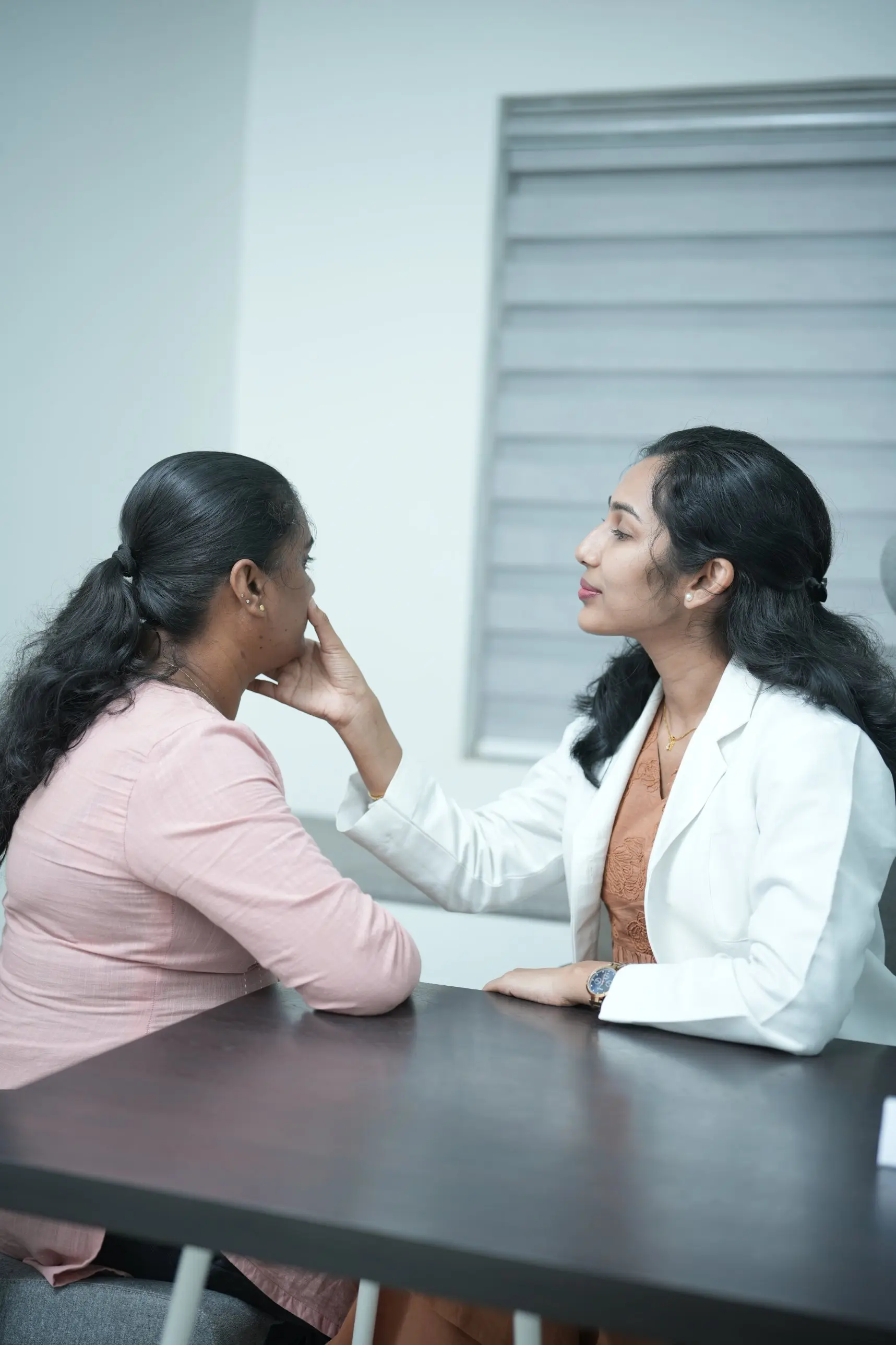
Myths and Facts About Fungal Infections: A Dermatologist Explains
Written by Dr. Minu Liz Mathew, MD DVL, IADVL member, Clinical Director, DermaVue Kochi. Medically reviewed by Dr. Sarath Chandran, MD DVL, IADVL member, Managing Director, DermaVue. This article accompanies the video below and reflects current dermatological evidence and Indian clinical practice as of 2026.
Quick answer: Fungal skin infections are among the most common dermatology conditions in India, particularly during the monsoon and summer months. They are not caused by poor hygiene alone, they do not always look the same, and over-the-counter antifungal creams used without a proper diagnosis often make them worse, not better. In this article and video, we address the most persistent myths about fungal infections and explain what the evidence actually says.
1. Why Fungal Infections Are So Common in India
India’s climate is well suited to fungal growth: high humidity, heat, and months of sweating across much of the country. In Kerala and Tamil Nadu, the monsoon (June to September) and summer (March to May) are when we see the highest volume of fungal skin conditions.
The most common fungal infections presenting at DermaVue:
| Condition | Common name | Where it appears | Peak season |
|---|---|---|---|
| Tinea corporis | Ringworm | Trunk, arms, legs | Monsoon, summer |
| Tinea cruris | Jock itch | Groin, inner thighs | Year-round, worse in summer |
| Tinea pedis | Athlete’s foot | Between toes, sole | Monsoon |
| Tinea versicolor | Pityriasis versicolor | Back, chest, neck | Summer, post-monsoon |
| Tinea capitis | Scalp ringworm | Scalp, eyebrows | Children, year-round |
| Cutaneous candidiasis | Yeast infection | Skin folds, underarms | Year-round |
These are caused by dermatophytes (fungi that infect keratin) or Candida (yeast). They are distinct conditions that need different treatments. Getting the diagnosis right before prescribing is the first step we always take at DermaVue.
2. Myths and Facts: What Dr. Minu Liz Mathew Addresses in the Video
These are the myths we hear most often in our clinics.
MYTH: Fungal infections only happen to people who are not clean.
FACT: Fungal infections are caused by fungi in the environment and on normal human skin, not by lack of hygiene. People who shower daily can still develop tinea or candidiasis. The actual risk factors are heat, sweat, tight clothing, shared towels and footwear, weakened immunity, and diabetes. Framing this as a hygiene problem delays treatment and causes unnecessary shame.
MYTH: The ring shape means it is definitely ringworm.
FACT: The ring appearance is typical of tinea corporis, but not all fungal infections form rings, and not everything that looks like a ring is fungal. Eczema, psoriasis, pityriasis rosea, and Lyme disease can all produce ring-shaped patches. Diagnosis should include a clinical examination and, where indicated, a skin scraping for KOH microscopy. Treating a ring-shaped rash with antifungal cream without a confirmed diagnosis is exactly how steroid-modified tinea, known as tinea incognito, develops.
MYTH: You can treat any fungal infection with over-the-counter antifungal cream.
FACT: Some mild, localised tinea does respond to OTC antifungal creams. The problem is that most OTC products available in Indian pharmacies combine an antifungal with a potent topical steroid and sometimes an antibiotic. The steroid suppresses the visible inflammation and makes the skin look better temporarily, while the fungal infection continues underneath or spreads. This is why patients come in with infections covering large areas of the body after months of self-treatment. Widespread or recurrent infections need systemic antifungals, not a pharmacy shelf product.
MYTH: Once the itching stops, the infection is gone.
FACT: Itching is the most noticeable symptom, but it is not a reliable sign that the infection has cleared. Fungi can persist in the skin without causing active itching. Stopping treatment early because the itch is gone is the most common reason fungal infections come back. The full course of antifungal treatment must be completed even after symptoms resolve.
MYTH: Tinea versicolor is contagious and should be kept away from others.
FACT: Tinea versicolor is caused by Malassezia, a yeast that is part of normal skin flora in most adults. It becomes a problem when it overgrows under the right conditions: humidity, oily skin, heat, or certain medications. It is not meaningfully contagious through normal social contact. The discoloration it causes is due to the yeast producing a compound that interferes with melanin production. These patches are not permanent skin damage. They fade after successful treatment, though that can take a few months.
MYTH: Antifungal powders and sprays alone are enough to treat fungal infections.
FACT: Topical antifungal powders and sprays have a genuine role in prevention and in keeping affected skin dry. They are not sufficient for treating an established infection. Powders do not penetrate adequately into the skin layers where dermatophyte infections take hold. Most moderate to severe tinea infections require oral antifungals prescribed by a dermatologist.
MYTH: If a fungal infection keeps coming back, it means the treatment is not working.
FACT: Recurrent fungal infections are common, but they usually point to a source of reinfection that has not been addressed, not to medication failure. Common sources include infected clothing and footwear that were not treated, shared towels and bathmats, an untreated infected family member, or an underlying condition such as diabetes or immunosuppression. A proper review of recurrent fungal infections should cover all of these.
3. The Steroid Cream Problem in India
This deserves its own section because it is a significant and growing clinical problem.
Many combination creams sold over the counter in Indian pharmacies contain an antifungal, a potent topical corticosteroid, and sometimes an antibiotic. Branded examples are well known to dermatologists. These products are intended for short-term use on specifically diagnosed conditions under medical supervision. They are routinely used by patients for months on self-diagnosed skin rashes without a prescription.
The result is tinea incognito: a fungal infection that has been partially suppressed by the steroid component, so its typical appearance is altered and it becomes harder to diagnose. Over time the steroid causes skin thinning, stretch marks (striae), and secondary bacterial infection on top of the original fungal problem. By the time these patients reach a dermatologist, the infection often covers a large part of the body and requires oral antifungal treatment alongside a carefully tapered steroid withdrawal.
Important: If you have been using a combination cream from a pharmacy for a skin rash for more than two weeks and the rash is spreading or changing, please consult a dermatologist before continuing. Do not stop the steroid component abruptly. It should be tapered under medical supervision.
4. When to See a Dermatologist for a Fungal Infection
Not every fungal infection needs an immediate dermatology appointment. These situations do:
- The rash is spreading or has been present for more than two to three weeks
- You have been using OTC antifungal or combination creams for more than two weeks with no improvement, or with worsening
- The infection is in the scalp, nails, or groin
- You have diabetes, are on immunosuppressive medication, or have HIV
- The rash is atypical: no ring shape, or patches are on the face
- A family member has a similar rash that is not clearing
- The infection keeps coming back after completing a full course of treatment
At DermaVue, a dermatologist will examine the rash, perform a KOH scrape where needed, and put together a targeted treatment plan.
5. Prevention: What Actually Reduces Fungal Infection Risk
| Prevention measure | Why it works |
|---|---|
| Dry skin folds thoroughly after bathing | Fungi thrive in moist environments. Moisture between toes, under arms, and in the groin is the most common trigger. |
| Wear breathable, loose cotton clothing | Synthetic fabrics trap sweat and heat. Cotton allows the skin to breathe. |
| Do not share towels, footwear, or clothing | Direct fomite transmission is the most common route for tinea pedis and tinea capitis. |
| Wash and dry footwear regularly | Fungal spores survive in shoes. Rotating footwear and drying shoes in sunlight reduces re-infection. |
| Change and wash gym clothes after every session | Sweat-soaked clothing against skin for extended periods is a common trigger in active adults. |
| Manage blood sugar if diabetic | Elevated blood sugar impairs the immune response to fungal organisms and is a major risk factor for recurrent candidiasis and tinea. |
| Use antifungal powder in sweat-prone areas during peak season | A preventive measure for patients with a history of recurrent tinea cruris or pedis. Does not replace treatment of an active infection. |
Related Reading on dermavue.com
6. Frequently Asked Questions
Is fungal infection contagious?
Most dermatophyte fungal infections (tinea corporis, tinea pedis, tinea capitis) are contagious through direct skin-to-skin contact or through shared items such as towels, clothing, and footwear. Tinea versicolor, caused by Malassezia yeast which is normal skin flora, is not meaningfully contagious. Avoiding shared personal items and treating infected family members are both important steps.
How long does it take to clear a fungal infection?
It depends on the type and location. Mild tinea corporis may clear in two to four weeks with topical antifungal cream. Nail fungal infections typically require oral antifungals for three to six months. Scalp infections usually need oral antifungals for six to twelve weeks. Completing the full course prescribed by your dermatologist, even after symptoms improve, is the key step most patients skip.
Why does my fungal infection keep coming back?
Recurrence is almost always caused by one of four things: incomplete treatment, reinfection from contaminated clothing or footwear, an untreated infected contact, or an underlying condition such as diabetes or weakened immunity. If your infection has returned more than twice, see a dermatologist for a full review that covers both treatment and source control.
Can I use the same cream my friend used for their fungal infection?
Different fungal infections need different antifungals, and what worked for your friend’s tinea pedis may not suit what you have. Using a steroid-containing combination cream on a condition it was not prescribed for can cause significant skin damage over weeks. A dermatologist consultation takes fifteen minutes and avoids months of incorrect treatment.
Is it safe to apply antifungal cream on the face?
Antifungal creams can be used on the face for fungal infections that occur there, but many OTC combination creams in India contain potent steroids that should not go near the face. Facial skin is thinner and prone to steroid-induced damage: skin thinning, rosacea-like reactions, and perioral dermatitis. Always get a dermatologist’s advice before applying any cream to the face.
What is the difference between eczema and a fungal infection?
Both can cause itchy, red, scaly skin, which is why they get confused. Eczema (atopic dermatitis) is an inflammatory skin condition, not an infection. It does not respond to antifungal cream and needs different treatment entirely. A KOH test, which examines a skin scraping under a microscope for fungal elements, reliably distinguishes the two. See our article on eczema vs psoriasis for more detail.
Where can I consult a dermatologist for fungal infections in Kerala and Tamil Nadu?
DermaVue has clinics in Thiruvananthapuram, Kollam, Thiruvalla, Kottayam, Kochi (Aluva), Thrissur, and Coimbatore. Walk in or book an appointment through dermavue.com or WhatsApp the nearest branch. Branch contact numbers are listed below.
About the Author
Dr. Minu Liz Mathew, MD DVL, IADVL member is the Clinical Director of DermaVue Kochi and a RealSelf-recognised dermatologist. She consults on skin conditions, laser treatments, and aesthetic dermatology, and contributes regularly to DermaVue’s patient education content. This article was written to accompany a video produced by Dr. Minu Liz Mathew for DermaVue’s YouTube channel.
Medically reviewed by Dr. Sarath Chandran, MD DVL, IADVL member, Managing Director, DermaVue.
Book a Consultation at Your Nearest DermaVue Clinic
DermaVue has seven clinics across Kerala and Tamil Nadu. Find the branch closest to you:
- Kochi (Aluva): +91 90720 07733
- Thiruvananthapuram: +91 83308 60007
- Kollam: +91 80868 60465
- Thiruvalla: +91 80860 00608
- Kottayam: +91 81298 83331
- Thrissur: +91 73567 42225
- Coimbatore: +91 80868 60018