Most people want the results microneedling offers: the smoother texture, the reduction in acne scarring, but they stop short when they hear the word “needle.” It is a valid reaction. The idea of thousands of micro-perforations sounds aggressive, and for many, the fear of pain becomes the deciding factor.
But the anticipation is almost always worse than the reality.
At DermaVue, we constantly see patients brace themselves for an ordeal, only to realize halfway through that the anxiety was unnecessary. Microneedling, or Collagen Induction Therapy, has a reputation that doesn’t quite match the clinical experience. While it isn’t a relaxation massage, it also isn’t torture. The goal here is to separate the idea of pain from the actual sensation you feel in the chair. We manage the experience with strict protocols, ensuring that what you feel is pressure and vibration, not acute distress.
What Does Microneedling Actually Feel Like?
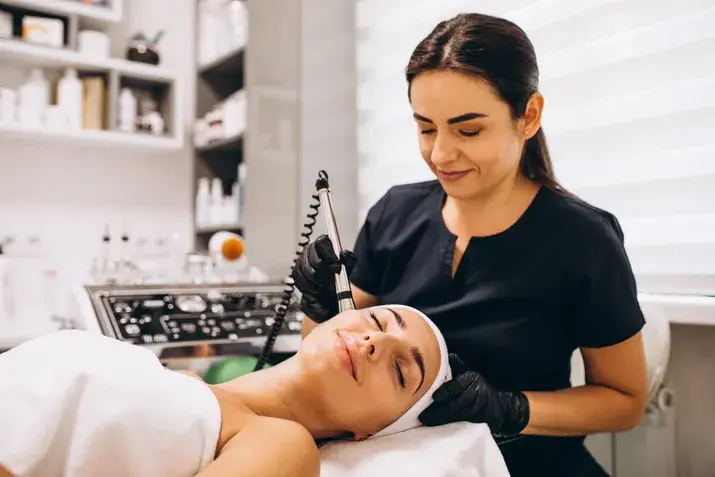
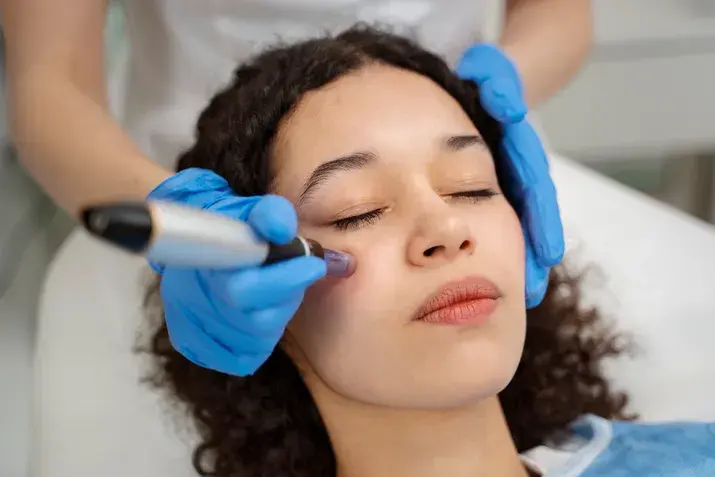
Modern medical-grade pens don’t drag across the skin like old-school dermal rollers; they stamp. The needles oscillate vertically at speeds so high the eye can’t track them, and this mechanics changes the entire sensory profile of the treatment. You rarely feel individual pricks.
Instead, the overwhelming sensation is mechanical vibration.
It feels like a rapid, persistent buzzing against the skin, overlaid with a texture that creates friction similar to an electric toothbrush being pressed firmly against the face, or warm sandpaper moving in consistent sections. The biology actually works in your favor here. Because the vibration is constant and intense, it tends to monopolize the nerve endings. Your brain prioritizes the signal of the “shake” over the signal of the “poke,” blunting the sharpness into a dull, background pressure.
Interestingly, the most “painful” part often isn’t physical at all; it’s auditory. When the practitioner moves the device over the temples or across the cheekbones, the motor is close to the ear. The buzzing reverberates through the skull. This loud, conduction-based noise tricks the brain into perceiving the treatment as more aggressive than it is. You aren’t necessarily feeling more intensity in those areas, but the sound makes you believe you are.
The Role of Topical Anesthetics
We manage sensitivity through a strict pre-treatment protocol. At DermaVue, every patient receives a high-strength topical anesthetic, typically a lidocaine blend applied 30 to 45 minutes before the procedure.
We do not rush the process. The cream needs this specific duration to penetrate the epidermis and desensitize the nerve endings effectively. Once active, the anesthetic changes the nature of the sensation entirely. It reduces the sharp “prick” to a dull, distant pressure. You will feel the vibration and the firm movement of the device, but the acute intensity is neutralized, keeping the experience comfortable.
If you are looking for the best dermatologist in Kochi for microneedling treatment , visit or book an appointment at Dermavue’s clinic located at Aluva, Kochi.
Variables Influencing Sensitivity Levels
Discomfort levels are rarely consistent throughout the entire session. The intensity changes based on three specific variables.
- Anatomy Matters: The cheeks and chin are usually straightforward. You have a layer of subcutaneous fat there that effectively cushions the impact. The forehead and jawline are different. There is no cushion. The skin sits tight against the bone, so the vibration transfers directly to the skeletal structure. It feels less like a prick and more like a deep rattle.
- The Depth of Treatment: We adjust the depth based on the problem. If we are just chasing a glow or better product absorption, the needles stay shallow, and you feel very little. But correcting acne scars or deep texture requires entering the dermis. We have to reach the structural layers to trigger remodeling. That naturally involves more feedback, but that is where the real change happens.
- The Device Mechanism: Manual dermal rollers tend to cause unnecessary pain. Because they roll, the needles enter and exit at an angle, creating a crude “tearing” effect in the tissue. At DermaVue, we use automated medical pens instead. They drive the needles vertically, perpendicular to the skin. It’s a clean entry and exit. No dragging, no tearing, just precision.
If you are living in Coimbatore, Tamil Nadu, Dermavue is the perfect choice for a trusted dermatologist in Coimbatore for advanced skin treatments. Book your appointment with us today.
Post-Procedural Sensation: The Inflammatory Response
The anesthesia typically wears off one to two hours after you leave the clinic. As the sensation returns, it does not manifest as pain. Instead, the treated area feels hot and tight.
Clinically, the presentation is almost identical to a moderate sunburn. You will see erythema (redness) and feel a radiating warmth. This is completely normal. The acute heat is transient and generally dissipates within 24 hours.
This reaction is not a side effect to be managed; it is the mechanism of action. We are intentionally triggering a controlled inflammatory response. That heat is the biological evidence that the wound-healing cascade has started. Your body is rushing blood and growth factors to the surface to build new collagen. If you don’t look a little red, we likely haven’t gone deep enough to achieve the structural changes you want.
Choose Dermavue for the Best Microneedling Treatment
Discomfort is subjective, but it is highly manageable when the correct protocols are in place. The advantage of a clinical environment like DermaVue is the level of oversight. We do not run a preset program; the practitioner adjusts the speed and depth of the device in real-time based on your specific feedback.
When you look at the results, the perspective shifts. A few hours of mild heat and tightness yield months of structural improvement and collagen remodeling. If fear of the sensation is preventing you from proceeding, schedule a consultation with us. We will evaluate your pain tolerance and develop a treatment plan that focuses on your comfort while helping you reach your skin goals.
Written and Reviewed by Dr. Sarath Chandran SR MD DVL