
If you have been dealing with pimples that keep coming back, stubborn marks that refuse to fade, or skin that feels greasy no matter what you do, you are not alone. Acne is one of the most common skin conditions I see in my practice, across all age groups — from teenagers writing their board exams to professionals in their 30s who thought they had left breakouts behind in college.
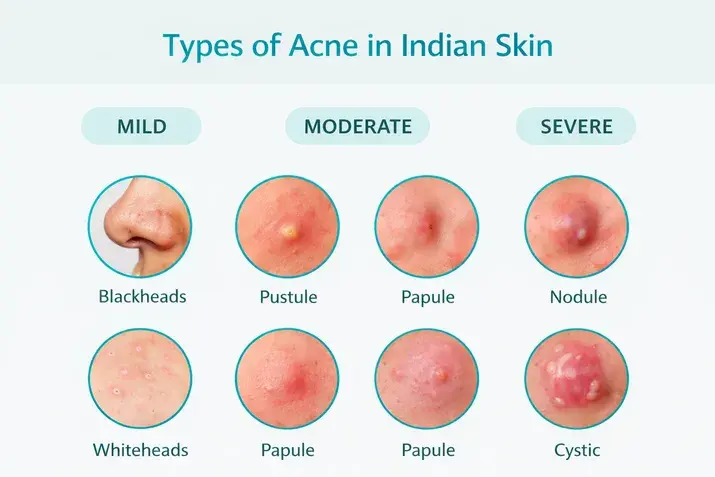 What makes things harder is the sheer amount of conflicting advice floating around. One Instagram page says to use lemon. Another says never touch your face. Your grandmother swears by turmeric. Your colleague uses a steroid cream and says it worked overnight. It is confusing, and more often than not, this confusion leads to habits that make acne worse, not better.
So let me set the record straight — as simply and honestly as I can. Acne is common. It is very treatable. And with the right approach, you can get clearer skin without damaging it along the way.
What Really Causes Acne
A lot of people believe oily skin is the root cause of acne. That is only partly true. Oily skin creates the environment for acne, but it does not cause it on its own.
Here is what actually happens. Your skin produces sebum (oil) through tiny glands attached to each pore. When excess oil mixes with dead skin cells, it blocks the opening of the pore. Bacteria that normally live harmlessly on your skin begin to multiply inside this blocked pore. Your immune system responds with redness, swelling, and pus — and that is the pimple you see.
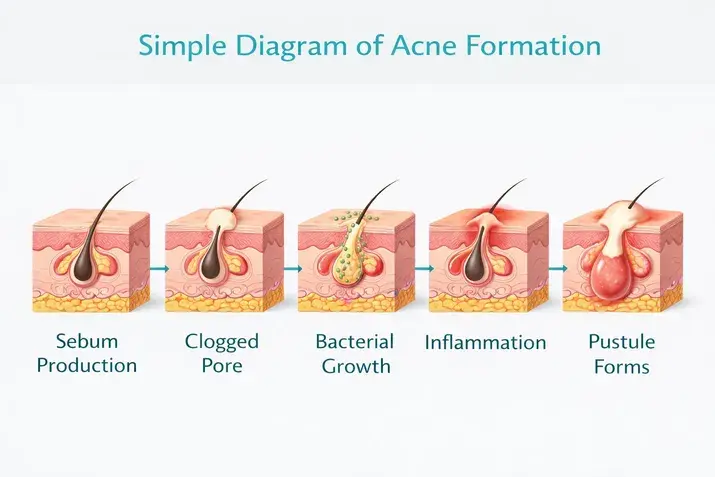 Hormones play a major role too. This is why acne flares around puberty, during menstrual cycles, in women with PCOD, and during periods of intense stress. Stress raises cortisol, which in turn stimulates oil production.
Now, here is something I often explain to patients in Kerala and Tamil Nadu. Our humid tropical climate means your skin produces more oil and sweat throughout the day. Pores get blocked more easily. Pollution and dust stick to sweaty skin. Even regular activities like riding a two-wheeler through traffic can aggravate breakouts. This is why the same skincare routine that works for someone in Delhi may not work for you here.
Acne Do’s — What Dermatologists Actually Recommend
1. Wash your face, but do not overdo it
Twice a day with a gentle, pH-balanced cleanser is enough for most people. If you work outdoors or exercise, a third wash is fine. But scrubbing your face four or five times a day strips the skin’s protective barrier and actually triggers more oil production. Use lukewarm water, not hot. And please — your face does not need soap. A proper face wash designed for acne-prone skin makes a real difference.
2. Use a moisturiser, even if your skin is oily
This surprises many patients, but it is important. When your skin is dehydrated, it compensates by producing even more oil. A lightweight, non-comedogenic (pore-friendly) moisturiser keeps the skin balanced. Look for gel-based or water-based formulas. Avoid thick creams and anything with coconut oil on the face.
3. Wear sunscreen every single day
Sunscreen is non-negotiable, especially in South India where UV exposure is high year-round. Sun exposure worsens dark marks left by acne — something called post-inflammatory hyperpigmentation, which is very common on Indian skin tones. Use a broad-spectrum sunscreen with at least SPF 30. Gel or fluid sunscreens work well for oily skin and do not feel heavy.
4. Build consistent habits
Clear skin is not about finding one magic product. It is about consistency. Stick with a simple routine for at least six to eight weeks before deciding whether it is working. Sleep seven to eight hours. Drink plenty of water. And if you are stressed, acknowledge it — stress management is part of skin health, whether people recognise it or not.
5. Seek medical guidance for persistent acne
If you have been dealing with acne for more than a few weeks, or if you are getting deep painful bumps, cysts, or waking up to new pimples every morning, it is time to see a dermatologist. There is nothing wrong with seeking professional help early. In fact, early treatment is the single best way to prevent permanent scarring.
Acne Don’ts — Common Mistakes We See Daily
1. Stop using scrubs and harsh exfoliants
Physical scrubs with rough particles damage the skin surface and spread bacteria to surrounding pores. I see patients regularly who have been using walnut scrubs or apricot scrubs thinking it will “clean out” pimples. It does the opposite. If exfoliation is needed, a dermatologist can recommend safe chemical exfoliants suited to your skin.
2. Please avoid home remedies on active acne
I understand the appeal of lemon, toothpaste, garlic, baking soda, and turmeric packs. They are familiar, inexpensive, and your grandmother probably used them. But lemon is highly acidic and causes chemical burns and pigmentation. Toothpaste dries out individual spots but irritates everything around it. Turmeric can stain and clog pores when mixed with oil. These remedies are not formulated for skin, and they often leave you with more marks than you started with.
3. Never use steroid creams without a prescription
This is a serious problem across India. Many pharmacies sell topical steroid creams over the counter, and they do make pimples look better overnight. But steroids thin the skin, cause rebound flares, and with prolonged use, lead to a condition called steroid-dependent dermatitis that is genuinely difficult to treat. If a cream works “too well too fast,” be suspicious.
4. Do not pop or squeeze your pimples
I know it is tempting. But squeezing pushes bacteria deeper into the skin, causes more inflammation, and dramatically increases the risk of scarring. The dark spots and pitted scars I treat every day are almost always the result of picking and squeezing. Leave active pimples alone and let them heal.
5. Stop switching products every week
When a product does not show instant results, the natural instinct is to try something new. But skin needs time to respond. Constantly changing cleansers, serums, and creams overwhelms the skin and makes it impossible to know what is helping and what is making things worse. Pick a simple routine, stay with it, and adjust only with professional guidance.
6. Be cautious with social media skincare advice
Not everything that works on camera works on your skin. Influencers promote products because they are paid to, not because they have examined your skin. What suits someone with dry skin in a cold climate can wreck oily skin in tropical humidity. Take online advice with a healthy dose of scepticism.
When Acne Needs Medical Treatment
There is a point where acne is no longer “just pimples.” If you are getting deep cystic bumps along the jawline, persistent breakouts that leave behind dark marks, or acne that is affecting your confidence and daily life, you need medical treatment — not another face wash.
Here is what I tell patients: the marks and scars from untreated acne can last for years, sometimes permanently. But the acne itself, when treated correctly, often responds within a few weeks. The sooner you start proper treatment, the less damage your skin sustains.
There is also an important distinction between salon facials and medical dermatology. Salon clean-ups and facials can feel relaxing, but they do not treat the underlying causes of acne. Medical treatment addresses hormonal triggers, bacterial overgrowth, inflammation, and oil production at the source. These are two very different things, and one cannot replace the other.
If your acne has not responded to over-the-counter products in four to six weeks, or if it is leaving scars, please consult a dermatologist. It is a straightforward decision that can save you months of frustration.
Finding a Dermatologist Near You
Patients looking for experienced dermatological care can consult board-certified dermatologists at DermaVue Clinics, which offers doctor-led acne treatment across Thiruvananthapuram, Kochi, Kollam, Kottayam, Thiruvalla, Thrissur, and Coimbatore. All treatments are physician-performed using evidence-based protocols tailored to Indian skin types and tropical conditions. You can also visit the DermaVue dermatologist page for more information.
A Note from Your Dermatologist
Acne can feel frustrating, especially when you have tried many things and nothing seems to work. But here is what I want you to know: acne is one of the most well-understood skin conditions in dermatology. We have effective treatments. We know what works and what does not.
What matters most is consistency and correct guidance. Quick fixes and overnight cures do not exist — and the products that promise them often cause more harm. A simple, evidence-based approach, followed patiently over a few weeks, delivers results that last.
If you are struggling with breakouts, do not wait for them to scar. Consult a dermatologist, follow the plan, and give your skin the time it needs. Clearer skin is absolutely achievable — and you deserve to feel confident in it.
Frequently Asked Questions
1.Does oily skin always cause acne?
Not always. Oily skin makes you more prone to acne because excess sebum can block pores, but many people with oily skin never get significant breakouts. Acne depends on a combination of oil production, pore blockage, bacteria, and inflammation. Managing oil helps, but it is not the whole picture.
2.Is acne worse in humid weather?
It can be. In tropical climates like Kerala and Tamil Nadu, high humidity increases sweating and oil production. Sweat mixes with surface oil and dust, clogging pores more easily. This is why people living in humid regions often notice more breakouts during monsoon and summer compared to cooler months.
3.Can sunscreen make acne worse?
Only if you use the wrong type. Heavy, cream-based sunscreens can clog pores. But gel-based, non-comedogenic sunscreens designed for oily skin will not aggravate acne. Skipping sunscreen, on the other hand, makes acne marks darker and harder to treat.
4.How long does acne treatment usually take?
Most patients start noticing improvement within four to six weeks of consistent treatment. However, complete clearance and fading of marks can take three to six months. Acne treatment requires patience — there are no safe shortcuts.
5.Should teenagers use acne medicines?
Yes, when recommended by a dermatologist. Teenage acne is driven by hormonal changes and often needs more than just a face wash. There are safe, well-studied medications suitable for teenagers, and early treatment prevents scarring that can be much harder to address later.
6.Will acne leave permanent marks?
It can, especially if pimples are squeezed, picked, or left untreated for a long time. Dark spots (post-inflammatory hyperpigmentation) usually fade over months with the right care. But pitted or indented scars from deep cystic acne can be permanent without professional treatment. This is one of the strongest reasons to treat acne early.
Disclaimer: This article is for educational purposes only and does not replace a personalised consultation with a dermatologist.
By Dr. Sarath Chandran MBBS MD — Board-Certified Dermatologist