Cashew-CNSL Contact Dermatitis
irritant + allergic dermatitis from cashew-shell liquid urushiol exposure during de-shelling and grading
Indian Standard Series patch testing plus a customised tray for cashew-CNSL, coir, chromium, azo dyes and rubber; 48 + 72 hour reading; IADVL-protocol topical and oral therapy from session 1; structured allergen-avoidance + PPE-upgrade plan; ESI / Workmen's Compensation documentation. Group workforce screening arranged on request for cashew factories and coir units across Kollam district.
Vinay K et al (Indian J Occup Environ Med 2024, PMC11606556) studied 200 cashew-processing workers in Kollam district and documented 47.5% prevalence of occupational skin disease. Cashew-shell liquid (CNSL) contains urushiol — the same chemical that drives poison-ivy contact dermatitis — and Kollam processes roughly 80% of India's export-quality cashew kernels through a workforce of approximately 600,000, predominantly female, across registered and unregistered units. The dominant patterns are irritant contact dermatitis from CNSL handling, allergic contact dermatitis to azo dyes and chromium, acne mechanica from sweat occlusion under gloves, and folliculitis. Our protocol follows the IADVL Contact Dermatitis Consensus 2018: patch testing with the Indian Standard Series plus a customised occupational tray, structured avoidance counselling, IADVL-graded topical and oral therapy, and ESI / Workmen's Compensation documentation that supports occupational-disease claims through the medical-board route.
Kollam processes approximately 80% of India's export-quality cashew kernels, with a predominantly female workforce of 600,000 across registered and unregistered units. The IJOEM 2024 cohort (Vinay K et al, PMC11606556) recorded 47.5% prevalence of occupational dermatoses among these workers — substantially above national-cohort baselines and the highest single-condition occupational-skin-disease prevalence reported in any Kollam-district cross-sectional study. Our protocol applies the IADVL Contact Dermatitis Consensus 2018 framework: patch testing with the Indian Standard Series plus a customised occupational tray, allergen identification, structured avoidance counselling, and IADVL-graded topical and oral therapy. DermaVue Kollam is rated 4.9 stars across 370+ Google reviews and serves the entire Kollam district from its Kavanad location.
irritant + allergic dermatitis from cashew-shell liquid urushiol exposure during de-shelling and grading
chronic irritant dermatitis from coir-fibre dust and water-immersion work
Indian Standard Series + customised occupational tray for cashew, dye, chromium, rubber, fragrance
saltwater + fish-protein contact dermatitis common in coastal-Kollam fishery cohort
sweat-occlusion driven inflammatory pattern in glove and PPE wearers
workplace-modification plan + barrier-cream + glove-rotation protocol
structured occupational-disease claim documentation for ESI and Workmen's Compensation review
on-site cohort screening for cashew factories and coir units across Kollam district
phased re-entry protocol with PPE upgrade + dermatology-guided re-exposure schedule
leather and textile-worker pattern, patch-test confirmed
Dr Jayalekshmi J and Dr Arunima A both hold the MD DVL postgraduate qualification and own every file together. Continuity of care is the default, not a tagline.
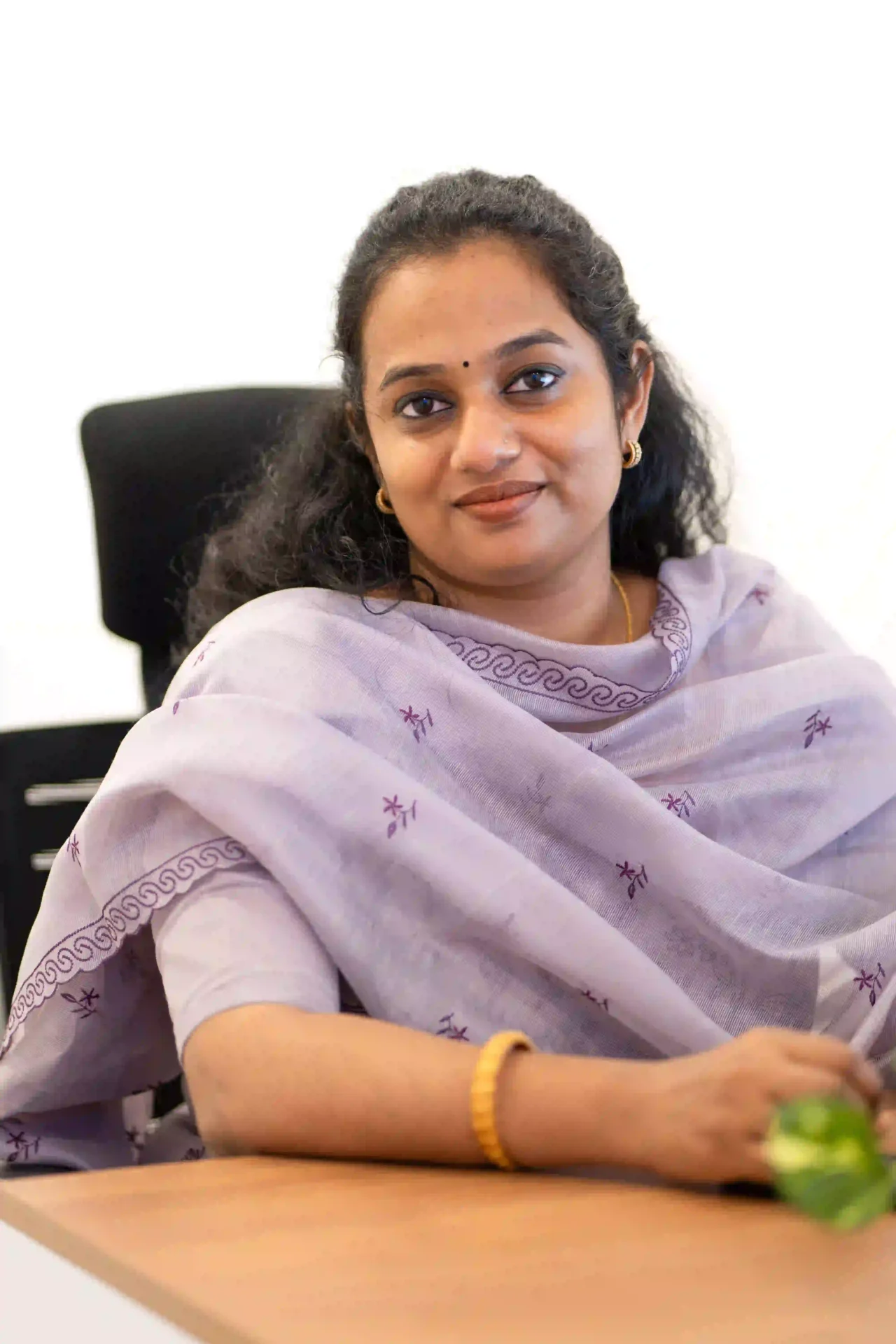
Dermatology, Cosmetology, Medical Dermatology
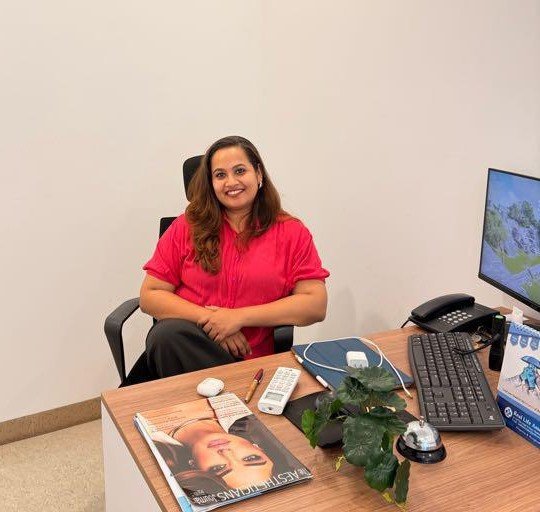
Dermatology, Dermatosurgery, Lasers & Aesthetic Procedures
Direct line to the team WhatsApp +91 80868 60465 →
Occupational dermatitis is skin inflammation caused or worsened by workplace exposure to chemicals, dust, water, allergens, or physical irritants. The Kollam cashew workforce, coir industry, fisheries, and leather/textile units have the highest occupational dermatitis prevalence in the district. The condition is reversible with allergen identification, avoidance, and IADVL-protocol therapy.
Cashew-shell liquid (CNSL) contains urushiol, the same plant chemical that causes poison-ivy reactions. During de-shelling and grading, workers handle raw cashew material with urushiol on the surface. A 2024 IJOEM study (PMC11606556) of 200 Kollam cashew workers documented 47.5% prevalence of occupational skin disease — irritant contact dermatitis, allergic contact dermatitis, and acne mechanica from sweat occlusion under gloves were the dominant patterns.
Yes. Patch testing applies small standardised amounts of common workplace allergens to your back for 48 hours. We read the results at 48 and 72 hours to identify which allergens trigger your dermatitis. At DermaVue Kollam we use the Indian Standard Series plus a customised tray with cashew-CNSL, azo dyes, chromium, rubber additives, and fragrance — the allergen panel most relevant to Kollam district employment.
The acute lesions usually clear in 4 to 8 weeks with topical corticosteroid, calcineurin inhibitor, and emollient therapy plus allergen avoidance. Re-exposure without protection brings the dermatitis back within days, so the return-to-work phase requires PPE upgrade and barrier-cream protocols. Most workers return to modified-duty work at week 4 and full duties at week 8 to 12 with appropriate PPE.
Yes, when the dermatitis is patch-test confirmed as occupational. DermaVue Kollam structures the medical record specifically to support Employees' State Insurance (ESI) occupational-disease claims and Workmen's Compensation reviews. We document the exposure history, patch-test results, photographs, treatment timeline, and work-relatedness opinion in the format ESI insurance medical boards require.
Yes. We arrange on-site or in-clinic cohort screening for cashew factories, coir units, and fishery operations across Kollam district. Group screening identifies cases earlier, reduces compensation liability for employers, and supports occupational-health certification requirements. Contact us via WhatsApp to schedule a workforce-screening visit.
Nitrile gloves rather than latex (latex itself causes contact dermatitis in 1 to 6 percent of users), changed every 2 to 4 hours; barrier creams applied to forearms before shift start; long-sleeved cotton inner layer under PPE; and post-shift skin cleansing within 30 minutes of work end. We provide a written PPE-rotation and barrier-cream protocol with every consultation.
No. Patch testing applies small adhesive discs containing standardised allergen amounts to your upper back. There is no needle and no pain. Some patients experience itching at positive-reaction sites between 48 and 72 hours — that itching is actually the diagnostic signal we are looking for.
Yes, if exposure continues without protection. Chronic untreated allergic contact dermatitis can progress to chronic hand eczema with thickened, fissured skin that resists therapy. Early diagnosis and proper allergen avoidance prevent this progression. The Kollam cashew workforce in particular benefits from screening at year 1 of employment rather than waiting for severe disease.
Patch testing has 70 to 80 percent sensitivity for common occupational allergens when the Indian Standard Series plus customised occupational tray is used. False negatives occur if the relevant allergen is not in the panel or if the patient has used systemic immunosuppressives. We add cashew-CNSL, coir extract, and other Kollam-specific allergens when the occupational history points there. Repeat testing with an extended panel is offered if the first test is negative but symptoms persist.
Consultation at DermaVue Kollam is Rs.300. Patch testing with Indian Standard Series ranges from Rs.4,000 to Rs.6,000 depending on the allergen count. Topical therapy ranges from Rs.500 to Rs.2,500 per month depending on regimen. ESI-covered patients pay no clinic fees when seen through the panel route.
Dr. Jayalekshmi J, MD DVL, and Dr. Arunima A, MD DVL, both Indian Association of Dermatologists, Venereologists and Leprologists (IADVL) members, lead the occupational dermatology service at DermaVue Kollam. Both physicians hold the 3-year NMC-recognised postgraduate MD DVL qualification and apply the IADVL Contact Dermatitis Consensus 2018 protocol.
₹300 consultation · same-day slots available · Kavanad clinic open Mon–Sat 10 AM – 7 PM, Sun closed.