⭐ 4.8★ Google Rating✅ 3,221+ Patient Reviews🏥 7 Clinics Across South India👨⚕️ MD DVL Board-Certified🔬 US-FDA Approved Equipment📍 Opposite Indian Overseas Bank, Thukalassery
Understanding Eczema in Kerala's Tropical Climate
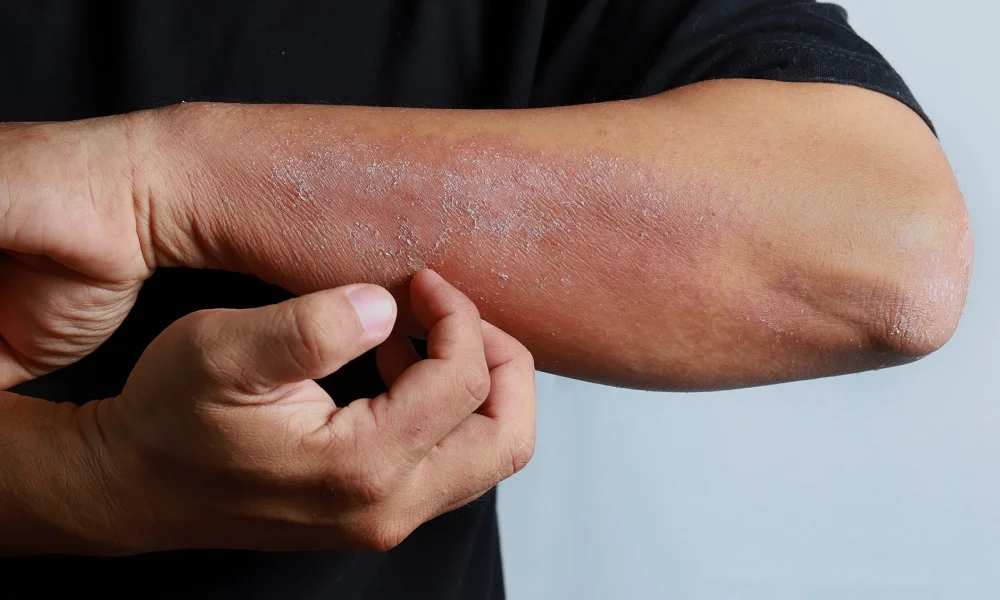
Eczema (atopic dermatitis) is worsened by Thiruvalla's heat and humidity. Sweat, dust mites common in Kerala homes, rubber, nickel, and local water quality all act as triggers. Our dermatologists account for Pathanamthitta district's specific environmental factors when designing your treatment plan.
Atopic dermatitis — chronic relapsing eczema, most common type
Contact dermatitis — allergic and irritant
Seborrhoeic eczema — scalp and face
Dyshidrotic eczema — palms and soles
Nummular eczema — coin-shaped patches
Paediatric eczema — infants and children
Eczema Treatment Explained by Dermatologist
Advanced Eczema Treatments at DermaVue Thiruvalla
We follow AAD and IADVL clinical guidelines for eczema management — combining prescription topicals, systemic therapies, and modern biologics where appropriate. Our goal is long-term disease modification, not just temporary suppression.
Prescription topical corticosteroids — correctly dosed with tapering protocols
Eczema is a chronic condition, but with proper treatment many patients achieve long remission periods. Our dermatologists design personalised maintenance protocols to prevent flares and progressively reduce severity.
Common triggers include high humidity and sweating, soaps and synthetic detergents, dust mites, rubber (latex), nickel from jewellery, and certain foods. We identify your specific triggers through allergy testing.
Topical corticosteroids are safe when prescribed and monitored by a dermatologist using evidence-based tapering protocols. Self-medication without supervision risks skin thinning and rebound eczema.
Yes. DermaVue Thiruvalla assesses eligibility and initiates dupilumab (Dupixent) therapy — a targeted biologic that dramatically reduces moderate–severe eczema with an excellent safety profile.
Mild–moderate eczema responds within 2–4 weeks of prescription topical therapy. Chronic or severe cases need 3–6 months of supervised treatment. NB-UVB phototherapy requires 20–30 sessions over 2–3 months.
Yes. Childhood eczema is among our most common presentations. We use paediatric-safe formulations and educate parents on flare management, bathing technique, and trigger avoidance.
No. Eczema is not contagious. However, there is a genetic component — children of parents with eczema, asthma, or hay fever have higher risk of atopic conditions.
Eczema causes intensely itchy, weeping or crusty patches in skin folds. Psoriasis causes well-defined, silver-scaled, less-itchy plaques on elbows, knees, and scalp. Both require dermatologist diagnosis as treatments differ significantly.