⭐ 4.8★ Google Rating✅ 3,221+ Patient Reviews🏥 7 Clinics Across South India👨⚕️ MD DVL Board-Certified🔬 US-FDA Approved Equipment📍 Opposite Indian Overseas Bank, Thukalassery
The T. indotineae & Terbinafine-Resistance Epidemic: What Kerala Patients Must Know
Quick Answer
Fungal infection treatment in Thiruvalla/Tiruvalla has become markedly more complex since the emergence of Trichophyton indotineae — a terbinafine-resistant dermatophyte first characterised in India (Kaul et al., IDOJ 2017; Rudramurthy et al., AAC 2018). Treatment follows the IADVL ECTODERM consensus: confirmatory KOH microscopy, immediate withdrawal of all topical steroid-antifungal combination creams, and extended oral itraconazole 200 mg daily for 6–8 weeks with liver function monitoring, plus topical luliconazole or sertaconazole. Sabouraud culture is indicated for refractory or atypical cases.
DermaVue Clinical Summary — Dermatophytosis
Since approximately 2014, India has experienced an unprecedented epidemic of chronic, recurrent and antifungal-recalcitrant dermatophytosis driven by the emergence of Trichophyton indotineae — a species formally delineated by Kano et al. (2020) and characterised by molecular studies as a distinct terbinafine-resistant dermatophyte with mutations in the squalene epoxidase (ERG1) gene conferring 40–80-fold reductions in terbinafine susceptibility (Rudramurthy et al., Antimicrobial Agents and Chemotherapy 2018; Verma & Vasani, IJDVL 2016; Kaul, Yadav & Dogra, IDOJ 2017). The WHO Fungal Priority Pathogens List (2022) and the CDC Morbidity and Mortality Weekly Report (2023) have both acknowledged the global spread of this organism. Kerala's year-round high humidity and widespread unregulated sale of combination topical steroid-antifungal creams (Panderm Plus, Quadriderm, Fourderm, Betnovate-C, Tenovate-M) have accelerated disease spread and created an endemic burden of steroid-modified tinea (tinea incognito).
DermaVue Thiruvalla manages dermatophytosis per the IADVL ECTODERM (Expert Consensus on The management Of Dermatophytosis in India) consensus (Rajagopalan et al., BMC Dermatol 2018) and IADVL SIG recommendations. Initial assessment includes confirmatory KOH mount microscopy (gold standard, sensitivity 88%) from scraping of active lesion edge, with Sabouraud dextrose agar culture reserved for atypical, treatment-refractory, or epidemiologically important cases. Immediate and complete withdrawal of all topical steroid-antifungal combinations is the single most important treatment step; patients are educated that "temporary relief" from these creams is itch suppression, not cure. Systemic therapy is first-line for any tinea beyond a single small lesion: oral itraconazole 200 mg daily for 6–8 weeks (or longer until clinical and mycological cure) is now preferred over terbinafine 250 mg in regions with documented resistance, with baseline and 4-weekly liver function and lipid profile monitoring.
Topical adjuncts include luliconazole 1% cream, sertaconazole 2% cream, and eberconazole 1% cream — azole agents retaining activity against most resistant strains. Griseofulvin and fluconazole retain limited utility. For tinea unguium (onychomycosis), pulse itraconazole 200 mg twice daily for one week per month for 3 months (fingernails) or 4 months (toenails) remains standard. Family contact screening and simultaneous co-treatment of all affected household members is mandatory to break the reinfection cycle, along with hot-wash (60°C+) laundry protocols for clothing and bedding. Candida intertrigo and Majocchi granuloma require specific differential management. DermaVue also manages and counsels the very common presentation of long-standing steroid-modified tinea with skin atrophy, telangiectasia and post-inflammatory hyperpigmentation — complications of pharmacy-cream misuse requiring adjunctive dermatological repair. Sources: IADVL ECTODERM consensus (iadvl.org), IJDVL, IDOJ, AAC, WHO (who.int), CDC (cdc.gov), PubMed.
Kerala consistently reports among India's highest rates of superficial fungal infections. The combination of sustained year-round humidity above 80%, widespread misuse of OTC combination steroid-antifungal creams (Panderm, Quadriderm, Fourderm, Betnovate-C), and the emergence of the terbinafine-resistant Trichophyton indotineae has produced a local epidemic of chronic recurrent dermatophytosis and steroid-modified tinea incognito. DermaVue dermatologists specialise in identifying and properly eradicating these resistant cases with evidence-based protocols.
Tinea corporis (ringworm) — ring-shaped patches on body
Tinea cruris (jock itch) — groin area, very common in humid climates
Tinea pedis (athlete's foot) — between toes, soles
Tinea unguium (onychomycosis) — nail fungal infection
Candidal intertrigo — skin fold infections
Steroid-modified tinea (tinea incognito) — epidemic in Pathanamthitta
Ringworm Infection — Causes & Treatment
Treatment Approach at DermaVue Thiruvalla
We confirm with KOH mount microscopy, withdraw all steroid creams, and prescribe proper antifungal courses of adequate duration. This is the only way to achieve true eradication.
Trichophyton indotineae is a terbinafine-resistant dermatophyte species first characterised in India and now documented on multiple continents. It carries point mutations in the squalene epoxidase (ERG1) gene that confer 40–80-fold reductions in terbinafine susceptibility (Rudramurthy et al., Antimicrobial Agents and Chemotherapy 2018; Singh et al., Mycoses 2018). It is the dominant driver of the chronic, recurrent, extensive, and treatment-refractory dermatophytosis epidemic seen at dermatology clinics across Kerala and India. The WHO (2022) and CDC (2023) have both recognised the organism as a global public health concern. At DermaVue Thiruvalla, oral itraconazole has replaced terbinafine as first-line systemic therapy precisely because of this resistance pattern.
Combination steroid-antifungal creams like Panderm Plus, Quadriderm, Fourderm, Betnovate-C and Tenovate-M contain a super-potent topical steroid (clobetasol or betamethasone) alongside a weak antifungal. The steroid temporarily suppresses itching and inflammation, giving deceptive "relief", but it simultaneously suppresses local skin immunity, allowing the fungus to spread deeper, wider, and more aggressively — a presentation called tinea incognito or steroid-modified tinea. Prolonged use additionally causes skin atrophy, stretch marks, telangiectasia, and post-inflammatory hyperpigmentation. IADVL has repeatedly campaigned against these products (IJDVL editorials 2018–2022) and the National List of Essential Medicines has flagged their inappropriate use.
Simple first-episode superficial tinea: 2–4 weeks of topical luliconazole/sertaconazole may suffice, plus 1–2 weeks oral itraconazole for confidence. Chronic recurrent or steroid-modified tinea: 6–8 weeks of oral itraconazole 200 mg daily is the current IADVL standard, occasionally extended to 12 weeks depending on clinical and mycological clearance. Nail fungus (onychomycosis): pulse itraconazole 200 mg twice daily for one week per month for 3 months (fingernails) or 4 months (toenails). Treatment is continued for 1–2 weeks beyond clinical clearance to prevent relapse.
Oral itraconazole has an established safety record when monitored appropriately. DermaVue Thiruvalla orders baseline liver function tests (LFT) and fasting lipid profile before initiation and repeats at 4-weekly intervals during therapy. Itraconazole is a potent CYP3A4 inhibitor, so all concurrent medications are reviewed for drug interactions (statins, benzodiazepines, certain cardiac drugs). It is contraindicated in pregnancy, congestive heart failure, and active liver disease. Patient-specific contraindication screening is standard at DermaVue.
Terbinafine resistance in Indian dermatophytes — particularly Trichophyton indotineae — is now widespread, with multiple centres reporting clinical failure rates exceeding 50% for standard 250 mg daily dosing. The resistance mechanism is squalene epoxidase (ERG1) mutations (F397L and related variants). Current IADVL guidance has shifted first-line systemic therapy from terbinafine to itraconazole, with terbinafine reserved for documented susceptible strains or fluconazole- or itraconazole-intolerant patients.
Yes — superficial dermatophytosis is highly contagious via shared towels, bedsheets, clothing, footwear, comb, floor contact and pet contact. DermaVue strongly recommends simultaneous examination and treatment of all symptomatic household members, hot-wash (≥60°C) laundry protocols for clothing and bedding, and sunlight-drying of bath towels and garments. Asymptomatic family-member screening is advised for chronic recurrent index cases.
KOH (potassium hydroxide 10–20%) mount is a bedside microscopy test performed on a skin, hair or nail scraping from the active lesion edge. The KOH dissolves keratin while leaving fungal hyphae visible under the microscope. It has approximately 88% sensitivity and is the recommended first-line confirmatory test per IADVL ECTODERM consensus. At DermaVue Thiruvalla, KOH mount is available in-house for every suspected tinea presentation; Sabouraud dextrose agar culture is reserved for refractory or atypical cases where species identification and susceptibility matter.
Long-term steroid-antifungal cream misuse causes permanent skin atrophy, telangiectasia, stretch marks, and post-inflammatory hyperpigmentation — particularly visible in Fitzpatrick IV–V Kerala skin. Chronic untreated dermatophytosis can also progress to deeper variants including Majocchi granuloma (deep follicular involvement requiring systemic therapy) and, rarely, disseminated disease in immunocompromised patients. Early correct treatment prevents all these complications.
Ringworm (tinea corporis) produces annular, scaly, advancing-edge lesions with central clearing and responds to antifungals. Nummular eczema produces coin-shaped, intensely itchy, weeping patches without a central clearing pattern and responds to topical steroids. Psoriasis produces well-demarcated silver-scaled plaques on extensor surfaces and does not respond to antifungals. KOH mount and clinical examination differentiate reliably at DermaVue.
Systemic antifungals (itraconazole, terbinafine, fluconazole, griseofulvin) are generally avoided during pregnancy. Topical clotrimazole, miconazole, and ciclopirox are pregnancy-safe for limited skin involvement. For extensive or refractory disease in pregnancy, treatment is deferred or managed in coordination with obstetrics. Breastfeeding considerations are individualised.
Keep skin (especially groin, axillae, feet, skin folds) dry and well-aerated; wear loose, breathable cotton clothing; change wet clothes promptly after sweating or swimming; dry feet thoroughly between toes after bathing; avoid sharing towels, combs, razors or footwear; hot-wash and sunlight-dry bedsheets and undergarments weekly; finish prescribed antifungal courses completely even after symptoms resolve; use antifungal dusting powder in high-humidity months in susceptible patients. DermaVue provides detailed written prevention counselling at every consultation.
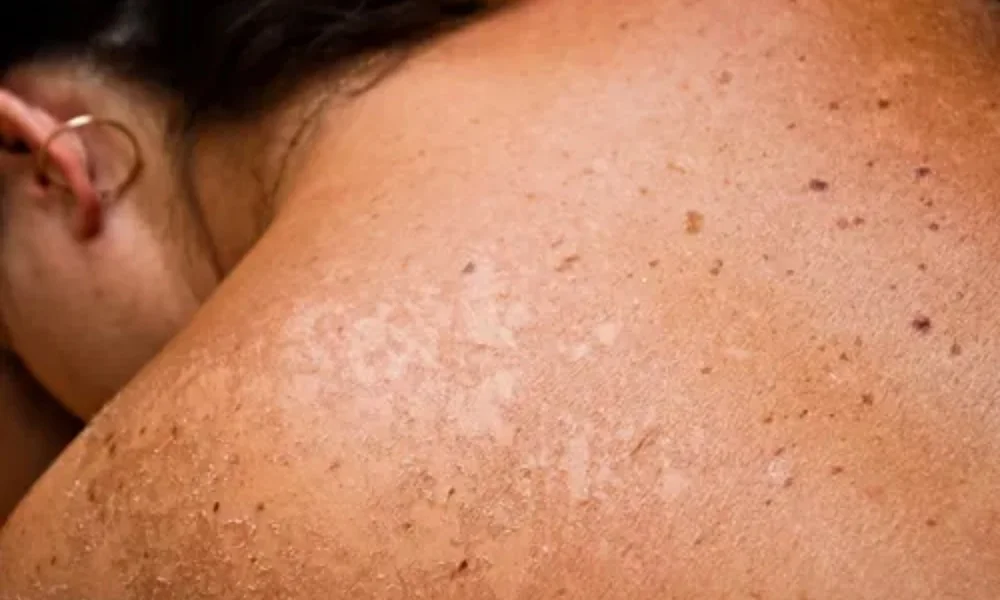
No. Pityriasis versicolor is caused by Malassezia furfur/globosa — a yeast, not a dermatophyte — and presents as hypopigmented or hyperpigmented scaly macules on the trunk, shoulders and upper arms. It responds to topical ketoconazole or selenium sulphide shampoo applications and oral itraconazole or fluconazole for extensive disease. It does not respond to terbinafine. Differentiation from true tinea is clinical and by KOH mount.
Consultation with KOH mount: ₹300 consultation + ₹200 procedure. Oral itraconazole 200 mg course: approximately ₹600–900 per month (generic). Topical luliconazole or sertaconazole: ₹200–400 per tube. LFT and lipid profile monitoring: approximately ₹800 per cycle at partner labs. Sabouraud culture (when indicated): additional ₹400–600. Transparent billing; no hidden add-ons.
Approximately 12 km from Pathanamthitta town, 22 km from Adoor, 15 km from Chengannur, 18 km from Changanassery and Kozhencherry, and 25 km from Ranni via the MC Road and Pathanamthitta–Thiruvalla road.
DermaVue is a physician-owned dermatology clinic in Thiruvalla (Tiruvalla) at
Iykara Peniel Tower, opposite Indian Overseas Bank, Thukalassery, on MC Road and
about 2 km from Thiruvalla Railway Station. Buses along
MC Road from Chengannur, Changanassery and Pathanamthitta stop close by, so patients from across
Central Travancore reach the clinic without changing routes.
Travel time to the clinic
From
Distance
Drive
Route
Thiruvalla town centre / MC Road
~1 km
~4 min
MC Road
Thiruvalla Railway Station
~2 km
~7 min
Railway Station Road
Chengannur
~10 km
~20 min
MC Road / NH-183
Changanassery
~18 km
~30 min
MC Road north
Mavelikara
~15 km
~30 min
via Chengannur
Pathanamthitta
~30 km
~50 min
via Kozhencherry
Cochin International Airport
~105 km
~2.5 hr
MC Road / NH-183
How to reach us
From Thiruvalla town / MC Road: the clinic is at Thukalassery, Iykara Peniel Tower, opposite Indian Overseas Bank, a short auto ride from the town centre.
From Thiruvalla Railway Station: about 2 km via Railway Station Road, roughly 7 minutes by auto.
Flying in: Cochin International Airport is about 105 km north via MC Road and NH-183, with on-site parking at the Thukalassery clinic.
Distances are approximate road distances from the Thukalassery clinic.
See the DermaVue Thiruvalla clinic page for the full list of treatments and directions.
WhatsApp DermaVue Thiruvalla
"Hi, I would like to book a dermatology consultation at DermaVue Thiruvalla."