Skip to main content Skip to main content
+91 90720 07733aluva@dermavue.comOpen All Days · Kochi · Mon–Sat 9–6:30 · Sun 11–5About our medical team →
§ 01 · Eczema · Kochi

Atopic dermatitis treatment in Kochi,
SCORAD-graded, barrier-repair first.

SCORAD severity index at every visit; ceramide-rich emollients applied 2-3 times daily as the floor of every plan; tacrolimus 0.1% or pimecrolimus 1% topical calcineurin inhibitors on the face and flexures; methotrexate or cyclosporine for adolescents and adults with refractory disease; dupilumab biologic eligibility assessment for severe cases that fail conventional systemic therapy.

4.8★ 1,450 reviews
MD DVL Board-certified
US-FDA Approved lasers
IADVL Atopic dermatitis 2018
100 m from Pulinchodu Metro · 15 min from Lulu Mall · 25 min from Kochi city centre
§ 02 · Quick Answer

How eczema is actually controlled.

Atopic dermatitis treatment at DermaVue Kochi follows IADVL STAND-AD consensus. First-line systemic for moderate-severe AD in India is cyclosporine 3-5 mg/kg/day or oral prednisolone (biologic and JAK-inhibitor therapies are cost-restricted). Dupilumab (IL-4/13 inhibitor) and JAK inhibitors (abrocitinib, upadacitinib, baricitinib) are highly effective but cost-restricted in India, IADVL panel explicitly notes accessibility constraints. Consultation ₹300; cyclosporine course ₹2,500-6,000/month; dupilumab approximately ₹2.5-4 lakh/year.

§ 03 · The Protocol

Five phases. Same hands. From diagnosis to maintenance.

Every eczema case at our Kochi clinic starts at SCORAD scoring, trigger identification, and barrier assessment, not at a steroid script. Severity sets the rung; environment sets the maintenance plan.

01

SCORAD scoring + trigger workup

SCORAD (SCORing Atopic Dermatitis) 0-103 scale at baseline. Trigger identification: food allergy testing where indicated, contact allergen patch test, fragrance / fabric / dust mite assessment.

02

Barrier restoration (non-negotiable foundation)

Emollients applied 2-4× daily, ceramide / colloidal oatmeal / petrolatum-based, fragrance-free. This alone reduces flare frequency 30-50% in mild-moderate AD.

03

Topical therapy

Low-mid potency topical corticosteroid (class V-VII for face/folds, class III-V for body) for active flares. Topical calcineurin inhibitor (tacrolimus 0.1%, pimecrolimus 1%) for face / folds long-term maintenance, avoids steroid atrophy.

04

Moderate-severe systemic (Indian first-line)

Cyclosporine 3-5 mg/kg/day with monthly BP + creatinine + LFT; 12-24 weeks typical course. OR methotrexate 7.5-25 mg/week with folate supplementation. Oral prednisolone short course for acute severe flares only.

05

Advanced therapy (cost-restricted)

Dupilumab 600 mg SC loading + 300 mg q2w (₹2.5-4 lakh/year); OR abrocitinib / upadacitinib / baricitinib oral JAK inhibitors. Highly effective but cost the dominant barrier in Indian practice.

Swipe →
§ 04 · Why Kochi Eczema Is Different

PM2.5 51 µg/m³ at the Vyttila monitoring station, three times the WHO safe limit.

Central Pollution Control Board data from the CPCB Vyttila station records peak PM 2.5 at 51 µg/m³ in Kochi, approximately three times the WHO annual safe limit (15 µg/m³). A 2025 PMC systematic review confirms PM 2.5 exposure exacerbates inflammatory acne and atopic dermatitis and accelerates skin barrier dysfunction. A Kasaragod (north Kerala) cross-sectional study of 5,914 individuals (Pulickal AS, 2021) reported eczema prevalence at 9.8%, well above the national 1–3% baseline. Combined with sustained 85–95% humidity and seasonal allergen load, the local presentation pattern shifts toward flexural and intertriginous dermatitis with frequent secondary bacterial infection. The protocol here treats barrier disruption as the primary lesion and anti-inflammatory therapy as the response to flare, not the daily floor.

  • 51 µg/m³peak PM 2.5 at CPCB Vyttila monitoring station; 3× the WHO annual safe limit (CPCB Vyttila 2024 data)
  • 9.8%eczema prevalence in 5,914-person Kasaragod community survey, several-fold above national reference (Pulickal AS, IJDVL 2021)
  • 85–95%year-round relative humidity, drives flexural and intertriginous involvement and secondary bacterial colonisation (CWRDM Kochi 2019)
CPCB Vyttila air-quality data 2024 · Pulickal AS Kasaragod community survey IJDVL 2021 · PMC 2025 PM 2.5 dermatology systematic review · CWRDM Kochi 2019
PM 2.5 vs WHO SAFE LIMIT
3×
WHO threshold exceeded
100
§ 05 · Clinical Summary

The published protocol, in plain English.

The IADVL Special Interest Group of Pediatric Dermatology STAND-AD modified Delphi consensus (published in IJDVL) defined the Indian standardised diagnosis and management protocol for atopic dermatitis. The Indian-context-aware sequence:

First-line: emollients (multiple times daily, barrier restoration is non-negotiable), topical corticosteroids (low-mid potency; class V-VII for face/folds, class III-V for body, class I-II only short courses for thick plaques), topical calcineurin inhibitors (tacrolimus 0.03-0.1%, pimecrolimus 1%, particularly for face + folds where steroid-use anxiety is high).

Moderate-severe AD systemic first-line (IADVL Indian-context): cyclosporine 3-5 mg/kg/day OR oral prednisolone short course, these are the practical first-line systemics in India because of cost and access. Methotrexate 7.5-25 mg/week and azathioprine are used for steroid-sparing maintenance.

Biologic and JAK-inhibitor therapies (highly effective but cost-restricted in India):

- Dupilumab (IL-4/13 monoclonal antibody): 600 mg loading then 300 mg every 2 weeks subcutaneous. Excellent efficacy but cost > ₹2.5 lakh/year limits widespread Indian adoption.

- JAK inhibitors: abrocitinib (oral, JAK1-selective), upadacitinib (oral, JAK1-selective), baricitinib (oral, JAK1/2). High efficacy in head-to-head trials; cost the dominant barrier.

- Lebrikizumab, tralokinumab (newer IL-13 monoclonal antibodies): not yet widely available in India.

IADVL panel explicit statement: dupilumab, JAK inhibitors recommended where accessible; cost makes them rarely first-line in routine Indian practice. Cyclosporine remains the workhorse Indian moderate-severe AD systemic. DermaVue Kochi pattern: emollient + topical steroid + tacrolimus 0.1% face/folds first; cyclosporine 3-5 mg/kg for moderate-severe with photographic SCORAD documentation; dupilumab / JAK inhibitor counselling for failed conventional systemics or biologic-eligible patients with budget capacity.

§ 06 · Compare

What changes when a board-certified dermatologist runs the protocol.

RECOMMENDED DermaVue Kochi (MD DVL dermatologist)
ALTERNATIVE Generic clinic / parlour
Diagnosis + SCORAD scoring
MD DVL with structured SCORAD scoring + photographic documentation
Often clinical eyeballing without scoring
First-line systemic
Cyclosporine 3-5 mg/kg with BP + creatinine monitoring (Indian-context first-line)
Often topical-only or repeated steroid bursts
Topical calcineurin inhibitor for face / folds
Tacrolimus 0.03-0.1% or pimecrolimus 1%, steroid-sparing
Long-term topical steroid → skin atrophy
Advanced therapy access
Dupilumab + JAK inhibitor (abrocitinib, upadacitinib) counselling for eligible patients
Often not offered
Trigger identification
Food / contact / fragrance / dust mite workup
Skin-only focus
Cost transparency
₹300 consult + written annual programme cost
Variable
§ 07 · Transparent pricing

Each line item. No package inflation.

Pricing starts from ₹300 consultation. Final quote after your diagnostic visit.

Dermatology consultation + SCORAD scoring From ₹300
Emollients (3-month supply) From ₹1,500-4,500
Topical corticosteroids (monthly) From ₹150-800
Topical tacrolimus 0.1% (30 g) From ₹600-1,500
Cyclosporine (3-month course) From ₹7,500-18,000
Methotrexate (3-month course) From ₹450-1,500
Dupilumab annual programme From ₹2.5-4 lakh
Abrocitinib (oral JAK1, monthly) From ₹15,000-30,000
All pricing starts from the amounts shown. Final treatment plan and cost confirmed after consultation. ₹300 covers the full diagnostic visit.
§ 08 · What's in the room

Eight modalities, sequenced per patient.

01

SCORAD Scoring + Photographic Documentation

standard at every visit

02

Trigger Workup

food / contact / fragrance / fabric / dust mite

03

Emollient + Barrier Restoration Protocol

foundation of all AD care

04

Topical Corticosteroid Therapy

class-matched to body region + severity

05

Topical Calcineurin Inhibitor

tacrolimus 0.1% / pimecrolimus 1% for face / folds

06

Cyclosporine Systemic

3-5 mg/kg/day for moderate-severe AD

07

Methotrexate Maintenance

7.5-25 mg/week steroid-sparing

08

Dupilumab Biologic

IL-4/13 inhibitor for biologic-eligible patients

09

JAK Inhibitor Counselling

abrocitinib / upadacitinib / baricitinib

10

Pediatric AD Management

STAND-AD age-stratified protocol

§ 08b · Watch the protocol

Our dermatologists explain the protocol on camera.

Board-certified dermatologists walk through the clinical approach — watch before your first visit.

Atopic Dermatitis Management at DermaVue Kochi
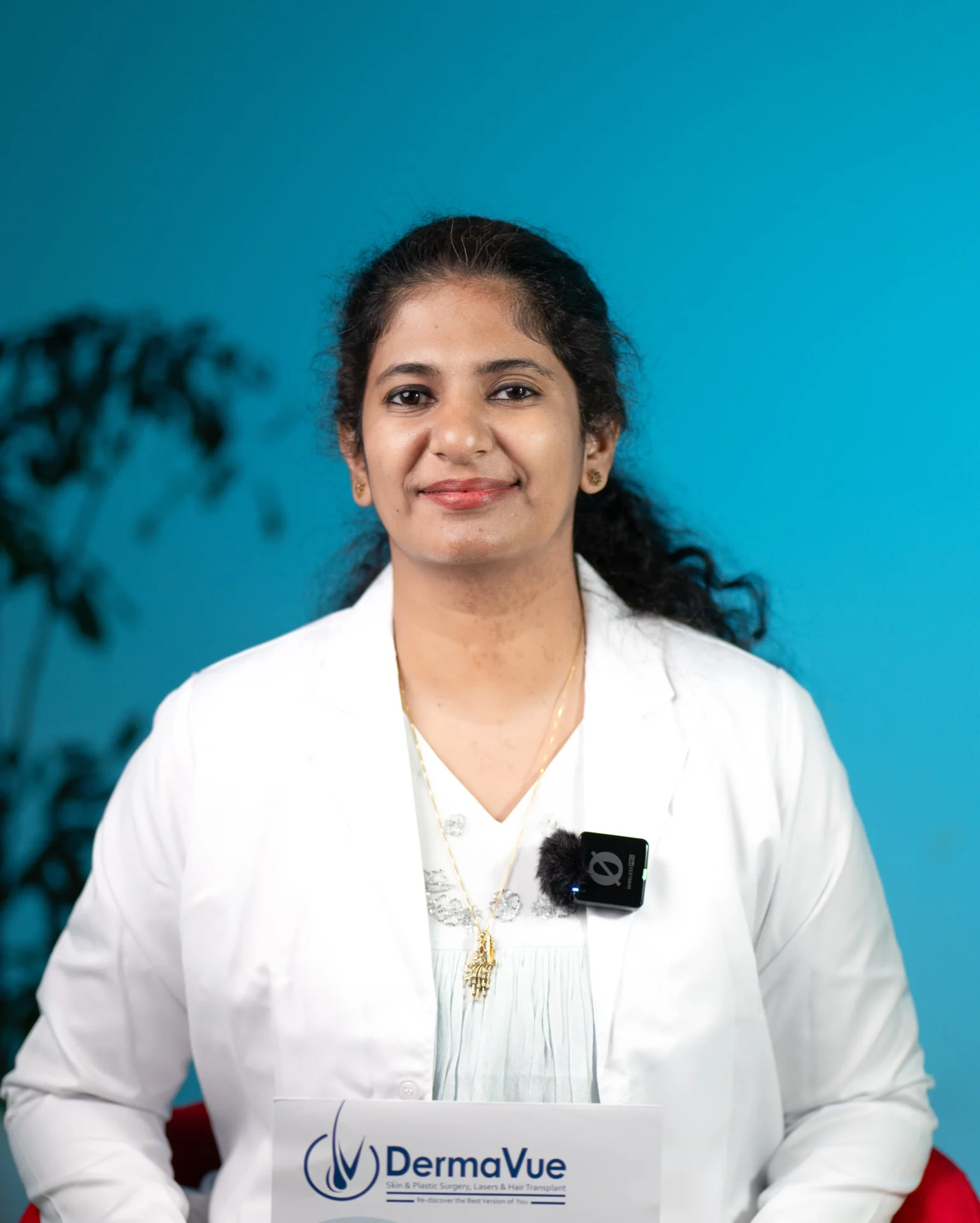
CLIP 01 Atopic Dermatitis Management at DermaVue Kochi Dr. Minu Liz Mathew explains the IADVL STAND-AD consensus protocol.
Pediatric Atopic Dermatitis, STAND-AD IADVL Approach
CLIP 02 Pediatric Atopic Dermatitis, STAND-AD IADVL Approach How DermaVue handles pediatric AD with the STAND-AD Indian context protocol.
§ 09 · Patient case

My son had moderate-severe atopic dermatitis from age 4. Spent years on repeated steroid bursts from other clinics. DermaVue ran proper SCORAD scoring + trigger workup, identified dust mite + food sensitivities, started emollient routine + tacrolimus 0.1% face/folds. Within 3 months SCORAD dropped from 48 to 14. Steroid-free maintenance now at month 9.

Maya Krishnan Kakkanad · Kochi · DermaVue Kochi patient
§ 10 · Your dermatologists

Five names on every consultation note.

One physician owns your file from intake through the 12–18 month maintenance phase. Continuity of care isn't a tagline here, it's the default.

  1. Dr. Minu Liz Mathew, MBBS, MD DVL, Chief Dermatologist at DermaVue Kochi
    01

    Dr. Minu Liz Mathew, MBBS, MD DVL

    Chief Dermatologist

    Dermatology, Cosmetic Dermatology, Lasers & Aesthetic Medicine

    • IADVL
    • ACSI
    • IMA
    • 15+ years
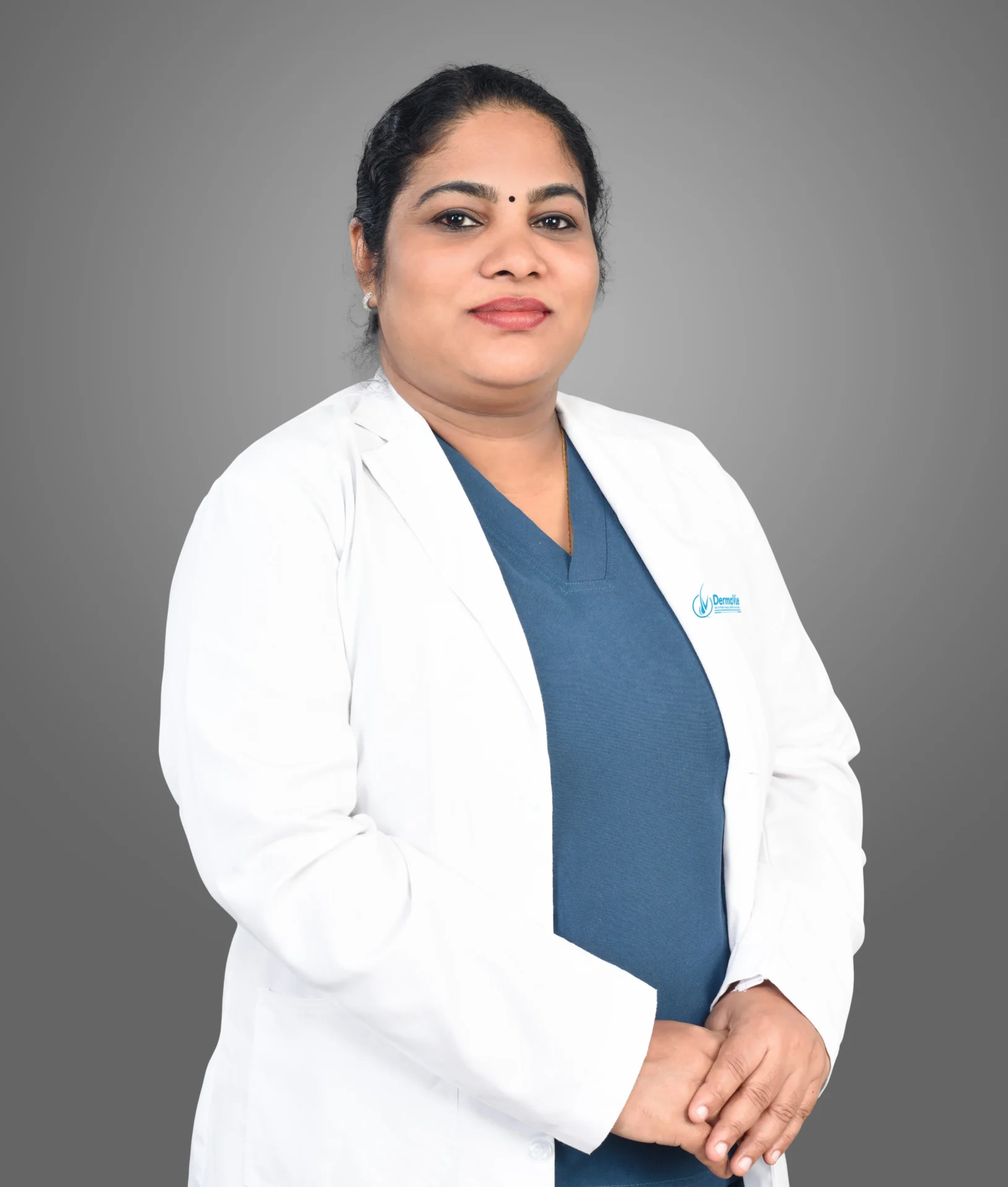
  2. Dr. Navya K G, MBBS, MD DVL, Consultant Dermatologist at DermaVue Kochi
    02

    Dr. Navya K G, MBBS, MD DVL

    Consultant Dermatologist

    Medical Dermatology, Cosmetic Procedures

    • IADVL
    • 9 yrs experience
  3. Dr. Arjun K, MBBS, DDVL, Consultant Dermatologist at DermaVue Kochi
    03

    Dr. Arjun K, MBBS, DDVL

    Consultant Dermatologist

    Venereology, Medical Dermatology

    • IADVL
    • 8 yrs experience
  4. Dr. Reshma J Neerackal, MBBS, MD DVL, Consultant Dermatologist at DermaVue Kochi
    04

    Dr. Reshma J Neerackal, MBBS, MD DVL

    Consultant Dermatologist

    Cosmetic Dermatology, Aesthetic Procedures

    • IADVL
    • 12 yrs experience
  5. Dr. Johna PS, MDS, FUE Trained, Hair Transplant Surgeon at DermaVue Kochi
    05

    Dr. Johna PS, MDS, FUE Trained

    Hair Transplant Surgeon

    FUE Hair Transplant, Beard & Eyebrow Restoration

    • APSI
    • 100+ procedures

Direct line to the team WhatsApp +91 90720 07733 →

§ 11 · Frequently asked

The questions every eczema patient asks. Honestly answered.

What is the IADVL STAND-AD protocol for atopic dermatitis?

STAND-AD is the IADVL Special Interest Group of Pediatric Dermatology modified Delphi consensus published in IJDVL, the Indian standardised diagnosis and management protocol for atopic dermatitis. Key Indian-context elements: cyclosporine 3-5 mg/kg/day OR oral prednisolone as first-line systemic for moderate-severe AD (rather than dupilumab, which is highly effective but cost-restricted in India); emollients + topical steroid + topical calcineurin inhibitor (tacrolimus 0.1% for face/folds to avoid long-term steroid atrophy) as topical foundation; methotrexate / azathioprine for maintenance.

Is dupilumab available in India for eczema?

Yes, dupilumab (IL-4/13 monoclonal antibody, 600 mg loading + 300 mg every 2 weeks subcutaneous) is available in India and highly effective for moderate-severe atopic dermatitis. The IADVL STAND-AD panel explicitly recommends it where accessible. The dominant barrier is cost: annual programme is approximately ₹2.5-4 lakh. DermaVue Kochi counsels eligible patients on dupilumab where conventional cyclosporine / methotrexate has failed or where the patient has budget capacity for biologic therapy.

What are JAK inhibitors for atopic dermatitis?

JAK (Janus kinase) inhibitors are oral targeted therapies that block specific inflammatory signalling pathways involved in atopic dermatitis. Three JAK inhibitors are approved for AD globally: abrocitinib (JAK1-selective), upadacitinib (JAK1-selective), baricitinib (JAK1/2). Highly effective in head-to-head trials versus dupilumab and conventional therapy. Indian availability is expanding but cost remains a barrier, monthly cost ₹15,000-30,000 for abrocitinib. Pre-treatment screen (TB, hepatitis, HIV, LFTs, baseline bloods) is required.

Why does my child keep getting eczema flares?

Atopic dermatitis is a chronic relapsing-remitting condition with no permanent cure, flares are part of the disease model, not treatment failure. Common Indian-context triggers: food allergens (egg, milk, peanut, soy, wheat, household-specific patterns), dust mites (very high RH areas including Kerala have heavy dust mite burden), contact allergens (fragrance in baby products, fabric softeners), staphylococcal colonisation (chronic plaque AD is often colonised), and stress (psychoneuroimmunology). DermaVue's structured trigger workup + emollient maintenance reduces flare frequency meaningfully, but does not eliminate the underlying disease.

Is topical steroid safe for long-term eczema use?

Topical corticosteroids are safe when used correctly: class-matched to body region (low-potency for face / folds / paediatric; mid-potency for body; high-potency only short courses for thick plaques), pulsed (not continuous), and supplemented with steroid-sparing alternatives. Long-term unmonitored topical steroid use risks skin atrophy, telangiectasia, perioral dermatitis, and steroid-rebound. The IADVL approach uses topical calcineurin inhibitors (tacrolimus 0.1% or pimecrolimus 1%) for face / folds maintenance to avoid long-term steroid atrophy in these high-risk anatomical areas.

Why are emollients so important for eczema?

Atopic dermatitis is fundamentally a skin barrier defect (often genetic, filaggrin mutations) with secondary inflammatory response. Restoring the barrier with regular emollient application (2-4 times daily, ceramide / colloidal oatmeal / petrolatum-based, fragrance-free) reduces transepidermal water loss, reduces allergen + microbial penetration, and reduces flare frequency by 30-50% in mild-moderate AD. Emollients are the non-negotiable foundation of every AD treatment plan, topical steroids and systemic agents address the inflammation; emollients address the underlying cause.

Can adults develop atopic dermatitis?

Yes, adult-onset AD accounts for 25-30% of all atopic dermatitis cases in dermatology practice. Presentation differs from childhood AD: more chronic plaque pattern (hands, neck, face, eyelids), more lichenification from chronic scratching, often with concomitant contact dermatitis or stress as trigger. Treatment protocol is similar to childhood AD: SCORAD scoring + trigger workup + emollients + topical therapy + systemic for moderate-severe.

What is the cost of atopic dermatitis treatment in Kochi?

₹300 consultation + SCORAD scoring. Emollient 3-month supply ₹1,500-4,500. Topical regimen (steroid + tacrolimus) ₹150-1,500/month. Cyclosporine 3-month course ₹7,500-18,000. Methotrexate 3-month course ₹450-1,500. Dupilumab annual programme ₹2.5-4 lakh (cost-restricted). Abrocitinib oral JAK monthly ₹15,000-30,000. Total cost depends on severity and chosen therapy line · DermaVue provides written annual cost projection before commitment to systemic or biologic therapy.

Does atopic dermatitis go away with age?

Many pediatric AD cases improve with age, approximately 50-60% of children with AD see substantial improvement by adolescence, though some persist into adulthood. Adult-onset AD is typically chronic. Even patients who experience remission may have flares triggered by stress, pregnancy, environmental change. The genetic predisposition (atopic march, AD + asthma + allergic rhinitis often co-occur) does not change with age. Long-term emollient maintenance + trigger awareness is the lifelong strategy.

Can diet help with my child's eczema?

Selectively, food allergy is a documented trigger for AD in some patients (commonly egg, milk, peanut, soy, wheat in young children), and identified food triggers should be avoided. BUT random food elimination diets without confirmed allergy testing can cause nutritional deficiency and rarely improves AD. DermaVue's approach: structured food allergy workup (skin prick test, specific IgE) for children with moderate-severe AD + suspected food trigger; targeted avoidance of confirmed triggers only; not elimination diets based on speculation.

§ 12b · Read deeper

Eczema is the umbrella; the patterns differ.

Atopic, contact, dyshidrotic, nummular, and stasis dermatitis share the inflamed-skin appearance but each responds to a different protocol. The hubs below cover the variants and the adjacent conditions (psoriasis, fungal) that frequently mimic them.

§ 13 · Find us

15 min from Lulu Mall. 100 m from Pulinchodu Metro.

Address
Metro Rail Pillar No. 57, Tamarind Rajadhani Building, Near Pulinchodu, NH-47, Aluva, Kerala 683101
Hours
Mon–Sat 9 AM–6:30 PM · Sun 11 AM–5 PM
KochiErnakulamAluvaEdappallyKakkanadKaloorKalamasseryThrikkakara
§ 15 · Start today

Book the SCORAD + trigger map + barrier assessment visit.
Daily emollient is non-negotiable; everything else flexes with the score.

₹300 consultation · same-day slots available · Aluva clinic open Mon–Sat 9 AM – 7 PM, Sun 10 AM – 6 PM.

WhatsApp us instead
Call